Amrita Shergil (1913-41) was a role model for women artists of future generations. She sailed with her Hungarian mother to France to study art in Paris. She got admitted first at the Grande Chaumiere under Pierre Vaillant and subsequently at the Ecole des Beaux-Arts, where she was taught by Lucien Simon. She had carved a forte for herself as an artist through the sheer vitality of her art, and through the force of her personality and manner of her liberated lifestyle.
Amrita was the elder of two daughters of Umrao Singh Shergil Majithia, a Sikh aristocrat and also a scholar in Sanskrit and Marie Antionette Gottesmann, a Hungarian pianist and singer. She spent her early childhood in a small village of Hungary called Dunaharsti. She spent most of early childhood in Budapest. She was already painting since the age of five she formally started learning painting at age eight.
Her early paintings display a significant influence of the Western techniques of painting as she practiced in the Bohemian circles of Paris in the early 1930s. Shergil returned to India at the end of 1934. She was already a technically accomplished painter, equipped with an avid thirst to know, a virile tenacity of purpose and single mindedness about her role in life. She was certainly as many years ahead of her time in India in the mid-1930s. In the 1960s Indian artists began to display her kind of self-assurance and purpose.
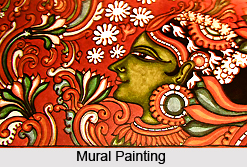
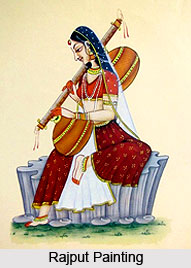
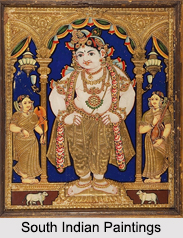
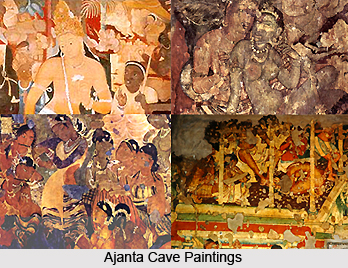
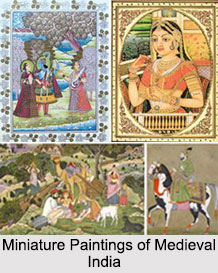
 She went to live in Simla. She began painting poor hill people who embodied the spirit of India. She undertook a cultural tour of India and was bowled by the freshness and originality of Ajanta and Ellora, the sensuous murals of the Mattancheri Palace in Cochin and the strength of the Kushana sculpture in Mathura. She attempted to include elements of Rajput painting in her later work. She started painting with her own distinct style, which was totally Indian in aspect of subject, spirit and technical expression. In 1937 Amrita went on a tour to South India, where she painted the famous trilogy of `The Bride`s toilet`, `Brahmacharis` and `Villagers going to the market`. These works gave her opportunity to achieve simplicity she always wanted in her paintings.
In 1938, Amrita Shergil went to Hungary and married her first cousin Victor Egan much to her parents` resistance. They came back to India to live in their paternal house at Saraya, Gorakhpur and Uttar Pradesh. Later they moved to Lahore in undivided India and she continued her works in top floor studio of her 23 Gangaram Mansion. She had an untimely death in 1941.
She was the youngest ever and the only Asian to be elected as Associate of the Grand Salon in Paris. Her legacy stands at par with that of the Masters of Bengal Renaissance. She drew inspiration from European painters such as Paul C‚zanne and Paul Gauguin. The turning-point came six years after her death with the foundation of a group of artists in Mumbai as free-spirited and self-absorbed as herself-the Progressive Artists` Group. Meera Mukherjee, Mrinalini Mukherjee , Arpita Singh, Anjolie Ela Menon, Nasreen Mohamedi and Trupti Patel to name a few are very much indebted to her.