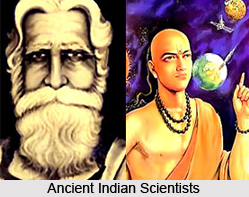
 Indian scientists are famous throughout the world. They have pioneered several significant scientific discoveries so far. Since the ancient period, India is considered as one of the scientific powerhouses in the world. Thus, this country has been scientifically advanced for several centuries now and the Indian scientists have made numerous path-breaking discoveries in the field of science. The various fields in which the Indian scientists have excelled include mathematics, warfare, geometry, astronomy, medicine, space science, physics, chemistry, botany, etc.
The astonishing inventions of the Indian scientists have played a vital role in the overall development of the country. They have also made India proud with their scientific achievements and many of the Indian scientists have also received some prestigious international awards as well. The discoveries of the Indian scientists have been appreciated all over the world.
Science and technology initiatives have always been encouraged in India. The Indian scientists have so far introduced numerous unique ideas in the field of science since the ancient period. They have studied many inventions and discoveries that are believed to be originated in the Western world but were studied in India, several centuries earlier. The Indian scientists are considered as some of the brightest talents the country has ever produced.
 Indian Scientists in Ancient Era
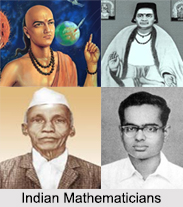
It is a true fact that since the ancient age Indian people possessed great scientific acquaintance which they applied for the profit of community. The Vedic sciences are considered as the richest and most comprehensive science of ancient India. The Vedic sciences comprise various branches such as medicine, space science, astronomy, mathematics and there were several Indian scientists who studied and enhanced Vedic sciences. Aryabhatta I, Charaka, Sushruta and Panini were some of the eminent scientists of the ancient era. While Aryabhatta defined the shape of Earth to be round in 499 A.D., Charaka and Sushruta chiefly contributed in the development of Ayurveda. On the other hand, Panini discovered the methodical linguistic analysis during the 4th century B.C. The ancient Indian scientists have also given many mathematical and scientific explanations that can be proved using the current methods. There are also many other notable scientists in ancient era Baudhayana, an Indian mathematician Bhaskara , an Indian mathematician, who wrote numbers in the Hindu-Arabic decimal system with a circle for the zero, Brahmagupta, an Indian mathematician and astronomer, Halayudha, a 10th century Indian mathematician who wrote the Mrtasanjivani, Jayadeva, a Sanskrit poet around 1200 AD, Nagarjuna, an important Buddhist teacher and philosopher, Sushruta, an ancient Indian surgeon and the author of the book Susruta samhita, Varahamihira, an Indian astronomer and mathematician, Kanada, a Hindu sage and philosopher who founded the philosophical school of Vaisheshika.
 The ancient Indian scientists and scholars developed the geometric theorems many years before Pythagoras did in the 6th century B.C. They also used advanced methods for determining the number of mathematical combinations by the second century B.C. The Indian scientists used ten numerals by the 5th century A.D. and by the 7th century; they started treating zero as a number. There are also several other technological discoveries made by the ancient Indian scientists. The discoveries were made connecting to physical science, pharmacology, medicine, artificial colours and glazes, metallurgy, re-crystallization, chemistry, geometry, astronomy, the decimal system and language and linguistics, etc. Other significant mathematical inventions like the conceptualization of rectangles, circles, triangles, squares, fractions; algebraic formulas, the ability to express the number ten to the twelfth power, and astronomy had also been described in Vedic sciences. The concepts of astronomy, metaphysics and perennial movement were described in the Rig Veda.
Indian Scientists in Medieval Era
In the ancient history of India especially during in Indus Valley Civilization and culture of Harappa shows that the Indian scientists continued discovering newer scientific and mathematical concepts. In that era, the main discoveries made by the Indian scientists were basically applied for metal casting, distillation, brick and pottery making, hydraulics, surveying, town planning, the development of a lunar calendar, etc. further, in the medieval period, the Muslim rulers of India including the Mughals also patronized the Indian scientists to make new discoveries. The emperors of the Mughal Dynasty also spread their inventions all over the world.
Indian Scientists in Colonial Era
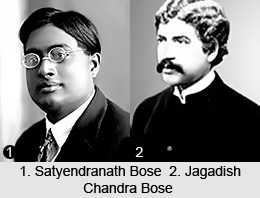
The extent of scientific research increased with British invasion in India. The Indian scientists contributed to numerous new scientific developments during the British period and the developments added to the original achievements of the previous millennia. During the British rule, the Indian scientists took up a new role of assisting the Europeans in their scientific explorations and research. However, there were many Indian scientists who worked independently and made important scientific discoveries. The Indian scientists made lots of pioneering discoveries during the first half of twentieth century that include the discovery of life in plants, Raman Effect, the Raman-Nath Theory, the application of electromagnetic waves to wireless telegraphy, the ionization theory, the Bose-Einstein Statistics, the Boson particles, etc. Chandrasekhar Venkata Raman, Jagadish Chandra Bose, Meghnad Saha, Satyendranath Bose, Prafulla Chandra Ray, S. Ramanujan, M. Visvesvaraya, and Dr. Shanti Swaroop Bhatnagar were some of the most prominent Indian scientists of the colonial period.
Indian Scientists in Independent India
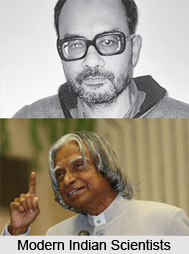
After independence, scientists in India gained support from the Government of India. The Indian scientists also started to explore innovative fields of science like; positron theory, nuclear science, cosmic rays, biotechnology, astrophysics, liquid crystals, environment, mining, molecular biology, virology, condensed matter physics, crystallography, etc. The Government of India has provided all the needed financial support to the Indian scientists to continue their research works. Some of the prominent Indian scientists of this period include names like
Vikram Sarabhai; Dr. Homi Jehangir Bhabha; Dr. Subrahmanyan Chandrasekhar, Dr. H. Khorana, A.P.J. Abdul Kalam, etc.