
Bhaskara (750 CE) advocated a dualistic and theistic interpretation of Hindu scriptures as opposed to non-dualist theories in Advaita-Vedanta. Bhaskara subscribed to the Satkaryavada theory of causation. According to this an effect pre-exists in its underlying cause before its appearance as an entity with name and form. Bhaskara interpreted the cosmos of souls and matter as real rather than apparent transformation of one aspect of the Supreme that has become subject to limiting conditions.
Brahman is both underlying and instrumental cause of the universe. Bhaskara`s philosophy is called Bheda-Abheda-Vada. The theory says that the cosmos is differentiated while its source is unitary. Individuals are subjected to restricted awareness, workings of karma and rebirth that are emanations of the Supreme Being. According to Bhaskara, defects occurring in the embodied soul, differentiated and conditioned by limiting extras, do not really affect the Brahman. Against non-dualist Vedanta, Bhaskara argues that if the world of differences and agency are products of beginning less, ignorance, then there are no grounds for thinking that monistic belief is true as it occurs in the sphere of Avidya.
Individual souls` desires for worldly things causes their burden to rebirth. Transforming desire into Bhakti upon the Supreme Being leads one to liberation. Embodied soul is real, although `borrowed` from Brahman which is its ultimate source. Bhaskara holds the scripturally prescribed duties apt to caste and various stages of life can always be applied. For salvation performance duties in combination with understanding of the nature of the soul and Brahman as the source is necessary.
Thus according to Bhaskara the individual soul is a part of Brahman only so long as it remains in ignorance. In knowledge and emancipation it becomes one with him.
This article is a stub. You can enrich by adding more information to it. Send your Write Up to content@indianetzone.com
Bhaskara
Bhaskara was an Indian philosopher and a realist Vedantin commentator of the Brahma-Sutras and Bhagavad Gita. Bhaskara had challenged Shankara`s concept of Maya.
Recently updated articles in Indian Philosophy
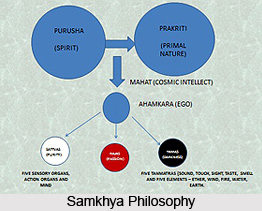
Samkhya Philosophy
Samkhya philosophy is one of India’s oldest intellectual traditions, explaining reality through the interplay of Puruṣha (pure consciousness) and Prak...
Maya, Prakriti in Hinduism
Maya or illusion is a very potent instrument of the Divine Prakriti, the Primal nature. In Hinduism one must be able to come out of Maya in order to a...

Samadhi in Hinduism
Samadhi is the result of meditation or that state of mind when there is an absence of all idea of individuality.
Samadhi in Buddhism
According to Buddhism, oen can only achieve samadhi through strict meditation and right concentration.

Abdul Rehman Jilani Dehlvi
Syed Abdul Rehman Jilani Dehlvi was a renowned Sufi saint of the Qadri Order in India.
Related articles in Indian Philosophy

Ajivika Philosophy
Ajivika philosophy is different from the mainstream religion
Indian Philosophy In The Vedic Period
Indian Philosophy in the Vedic Period was primarily based on the concepts of nature worship.
Achintya Bheda Abheda Philosophy
Achintya-Bheda-Abheda is a School of Vedanta that represents the philosophy of unimaginable one-ness and difference in relation to the power creation...
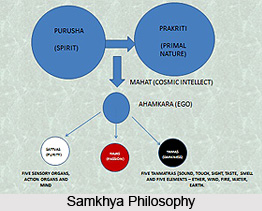
Samkhya Philosophy
Samkhya philosophy is one of India’s oldest intellectual traditions, explaining reality through the interplay of Puruṣha (pure consciousness) and Prak...
Charvaka Philosophy
The Charvaka Philosophy believes that only those things that can be perceived is the ultimate reality.