 Upapuranas are generally held to be additions or supplements to the Mahapuranas. Puranas usually are categorized into a `Maha` and an `Upa.` Maha`s are regarded as great and the Upa`s are lower or additional. Like the other Puranas, the Upapuranas too narrate on five themes called Panchalaksana, which means "five distinguishing marks". Puranas use a large quantity of religious and philosophical concepts from Bhakti to Samkhya philosophy, in their narration. The lists of these Upapuranas as given in the various Mahapuranas do not tally. Quantity is less clearly defined in the Upapuranas and these have also not been critically edited. The Upapuranas do not in general differ essentially from the Puranas, except that they are even more exclusively adapted to suit the purposes of local cult and the religious needs of separate sects.
Origin of Upapuranas
The number of the Mahapuranas, the sacred text was eighteen. But the expansion of Purana literature went on unabated. For this reasons those of the puranas, which did not find a place in the traditionally listed Puranas, were conciliated under the title `Upapuranas`. The incongruity in this regard is that in due course of time the numbers of these Upapuranas was also got fixed at eighteen. They were considered as supplementary material that is collected and appended at the back of a book to the Mahapuranas and hence of lesser importance.
Important Upapuranas
The Vishnudharmottara is occasionally given out as a part the Garuda Purana, but generally it is counted as an independent Upapurana. It is repeatedly quoted by Alberuni as the "Vishnudharma." It is a Kashmiri Vaishnava book of encyclopaedic character in three sections. Section I deals with the usual themes of the Puranas: the Creation of the world, cosmology, geography, astronomy, division of time, genealogies, Stotras, rules about Vratas and Shraddhs. Section II deals with law, politics, medicine, the science of war, astronomy and astrology. Section III, too, is of a very miscellaneous character, dealing with grammar, lexicography, metrics and poetics, dancing, singing and music, sculpture and painting (the making of images of gods) and architecture (construction of temples).
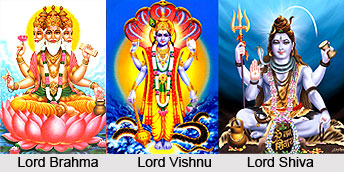
The Brhaddharma Purana, "the Great Purana of the Duties," which appears as the eighteenth in a list of the Upapuranas, only devotes the beginning of its first section, and its last section to Dharma, with the glorification of which it begins. The greater portion of the first section is in the form of a conversation between the Devi and her two friends Jaya and Vijaya, which gives it a Tantric stamp. In the second section, too, the Devi appears as the Great Goddess, to whom Lord Brahma, Lord Vishnu and Lord Shiva come singing her praises, and it teaches that the universe and all the gods have their existence in Shiva and Sakti.
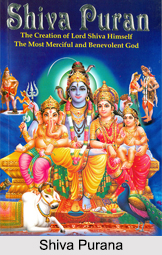
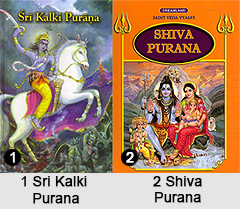
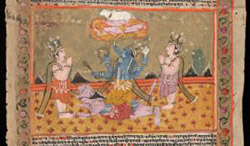 The Shiva Purana, which is said to consist of no less than twelve Samhitas, is one of the most voluminous Upapuranas.
Some of the other Upapuranas are Sanatkumara, Narasimha, Brihannaradiya, Sivarahasya, Durvasa, Kapila, Vamana, Bhargava, Varuna, Kalika, Nandi, Surya, Parasara, Vasishtha, Devi Bhagavata, Ganesa, Mudgala and Hamsa. Among these the Ganesha and Mudgala Puranas are sectarian Upapuranas devoted to Ganesha. The Ganesha Puranas and the Chandi or Chandika Purana are also Shaivaite Upapuranas. The Devi Bhagavata Purana glorifies the chastity of the Goddess Durga as the Supreme Being. Along with the Mahatmya of the Markandeya Purana, Devi Bhagavata Purana has become a basic text for Devi worshipers. The Surya Purana is dedicated to the cult of the sun. The deeds of Vishnu in the future age at the close of the Kali Yuga are described in the Kalki Purana. The Kalika Purana talks of the deeds of the Goddess Kali in her numerous forms, and of the worship dedicated to her. One chapter deals in detail with the animal and human sacrifices which should be offered to her. Curiously enough it also contains a chapter on politics.
Though the Upapuranas are more sectarian in disposition concerned in propagating their own cults but the general content of these Upapuranas is indistinguishable with those of the Mahapuranas. The puranas are mainly available in colloquial speech translations.