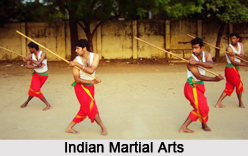
 Indian martial arts display a great diversity in their form and type, in keeping with the country`s rich and varied culture. Now, in India, martial art is a necessity for every people. It is necessary for women also.
Origin of Indian Martial Arts
Each region in India practices its own unique martial arts discipline with great vigour and enthusiasm. The Sanskrit language term for martial arts is `Dhanur Veda`, derived from the terms dhanus meaning `bow` and veda meaning `knowledge`. Thus, it literally translates into the science of archery. Since ancient times, martial arts have constantly been referenced in various literary texts, indicating their long course of development and refining.
History of Indian Martial Arts
The history of martial arts can be traced over a greatly extended period of time. Early martial traditions go back to the 2nd millennium BC. The Agni Purana is arguably the earliest extant manual of Dhanurveda which talks about the art of war in five detailed parts. It was duly mentioned in Vedic literature like the Rig Veda, Yajur Veda and Atharva Veda. The tome described how to improve a warrior`s individual artistry and kill enemies using various different methods in warfare, whether a warrior went to war in chariots, elephants, horses, or on foot.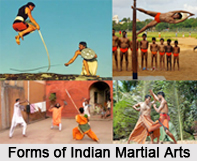
Indian Martial Arts in Mahabharata
Numerous references to Indian martial arts are found scattered throughout the Mahabharata. The vivid descriptions of martial artistry are found in the contest between Arjuna and Karna, who use bows and swords, trees and rocks, and eventually fists in unarmed battle; and fighters boxing with clenched fists and fighting with kicks, finger strikes, knee strikes and head butts.
Indian Martial Arts in Ramayana
Ramayana also has the reference of Indian Martial arts. Among the various Indian martial arts, Malla-yuddha was regarded as prominent in that era. It is a form of combat wrestling codified into four forms which is described in the ancient Indian epics as the fighting style of warriors such as Bhima.
Reference of Indian Martial Arts in Other Literature
The most graphic expressions of the various martial art forms in the ancient times are found in various literary works. Earliest written evidence of martial arts in Southern India dates back to the Sangam literature of Tamil Nadu in about the 2nd century BC to 2nd century AD. The Akananuru and Purananuru of the Sangam era describe martial arts of ancient Tamilakkam, especially Silambam, a popular martial art involving long poles still popular in South India. References to fighting are also found in ancient Buddhist texts such as the Lotus Sutra and the Hongyo-kyo. Later treatises include the Buddharata Sutra, which described Vajra Mushti, the Sushruta Samhita etc. With the advent of the Mughals, traditional and indigenous styles fused to create the popular pehlwan style. There was seen a gradual decline of the traditional Indian art forms during the British era. However, a resurgence of the various regional martial arts came about in the 1920`s. 
Styles of Indian Martial Arts
Varied styles of regional martial art forms exist in India. Due to the great diversity of the country, many different styles of martial arts have developed over the ages. Broadly speaking, we can categorise them into the styles of Northern and Southern India. In northern India we see practices like Pehlwani, Gatka and the Thang Ta and Sarit. In the south, the most popular martial art forms are Kalairpayattu, Silambam, Varma Ati and Mallakhamb. These martial arts have evolved in different eras of India`s history, often in response to socio-political situations. The Gatka, a Sikh martial art involving sticks, evolved from sword practice in the 19th century British Indian army, and the warriors of the Tamil rebel king Veerapandi Kattabomman relied largely on their Silambam skills in their rebellion against the British. The various styles range from wrestling techniques like those found in the Pehlwani, to a complete martial discipline, like that found in Kalaripayattu, originating from Kerala.
Academies of Indian Martial Arts in Modern India
There are a number of reputed academies located across the country that educate the people in the various martial art forms. Typically, these different schools and academies teach the martial art, which is typical to the region in which they are located. Some of these Academies located in the different state are mentioned below. Some prominent academies include the MKG Kalari Sangham in Kerala, teaching Kalaripayattu; the Simashan Institute of Martial Arts in Tamil Nadu and the Shri Rakesh Aakaala in Rajasthan.
The field of Indian martial arts is demonstrably rich and varied. The immense diversity in India`s culture has contributed immensely to the great variety and ingenuity in the form, style and practice of the same. Over the years, there has been a revival of the art forms in various regions, and we see a resurgence of the traditional martial arts in the field of self defense.