





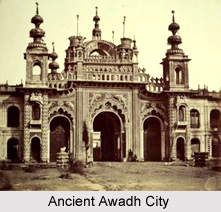
 Awadh is a fertile region in the middle-Ganga valley, around Ayodhya, west of Varanasi. It was earlier known as "Lakshmanpur". Awadh is believed to be one of the most ancient of Hindu states. Awadh can be described as a "Princely state of India". The name of Awadh is derived from Ayodhya before the effect of Mughal rule. In the recent times the region of Awadh geographically includes the districts of Bahraich, Ambedkar Nagar, Faizabad, Hardoi, Lucknow, Rai Bareilly, Unnao, Barabanki, Gonda, Lakhimpur Kheri, Pratapgarh and Sultanpur. The dialect prevalent in this region is "Awadh". Awadh is a fertile region in the middle-Ganga valley, around Ayodhya, west of Varanasi. It was earlier known as "Lakshmanpur". Awadh is believed to be one of the most ancient of Hindu states. Awadh can be described as a "Princely state of India". The name of Awadh is derived from Ayodhya before the effect of Mughal rule. In the recent times the region of Awadh geographically includes the districts of Bahraich, Ambedkar Nagar, Faizabad, Hardoi, Lucknow, Rai Bareilly, Unnao, Barabanki, Gonda, Lakhimpur Kheri, Pratapgarh and Sultanpur. The dialect prevalent in this region is "Awadh".
Etymology of Awadh According to popular legend Ramchandra of Ayodhya, the hero of the Ramayana gifted the territory of Lucknow to his devoted brother Lakshman after he had conquered Lanka and completed his term of exile in jungle. Therefore people say that original name of Lucknow was "Lakshmanpur". Ayodhya was so large a city that Lakshmanpur was described as its suburb. Name Awadh is derived from "Ayodhya". Until 16th Century A.D, its name was Ayodhya and not Awadh. History of Awadh The history of Ayodhya however as of nearly all Hindu Kingdoms between 7th and 11th Centuries is a mystery. Awadh again came into existence when Muslim rulers started to reign in India. Bakhtiyar Khalji was made governor of this region by Qutubuddin in 12th Century A.D. Nasiruddin Muhammad Shah was made governor in 1325 AD. Later Babur himself visited in 1538 AD with his army. Awadh became a "Subah" or province of the Mughal Empire after Babur annexed it. 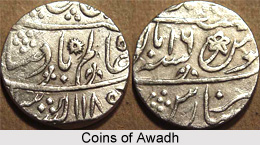
The political unity of Awadh can be traced back to the time when it was the ancient Hindu kingdom of Kosala with its capital as Ayodhya. The region of Awadh was also known as the "Granary of India". It was considered to be strategically important for the control of the fertile plain between the Ganges and the Yamuna rivers known as the Doab. Culture of Awadh The cuisine of the Awadh region is famous all over the globe as it has its own distinct Nawabi style and flavour. The sumptuous cuisines of this place include 'Biryanis' and 'kebabs'. These primarily originated from the city of Lucknow which is greatly influenced by the Mughal cooking techniques. The Bawarchis (cooks) of Awadh gave birth to the dum style of cooking on a slow fire. The richness of Awadh cuisine lies not only in the variety of cuisine but also in the ingredients used like paneer, and rich spices including cardamom and saffron. The royalty of Awadh was also famous for indulging in extravagant pastimes like elephant and rooster fight. Even the game of kite flying which is considered to evoke passionate involvement among the flyers was a main feature of this region. The magnificent skyline of the city of Awadh is living examples of the architectural ingenuity of the Nawabs. |
| ||||||||||||||||||||||||||||

