
Vedic period extended from about 2000 B.C. to 560 B.C. The historians have divided the Vedic age into the Age of the Mantras, the Age of the Brahmanas and the Age of the Upanishads. Vedic religion is like a parental religion from which many such religions arose that continue to exist even today. Vedic religion has its connections even with pre-Zoroastrian Persian religion and this cannot be denied, though it is not a direct descendant. So is the evidence of this being the predecessor of Hinduism, Jainism and Buddhism cannot be ignored. Vedic religion as already debated is a very ancient religion and from this has evolved these different religious categories. Vedic religion propagated the Vedic pantheon which held the unitary view of the universe with God seen to be assuming different forms of Isvara which is God`s personal feature, Paramatma being a localized feature and Brahman God`s impersonal energies.
The Mantras were created by the poets, the Brahmanas, were the elaborate ritualistic treatises and the Upanishads consisted of secret teachings in context to mysticism. The religious poets in the Veda group their way towards the perpetual Spirit and leave behind a trail of broken idols and abandoned faiths. A firm search for unity was what they were concerned with. Same epithets had been used to describe several gods. This resulted in an overlapping of divinities which was then inferred that they were all in one spirit. This type of worship was called Monotheism. However this claim cannot be fully supported.
At times the creative power which is common to all gods is personified and made into a supreme divinity for a time. In this way a series of divinities develop who are meant for certain creations. Finally God is supreme power who is the contemplation of a Spirit in and beyond the world which is its partial manifestation.
In the hymns there are songs of Creation in which there is an attempt to reach the One which is beyond all categories of thought. The conception of Rita or cosmic order from which came the Indian ideals of Dharma and Law of Karma is another characteristic of the age of Mantras. Rita meant the cosmic and moral order. The gods were adored as the guardians of both cosmic and moral order. The order of the Universe was supposed to be maintained by Yajnas.
Gradually sacrifices became important and became more complex and in the Age of the Brahmanas. In this age the idea was developed that men was debt to the Gods, the Rishis, the Pitris and animals. The four ashrams had its origin in this age as they were organized along with the four varnas. The idea of varna-ashrama-dharma took shape in the minds of the people. Prajapati was the chief god and the creator of the world, Lord Vishnu becomes the personification of sacrifice and Lord Shiva is identified with the Vedic god, Rudra.
Thereafter, took place the first renaissance in Hindu religion which was represented by the Upanishads. These Himalayan treatises form the sources of all thought. They are accepted as authoritative revelation. Bhagavad Gita is probably their essence. However it can be considered that Hinduism laid its strong foundation in this age.
In the age of Upanishads conceptions like Brahman, Atma, Moksha, Samsara, Karma, Upasana and Jnana came into existence. The gods retreat into the backdrop, the priests become inferior, sacrifices are looked down, contemplation takes the place of worship and the acquisition of divine knowledge gains importance. True spiritual manhood was seen in this age. Jnana takes the place of Yajna during this age. Karma is given a broader meaning than ritual and is related to the concept of rebirth. Law of Karma and the process of Samsara were the fundamental bases of all schools of Hinduism, Buddhism and Jainism. Liberation from the cycle of births and deaths can be attained only through the realization of the spirit of the universe and the spirit of man. These concepts occupy the foreground of religious life. Varna and ashram recede into the background. Yoga and Tapas were not prominent in this age.
Vedic Religion
Vedic Religion dates back to ancient India. Vedas are a composition of ancient texts which are the oldest scriptures containing religious verses, functions and propitious occasions.
Recently updated articles in Religion in India
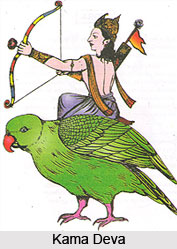
Kusumayudha
Kusumayudha is a name of Kamadeva, the Hindu God of Love. Depicted with a sugarcane bow and flower-tipped arrows, he represents attraction and longing...

Bhoyar Caste
Bhoyar Caste is largely found in the Central Provinces of the country. Traditional occupation of Bhoyars is agriculture. They are good cultivators and...
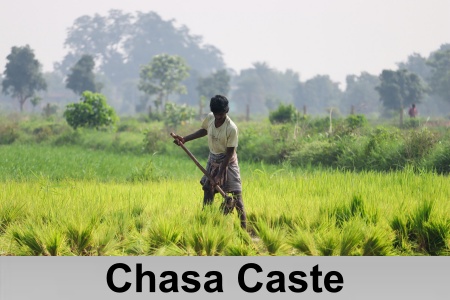
Chasa Caste
Chasa caste is a prominent agrarian community native to Odisha. Traditionally associated with cultivation and farming, Chasas have historically played...
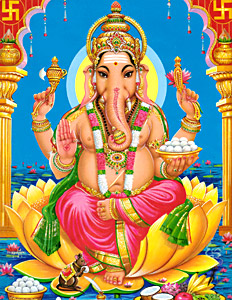
Vigneswara, A Form of Lord Ganesha
Lord Vigneswara is another form of Lord Ganesha or Vinayaka, prominently worshipped as the God of intelligence and good luck in the Indian subcontinen...
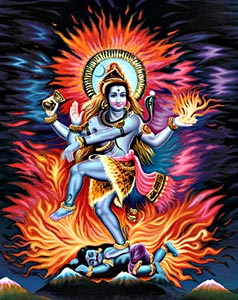
Maheswara
Maheswara, meaning “the Great Lord,” is a revered name of Lord Shiva in Hindu tradition. It represents Shiva’s supreme authority over creation, preser...
Related articles in Religion in India
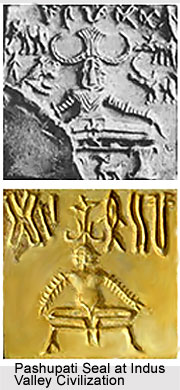
Religion in Indus Valley Civilization
Religion in Indus Valley Civilisation included Hinduism, Buddhism and Jainism. Details about the religion in Indus Valley Civilization have been gathe...
Iyer Brahmin
Iyer Brahmins are originally from Tamil Nadu of South India. They are known for their adherence to Advaita philosophy and Smarta traditions. Tradition...
Kumbhakar / Kumhar Caste
Kumbhakar or Kumhar caste is a traditional artisan community in India known for pottery making. Derived from Sanskrit word Kumbhakar, meaning potter,...

Gujjars in Mughal Era
Gujjars in the Mughal era enjoyed great power. Further their power increased with the decline of Aurangzeb, Mughal emperor.
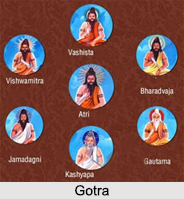
Gotra in Hinduism
In Hinduism, gotra refers to a lineage system tracing descent from ancient sages, primarily through the paternal line. Originating from Vedic traditio...