 The legacy of the Mughal Empire continues to captivate the imagination with its rich history and grandeur. The Mughal Emperors, renowned for their creation and governance of one of the greatest empires in history, left an indelible mark on the Indian subcontinent. Their ability to unite a diverse land under one rule is a testament to their organizational prowess and strategic brilliance.
The Mughal emperors held the supreme position of authority in the Mughal Empire, which encompassed present-day India, Pakistan, Afghanistan, and Bangladesh. They styled themselves as Badshah, meaning "great king" or Shahanshah, which translates to "emperor" in Persian. From the early sixteenth century to the mid-nineteenth century, these eminent rulers transformed the fragmented states of India into a unified whole. The legacy of Babur, Akbar, Shah Jahan, and Aurangzeb, among others, continues to resonate even though the empire itself no longer exists physically. Although their power declined rapidly in the colonial India, they still held nominal rule until the Indian Rebellion of 1857.
The Mughals were a branch of the Timurid dynasty, originating from Central Asia with Turco-Mongol heritage. The empire`s founder, Babur, a Timurid prince from the Fergana Valley in modern-day Uzbekistan, was a direct descendant of the renowned Central Asian conqueror, Tamerlane, and had ancestral ties to Genghis Khan through Timur`s marriage to a Borjigin princess.
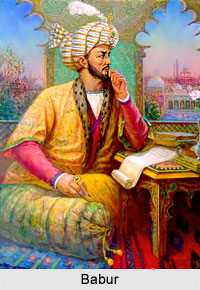
Babur
Born on February 14, 1483, Babur laid the foundation of the Mughal Empire in India. As a Timurid prince, he harbored ambitions to conquer the Delhi Sultanate. Exploiting internal rivalries within the Sultanate of Ibrahim Lodhi, Babur ventured into Hindustan. He took advantage of an invitation from Daulat Khan Lodhi, the governor of Punjab, and Alam Khan, the uncle of Ibrahim Lodhi. In 1526, Babur fearlessly led his veteran army of 12,000 against the enormous Lodhi battalion.
 Babur`s strategic brilliance was evident in his use of advanced warfare mechanisms that his opponents were not familiar with. Employing firearms, guncarts, superior cavalry, and mobile artillery, Babur achieved a resounding victory in the First Battle of Panipat. This battle is often considered the first "Gunpowder" victory by Western historians
Babur ruled over India from 1526 to 1530. Despite a relatively short reign, Babur made significant contributions. He defeated the Delhi Sultanate, establishing Mughal rule in northern India. He introduced Central Asian influences, including the use of gunpowder artillery. Babur`s memoir, the Baburnama, provides valuable insights into his life and the early years of the Mughal Empire. His reign paved the way for future expansion of the Mughal dynasty.
Humayun
Babur was succeeded by his son Humayun. He reigned over the Mughal Empire in India from 1530 to 1540 and again from 1555 to 1556. However, Humayun did not inherit his father`s wisdom. His ascension to the throne proved challenging, as he faced opposition from his own brother, Kamran, whom he had entrusted with the responsibility of ruling Kabul. Kamran took advantage of Humayun`s leniency and asserted greater independence.
Despite battling numerous challenges, Humayun made significant contributions to the empire. He expanded Mughal territories in both directions, conquering parts of present-day Pakistan and Bangladesh. Humayun also promoted cultural exchange and patronized the arts, fostering a vibrant artistic and intellectual atmosphere. His reign laid the groundwork for the Mughal style of architecture and art that reached its pinnacle under his son, Akbar. Humayun faced exile and temporary loss of power which established diplomatic ties between the Safavid and Mughal courts, leading to significant West Asian cultural influence in the Mughal court. Humayun`s eventual return to India in 1555 marked the restoration of Mughal rule, but his untimely death shortly thereafter halted his efforts to solidify the gains made by his father.
Akbar
The Mughal Empire reached its zenith during the reign of Akbar, earning him the epithet of "Akbar the Great." Akbar, meaning "the Greatest One" in Persian, lived up to his name. Akbar, considered one of the greatest Mughal emperors, reigned over India from 1556 to 1605. His reign marked a golden era for the Mughal Empire. Akbar implemented policies of religious tolerance, promoting harmony among Hindus, Muslims, and other communities. Through marriage alliances with Indian Rajput and Persian princesses, Akbar integrated diverse cultural influences into the fabric of the empire. His reign was marked by significant territorial expansion and administrative reforms in Mughal Empire.
Akbar introduced a centralized administration, economic reforms, and land revenue systems that fostered stability and prosperity. Akbar`s military campaigns expanded the empire to encompass much of the Indian subcontinent. He was a patron of the arts and encouraged the development of a distinct Mughal style in architecture, painting, and literature. Akbar`s reign stands as a testament to his visionary leadership and his commitment to creating a diverse and culturally vibrant empire.
Jahangir
Jahangir, the fourth Mughal emperor, ruled over India from 1605 to 1627. He was a stark contrast to his wise father. During Akbar`s lifetime, Jahangir rebelliously demanded possession of Agra. He later acquiesced realizing his probability of becoming the next Mughal emperor after his father. Nevertheless, Jahangir was characterized by restlessness and unfulfilled passions but under him the Mughal empire witnessed a flourishing transformation in art and culture.
His reign was marked by a focus on cultural and artistic endeavors. Jahangir`s court became a hub of artistic and intellectual activity, with the emperor himself being a patron of the arts. He commissioned beautiful paintings and encouraged the growth of Mughal miniature painting. Jahangir also expanded the empire`s territories, particularly in the Deccan region, through military campaigns. He emphasized diplomacy and maintained peaceful relations with neighboring kingdoms. Additionally, Jahangir`s reign saw the flourishing of the Mughal garden tradition, with the creation of famous gardens like Shalimar Bagh in Kashmir.
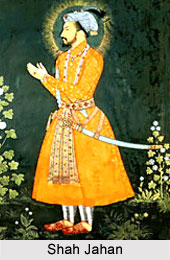
Shah Jahan
Shah Jahan, the third son of Jahangir became the fifth Mughal emperor. He reigned over India from 1628 to 1658. His reign is often regarded as the pinnacle of Mughal architecture and grandeur. Shah Jahan commissioned the construction of several iconic monuments, most notably the magnificent Taj Mahal, a testament to his love for his wife Mumtaz Mahal. He also built the Red Fort in Delhi and the Jama Masjid, one of the largest mosques in India. Shah Jahan focused on administrative reforms, promoting justice and effective governance.
Despite Shah Jahan"s architectural achievements, his reign also witnessed financial strain due to costly construction projects. He conducted an expensive military campaign to recover territories but incurred substantial financial costs without significant land acquisition. However, the Mughals successfully gained control over the Deccan states of Golconda and Bijapur through the assistance of Fateh Khan, the cunning son of Malik Ambar. Shah Jahan`s reign was marked by relative peace, as the empire experienced a respite from foreign invasions. Shah Jahan`s legacy remains etched in the beautiful structures he left behind, symbolizing the splendor of the Mughal Empire.
Aurangzeb
Aurangzeb, who ascended the throne in 1658, cemented his position through a blood-stained struggle against his own brothers. Adopting a strict and orthodox interpretation of Islam, Aurangzeb implemented a series of policies that aimed to Islamize the empire and suppress other religious communities. He reimposed the jizya tax on non-Muslims, demolished Hindu temples, and imposed restrictions on the practice of non-Muslim religions. These policies created tensions within the empire and alienated many non-Muslim subjects, leading to widespread discontent.
Aurangzeb`s reign was also marked by constant military campaigns to expand the empire and assert Mughal authority. He waged wars against various regional powers, such as the Marathas in the Deccan, the Rajputs in Rajasthan, and the Sikhs in Punjab. While he achieved some military successes and temporarily extended Mughal control, the prolonged and costly nature of these campaigns strained the empire`s resources and contributed to its decline.
Decline of the Mughal Empire
After Aurangzeb`s death in 1707, the Mughal Empire entered a period of decline characterized by weak and ineffective rulers, regional revolts, and the emergence of independent states. The empire faced external threats from the British East India Company, who gradually expanded their control over various parts of India through a combination of military force, diplomacy, and economic exploitation. The reign of later Mughal emperors like Shah Alam II, Muhammad Shah, and Bahadur Shah Zafar witnessed a period of decline and fragmentation for the Mughal Empire.
Muhammad Shah, who reigned from 1719 to 1748, faced several obstacles from neighboring kingdoms. During his rule, the empire began to break apart, with large portions of central India falling under Maratha control. The empire became increasingly weak and dependent on external powers for protection.
Shah Alam II, who ruled from 1759 to 1806, faced numerous challenges from regional powers and foreign invasions. His authority was greatly diminished, and he became a pawn in the hands of various factions, including the Marathas and the British East India Company. His reign marked the loss of central authority and the rise of regional powers.
The Battle of Plassey in 1757, where the British decisively defeated the last Mughal ruler, Shah Alam II, marked a significant turning point. The Mughals were reduced to figureheads with nominal authority, while the British established their dominance over large parts of the subcontinent.
Bahadur Shah Zafar, the last Mughal emperor, ruled from 1837 to 1857. His reign was marked by political turmoil, as the British East India Company gained control over large parts of India. Zafar was the nominal leader of the Indian Rebellion of 1857, also known as the Sepoy Mutiny, but the rebellion was ultimately crushed by the British. Zafar was deposed and exiled to Burma, marking the end of Mughal rule in India.
Legacy of Mughal Empire
Despite the decline and eventual dissolution of the Mughal Empire, its cultural and architectural contributions endure to this day. The Mughal Emperors were great patrons of the arts, literature, and architecture. Mughal architecture blended Persian, Indian, and Central Asian styles, creating a unique and distinctive architectural tradition. The Mughal rulers also patronized the development of miniature paintings, which flourished under their patronage, depicting themes from court life, epic stories, and religious narratives.
Additionally, the Mughal Emperors played a significant role in shaping Indian cuisine, introducing new ingredients, flavors, and culinary techniques. Many Mughal-inspired dishes, such as biryani, kebabs, and kormas, remain popular in Indian cuisine today.
The Mughal Emperors left an indelible mark on the Indian subcontinent through their political achievements, cultural patronage, and architectural marvels. While the empire eventually declined and was replaced by British colonial rule, the legacy of the Mughals continues to captivate and inspire people around the world.
Mughal Emperors
The Mughal emperors were a line of powerful and influential rulers who established and ruled over northern part of India from 16th to the 19th century. They left a lasting legacy, known for their architectural marvels, cultural achievements, and administrative reforms. Prominent Mughal emperors include Akbar, known for his religious tolerance and Shah Jahan, who built the iconic Taj Mahal.