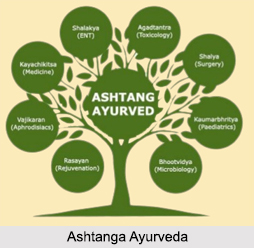
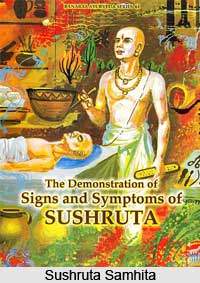
 Samadhatu, the very term first made its presence felt in the definition of health given by Sushruta, the founding father of surgery in India. According to Ashtang Ayurveda, `Nature works on the principle of balance; hence this balance should be maintained. There should be balance inside and outside the body.
If one eliminates all toxic imbalances from the body, we can re-establish a state of health. To achieve this kind of stability within the body, Ayurveda lays much stress on the functions of the body rather than on the structure of the body. This angle of thought has given rise to the concept of Samadhatu.
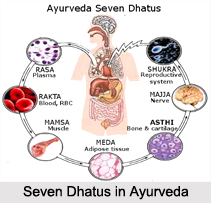
The dhatus are a supporting part of the body bounded by the skin which are generated from the foetus stage and are then sustained by nutrition during the rest of a person`s life. The food that we consume is assimilated in our body in the form of ahar rasa which helps in survival, growth and fortification. From this ahar rasa originates the life sap or jeevan rasa which is the preliminary source of the dhatus. There are seven dhatus or body tissues in all: rasa, rakta, mansa, medh, asthi, majja and shukra dhatu. From rasa (life sap) the body builds up rakta (blood), from rakta it develops mansa (muscles), from mansa originates med (fat), from med is developed asthi (bones), from asthi the body generates majja (nervous system) and from majja is produced shukra (semen). Samadhatu signifies an equilibrium condition when all the seven tissues of the body are carrying out their respective functions properly.
Each of the seven dhatus has a different function that is properly carried out in the Samadhatu state. Rasa or the life sap flows through various channels and nourishes the body .It soothes the senses, creating peace and satisfaction in the mind. Rakta or blood is synonymous to jeevana or life. By maintaining the normal activities it increases vitality and imparts a natural glow to the skin. Mansa or muscle act as a covering sheath to the bones and contributes to the strength of the body. The function of Meda is to lubricate the body.
Medha also provides strength to the body and the bones. Asthi or bone attaches itself to the muscles, thus providing support to the body and rendering muscular action possible. Majja or the nervous system, which fills the cavities of bones, contributes to the viscidity and strength of the body.Shukra or semen, which is the most important tissue according to Ashtang Ayurveda, initiates proper sexual activities and sense satisfaction. This tissue, which has the potential to be ejected during the act of copulation, is responsible for bodily vigour and impregnation. So we see that the Samadhatu condition is absolutely essential for the proper co-ordination of bodily activities.
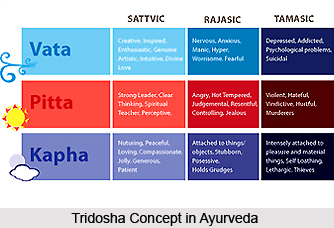
In the Samadhatu condition, the immune mechanism is strong and the body is protected from external invasions. If there is degeneration of the dhatus, then the body construction collapses and in due course life ends. Intake of proper food is mandatory for the body to retain its Samadhatu condition. This explains why any living creature (including human beings) survives and grows with food and gradually perishes without it. Disruption in the activities of the three doshas (vaat, pitta and kafa) affects the dhatus. These affected or defective dhatus are a great hindrance to a healthy life. Proper diet and life style ( ahar and vihar in Ayurvedic terminologies ) help in maintaining the balance of doshas which in turn keeps the dhatus healthy.
In conclusion we can say that Samadhatu condition is vital for a healthy body. In case this equilibrium condition is hampered, immediate treatment is essential to prevent bodily loss and eventual destruction of life. Ashtang Ayurveda prescribes suitable diet and lifestyle that would ensure the Samadhatu condition.