Forms of Indian theatre are numerous and the rich account of Indian drama unveils the verity that Indian theatre has a deep rooted relation with Indian epics and Indian mythologies. This later not only structured the rich forms of Indian theatre but also aided in making Indian `Natya ` to stand apart as a whole new form of expression. India has the most recollect tradition in theatre which goes back to 5000 years. According to the rich timeline of Indian natya, it has its roots deeply allied with Vedic ritualism and with age old socio cultural anthropology which delineated the development of various dramatic forms of Indian theatre.
History of Indian Theatre
The history of Indian theatre that goes back to the mythological era, states that the ancient drama which was once the illustration of the myths gradually became a rather structured art form with the passage of time. Sanskrit Dramas which were once the aristocratic way of reflecting the unedited realities of life slowly became lot more structured and contemporary. The forms of Indian theatre therefore can be broadly classified into six different genres like Classical Indian dance drama, traditional Indian theatre, Indian Folk Theatre, Indian Puppet theatre, modern Indian theatre and the Indian Street Theatre. Forms may differ, one contour might not give the same spectrum like the other yet every form of Indian theatre carries the essence of the rich cultures of India, the flush of its fiestas and most importantly the vibrancies of Indian populace.
 Forms of Indian Theatre
Classical Indian Dance Drama
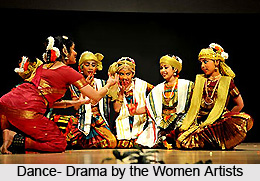
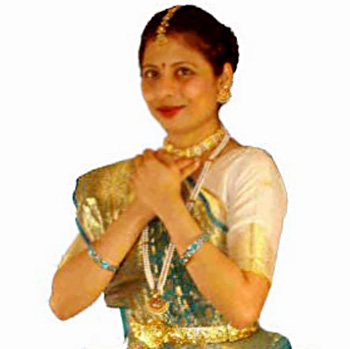
The aristocratic and religious fervour of the Sanskrit dramas which ruled the Indian drama and art forms during the ancient era somewhat lost its grandeur with the introduction of Indian classical dance drama. Developed in the early 15th century Classical Indian dance drama gradually became a much cherished art form of the classical Hindu temple culture. It became such a harmonious art form where ideas, thoughts, dramaturgy and Natya gained an articulate dimension through rhythm, `mudraas` and timber. Classical Indian dance drama amidst the artistic forms of Kathak, Bharatnatyam, Odissi, Kuchipudi, Mohinittam and Yakshagana gained a rather cohesive and consistent dimension. Classical Indian dance drama therefore became an art form of mouthing a lot amidst mudraas and rhythm whilst without saying anything. Quite ideally therefore Classical Indian dance drama gradually established itself as a typical form of Indian theatre which is definitely an effort of personating the Divine through `rasas`, `tune` and mudraas.
 Traditional Indian Theatre
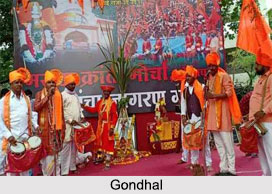
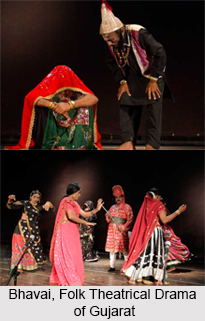
The forms of Indian theatre acquired a rather a whole new facet with the emergence of the traditional Indian theatres. The mudraas and rasas of the classical Indian dance drama was rather rationised with the traditional aspects of Indian theatre. Traditional theatre performances at that time were mainly connected with various Hindu religious cults and divinities and were mainly performed by the devotees. Drama was then rather an illustration of virtue and vices. Traditional Indian theatre as an art form was therefore a reflection which was definitely larger than life and also the very smartness of the contemporary realities were also missing yet it is not an exaggeration to say that it was the beginning of a particular form of Indian theatre where apart from the verve of eposes, lyrics, epics and Sanskrit texts and plays dialogue, monologue and soliloquies made their presence felt in a large way. `Jatra`, `Rasleela`, `Bhavai`, `Theyyam` and several other types of traditional theatres are performed in the country.
Folk Theatre In India
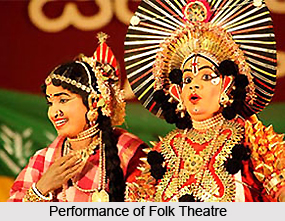
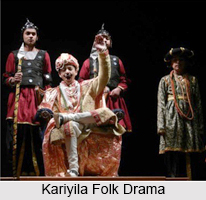
Gone are the days of traditional aspects which ruled the Indian theatre during the medieval period. Today a reorganized and streamlined form of Indian theatre has emerged which originated during the late 15th century. Folk theatre as it has been named this art form actually has its roots associated with the times of the ancient rimes. Although as a theatre form it emerged during the 16th century yet Folk theatre actually boasts of its diachronic relation with ancient Vedic literature and even with Buddhist literature. Folk theatre as a typical theatre form gradually emerged as a regional form of drama based on the attributes of local religion, legends, art, vernacular, history and mythology. Indian folk theatre can therefore be categorized into two distinct categories like the secular and religious; curiously, the two art forms continuously influenced each other whilst making Indian folk theatre to stand apart with dignity. `Veethi Nataka`, `Burraktha`, etc are a few of the various kinds of Indian folk theatre.
 Indian Puppet theatre
Forms of Indian theatre witnessed a marked change with the introduction of the Indian puppet theatre during the fag end of the medieval period. Although puppetry started in a rather crude way in the cradles of evolution yet it is after the immense success of Indian folk theatre Indian puppet theatre gradually made its presence felt. Shadow puppetry became popular as one of the classical forms of the Indian theatre. `Natyashastra` by Bharata unfolds the fact that even in the ancient age puppetry was there. The most important reference is to the `Sutradhar` who used to control and manipulate the dolls with `Sutra` or strings. Ancient India has accepted puppet as a divine creation and puppetry therefore stood apart as an eminent theatre form of India. String puppets, rod puppets and glove puppets are amongst the different forms of puppet theatre which are quite popular in India.
 Modern Indian theatre
Contemporary Indian theatre can be traced back to the British era. The harmonized blend of Eastern and Western philosophy, the impact of London Theatres later added that contemporary tinge to the age old aspects of Indian drama. Change was marked in the dramatic form however it is right after the independence of India and with the alteration in the socio and political set up in India Indian theatre and drama became lot more realistic and naturalistic. Historical plays, mythological characters, virtues and vices were for the first time not given that much of importance and for the first time in India a whole fresh enunciation was bestowed in Indian drama and thus developed a new form of Indian theatre - The Modern Indian Theatre. Modern theatre is generally classified into two types: amateur and experimental.
Indian Street Theatre
One of the most important and contemporary forms of Indian theatre is the Indian street theatre. In the recent era street theatre has segregated itself as a means of illustrating the socio political issues and an effort to reach the common people. These short, direct, intimate and effective street theatres are a significant ways of handling issues. Indian theatre gradually broke the barriers of orchestra, galleries, so called viewers and pits and reached the common people at the most unexpected places like at the market, bus stop and garage.
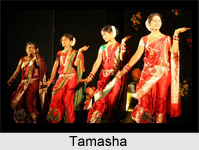
The various forms of Indian theatre thus portray the journey of Indian theatre from the eposes to the contemporary theatres. India boasts of numerous types of regional theatre, which involve the types of theatre prevalent amongst different inhabitants of the various Indian states.
Forms of Indian theatre
Forms of Indian theatre unfolds the saga of the journey from eposes to the modern themes.