Introduction
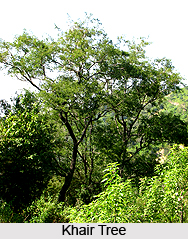
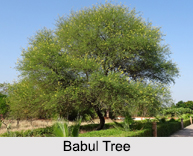
In the Indian subcontinent one of the species of acacia called Acacia Catechu is known as `Khair`. It is a medium sized deciduous tree with crooked and forked truck. Its growth can be traced in both natural and plantation forms in most parts of the nation up to an elevation of 1300 meters above sea level. In India the Acacia Catechu is categorized mainly into three divisions: Catechu, Catechuoides and Sundra. In India the Acacia Catechu is widely found in Uttar Pradesh, Jammu, Punjab, Himachal Pradesh, Madhya Pradesh, Bihar, Odisha and Andhra Pradesh. The other species known as Acacia Catechuoides is found in the terrain region of Sikkim, West Bengal and Assam whereas the third variety also known as the `red catechu` or `lal khair` is prevalent in Gujarat, the Deccan, Rajasthan and southern parts of Maharashtra.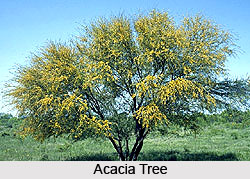
Features of Acacia Tree
The Acacia tree is distinguished by its thorny branches, bipinnate leaves, and small yellowish flowers that form spherical clusters. It produces pods filled with tannin-rich seeds, which are widely utilized in dyeing, tanning, and traditional medicine.
The plants often bear spines, especially those species growing in arid regions. These sometimes represent branches which have become short, hard and pungent, or sometimes leaf-stipules. Acacia armata is the Kangaroo-thorn of Australia and Acacia erioloba is the Camelthorn of Africa. Acacia seeds can be difficult to germinate. Research has found that immersing the seeds in various temperatures (usually around 80 degrees Celsius) and manual seed coat chipping can improve yields to approximately 80 percent.
Acacia trees are deciduous, shedding their leaves seasonally in response to environmental changes like temperature shifts and daylight variations. Before falling, the leaves turn yellow or reddish, adding vibrant color to the forest landscape.
Benefits of Acacia Tree
Acacia are being used for a variety of purposes. Some of the species have important uses in the traditional medicine like ayurveda as the chemical compounds found in them are universally is used in the perfume industry. The plant is also believed to help in the treatment of premature ejaculation. Acacia also serves ornamental purposes. The Egyptians of the ancient times used to put acacia in the paints. The purpose of using acacia in the perfume industry can be traced back to times immemorial. One of the species of acacia, known as, “Acacia Farnesiana” is used in the perfume industry due to its strong fragrance.
Acacia is also used for an assortment of consumption products. In the eastern part of the globe the feathery shoots of acacia are used in cooking. Then there are some species of acacia, which yield gum. In India the acacia catechu has been exploited commercially in tannin and Katha industry for decades. To the people living in the rural parts of India the acacia is a subsidiary source of income as they are totally dependent on this plant on their day-to-day fuel, building material, fodder and others.
Use of Acacia in Food
Acacia seed pods, also known as Guajes, serves as part of a botana in Oaxaca, Mexico. Acacia seeds are often used for food and a variety of other products. In Burma, Laos and Thailand, the feathery shoots of Acacia pennata (common name cha-om, and su pout ywet in Burmese) are used in soups, curries, omelettes, and stir-fries. Honey made by bees using the acacia flower as forage is considered a delicacy, appreciated for its mild flowery taste, soft running texture and glass-like appearance. Acacia honey is one of the few honeys which do not crystallize. In Mexico the seeds are known as Guajes. Guajes or huajes are the flat, green pods of an acacia tree. The pods are sometimes light green or deep red in colour, both taste the same. Guaje seeds are about the size of a small lima bean and are eaten raw with guacamole, sometimes cooked and made into a sauce. They can also be made into fritters. The ground seeds are used to impart a slightly garlicky flavour to a mole called guaxmole (huaxmole). The dried seeds may be toasted and salted and eaten as a snack referred to as "cacalas".
The first-known predominantly vegetarian spider Bagheera kiplingi, was first documented and filmed in 2009 feeding from the tips of the acacia plants which are known as Beltian bodies. This part contains high concentrations of protein. Acacia is listed as an ingredient in Sun Drop, Fresca, a citrus soft drink, RC Cola, Barq`s root beer, Full Throttle Unleaded Energy Drink, Strawberry-Lemonade Powerade, Altoids mints, Langer`s Pineapple coconut Juice and Wrigley`s Eclipse chewing gum.
The tree’s seeds are rich in protein, making them a valuable nutritional resource. Kattha (catechu), an extract from its heartwood, imparts the distinctive flavor and red hue to paan, a traditional Indian and Southeast Asian preparation of betel leaf (Piper betle) combined with areca nut and slaked lime paste.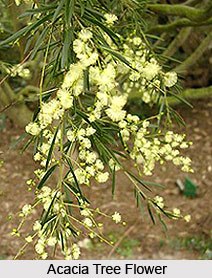
Medicinal Uses of Acacia Tree
Many Acacia species have important uses in traditional medicine. Most of the uses have been shown to have a scientific basis since chemical compounds found in the various species have medicinal effects. In Ayurvedic medicine, Acacia nilotica is considered a remedy that is helpful for treating premature ejaculation. A 19th century Ethiopian medical text describes a potion made from an Ethiopian species of Acacia (known as grar) mixed with the root of the tacha, then boiled, as a cure for rabies. An astringent medicine high in tannins, called catechu or cutch, is procured from several species, but more especially from Acacia catechu, by boiling down the wood and evaporating the solution so as to get an extract.
Ornamental Uses of Acacia Tree
A few species are widely grown as ornamentals in gardens. The most popular perhaps is Acacia dealbata (Silver Wattle), with its attractive glaucous to silvery leaves and bright yellow flowers. It is erroneously known as "mimosa" in some areas where it is cultivated, through confusion with the related genus Mimosa. Another ornamental acacia is Acacia xanthophloea (Fever Tree). Southern European florists use Acacia baileyana, Acacia dealbata, Acacia pycnantha and Acacia retinodes as cut flowers and the common name there for them is mimosa. Ornamental species of acacia are also used by homeowners and landscape architects for home security. The sharp thorns of some species deter unauthorized persons from entering private properties, and may prevent break-ins if planted under windows and near drainpipes. The aesthetic characteristics of acacia plants, in conjunction with their home security qualities, make them a considerable alternative to artificial fences and walls.
Functional Uses of Acacia Tree
Beyond its role in food, ornamentation, and medicine, the Acacia tree serves multiple practical purposes.
Fodder: Its branches are commonly harvested as goat fodder and occasionally fed to cattle.
Wood: Valued for furniture and tools, its dense wood is also used for firewood and charcoal.
Dyeing & Tanning: The heartwood extract is essential in dyeing, leather tanning, and preserving fishing nets. It also functions as a viscosity regulator in oil drilling, enhancing industrial applications.