Home > Society > Religion in India > Concept of Sesatva
Concept of Sesatva
Concept of Sesatva essentially means sub-ordination to God. Since all sentient and non-sentient beings are dependent on the Ishwara for their very existence, they are controlled by Him and are therefore subservient to him.

Share this Article:

The concept of Sesatva in Vaishnava theology means subordination. It is not a new idea that has been exclusively propounded by Vaishnava theology. It is in fact evolved out of the concept of sarira or body referred to in the Antaryami Brahmana of the Brhadaranyaka Upanishad. The famous passage in this Upanishad has described all the entities in the universe, both non-sentient as well as sentient, starting from the five physical elements and culminating in the soul as the sarira of the Paramatman. The term sarira is defined by Ramanuja, in order to make it applicable to all the twenty-two entities enumerated in this Upanishadic passage, as that substance which is wholly supported and controlled by a spiritual Being and that which exists as entirely dependent on that Being.

In other words, all sentient and non-sentient entities including the jivas constitute the sarira or body of Ishwara in the technical sense that the former are wholly dependent on the latter for their existence; they are completely controlled by Ishwara and they subserve the purpose of the Supreme Being. This is how the concept of Sesatva is explained.

Three concepts are used to explain the organic relationship that exists between Brahman and the universe of cit and acit. These are: adhara-adheya (the sustainer and the sustained), niyanta-niyamya (the controller and the controlled) and the sesi-sesa (the Supreme Lord and the dependent). Jiva in relation to Paramatman is adheya, niyamya and sesa. It is out of this threefold character of the concept of sarira that the Vaishnava theology has formulated the theory of jiva as nirupadhika sesa.
Share this Article:

Related Articles

More Articles in Religion in India


Religion in Indus Valley Civilization
Religion in Indus Valley Civilisation included Hinduism, Buddhism and Jainism. Details about the religion in Indus Valley Civilization have been gathered from archaeological artefacts.
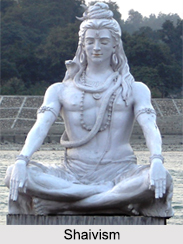
Shaivism Religion
Shaivism is the second largest “religious community” in modern India with its roots deeply seated in the Hindu Vedic belief.
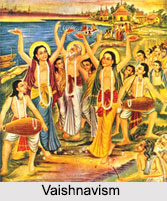
Vaishnavism
Vaishnavism is among the more popular denominations of Hinduism, with its own distinctive ideas about spirituality and morality. Vaishnavism concentrates on worshipping god Vishnu and of his incarnations.
Hinduism Religion
Hinduism is more of a philosophy which is a way of living according to the understanding of the principles of Vedas and Upanishads.
Islam
Islam is a religion that beliefs in Allah as the one and only God and creator of the Universe. Islamic law or Sharia is characterised by the five pillars of Islam which comprise the essential duties of every Muslim.
Christianity
Christianity is a religion based on the teachings and life of Jesus Christ and it is the largest religion in the world.
Buddhism
Buddhism is a religion and a philosophy that encompasses a wide variety of beliefs, practices and traditions that are chiefly based on the teachings of Gautama Buddha and its later disciples.
Jainism
Jainism chronologically preceded the religion of Buddhism. It is considered as one of the oldest religions of India. Jainism in India shared with Hinduism and Buddhism. It is an integral part of South Asian religious belief and practice, but it is not a Hindu sect and not a Buddhist heresy, as earlier scholars believed.
Zoroastrianism
Zoroastrianism, closely related to Judaism, Christianity and Islam was founded by Zoroaster.
Sikhism
Sikhism is a religion started by Guru Nanak in land of Punjab in 15th century A.D.
Iyer Brahmin
Iyer Brahmins are originally from Tamil Nadu of South India. The Iyers have always taken an interest in preserving the arts and sciences.
Barai Caste
Barai Caste is the professional cultivator caste of betel leaf. Tamboli and Pansari are the terms used indifferently for Barai Caste. The diversity of names of the sub-divisions of Barai Caste discloses the mixed elements that formed the caste.
Dangi Caste
Dangi Caste is largely distributed in the high land regions, and the word Dangi is said to have originated from the geographical features of their territory. Main occupation of the members of Dangi Caste is cultivation.
Nadar Caste
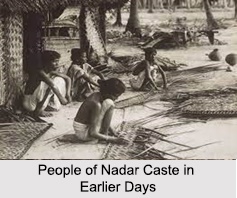
One of the most renowned castes of Tamil Nadu is the Nadar caste. The Nadar community is a mixture of sub-castes and classes of different origins, which came under one banner of Nadar caste gradually.
Kumbhakar Caste
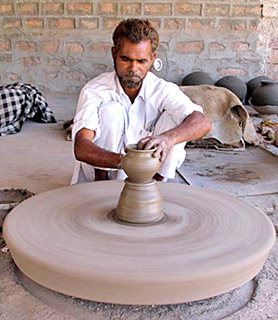
Kumbhakar is the potter caste who manufactures all kinds of earthen vessels.
Gujjars in Maharashtra
Gujjars in Maharashtra have several sub-castes. Here, in this state the Gurjars are listed as a separate caste. They are included in the Maharashtra OBC list.
Awasthi Brahmin
Awasthi is a surname or a family name of a particular sub-caste of Brahmins in the Indian continent.
Bhoyar Caste
Bhoyar Caste is largely found in the Central Provinces of the country. Traditional occupation of Bhoyars is agriculture. They are good cultivators and mostly grow sugarcane.
Gujjars in Mughal Era
Gujjars in the Mughal era enjoyed great power. Further their power increased with the decline of Aurangzeb, Mughal emperor.
Origin of Vaishnavism
Origin of Vaishnavism shares its attributes to many sources and religious evolution, dating back to pre-Vedic epoch.
Gotra in Hinduism
In Hinduism, gotra refers to a lineage system tracing descent from ancient sages, primarily through the paternal line. Originating from Vedic tradition, it plays a crucial role in identity and marriage customs. Individuals from the same gotra are considered to share a common ancestor and are traditionally prohibited from intermarrying.