
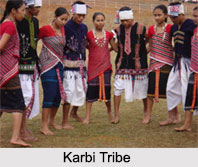
 Karbi Tribes are mainly dominated in the Karbi Anglong district of Assam. Some are also found in North Cochar Hills, Nagaon, Golaghat, Kamrup, Jorhat, Sonitpur and Lakhimpur districts of Assam and in the bordering states of Nagaland and Meghalaya. Karbi tribes possess a rich cultural frame and a distinctive life style. They have a tradition, culture, language, identity and ecological position of their own.
Karbi Tribes
Karbi Tribes are found in the hilly areas of Assam. They have maintained their culture that differentiates them as a separate ethnic group.
Introduction
Karbi Tribes are mainly dominated in the Karbi Anglong district of Assam. Some are also found in North Cochar Hills, Nagaon, Golaghat, Kamrup, Jorhat, Sonitpur and Lakhimpur districts of Assam and in the bordering states of Nagaland and Meghalaya. Karbi tribes possess a rich cultural frame and a distinctive life style. They have a tradition, culture, language, identity and ecological position of their own.Origin of Karbi Tribes
The Karbi Tribes belong to greater Mongoloid racial stock. Linguistically they belong to the Tibeto-Burman group. The Karbis belonged to western China and entered Assam from Central Asia through migration at the beginning of the 17th century A.D.
Society of Karbi Tribes
The Karbi is divided into three major divisions - Ronghong, Chintong and Amri. The Karbis have five clans called "Kur". These are Terang, Teron, Enghee, Ingti and Timung. Each of these five clans has several sub-clans. While Enghee and Timung have 30 sub-clans each, Terang and Teron have 6 sub-clans each and the remaining clan Ingti has only 4 sub-clans. These clans are completely exogamous and marriage between a boy and a girl belonging to the same clan can never take place since the children of the same clan are considered as brothers and sisters.
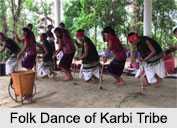 The Karbi tribes basically live on hill tops and they generally do not live in compact areas. Each village has a headman called "Gaonbura" or "Sarthe" who is appointed by the authority of Karbi Anglong Autonomous Council. The traditional village council of the Karbis is called "Me" and this council is composed of all the elderly male members of the village. The village council plays an important role in regulating the social, economic and religious life of the village.
The Karbi tribes basically live on hill tops and they generally do not live in compact areas. Each village has a headman called "Gaonbura" or "Sarthe" who is appointed by the authority of Karbi Anglong Autonomous Council. The traditional village council of the Karbis is called "Me" and this council is composed of all the elderly male members of the village. The village council plays an important role in regulating the social, economic and religious life of the village.Occupation of Karbi Tribes
Agriculture, shifting cultivation, food gathering are their main occupation while service, casual labour are the additional source of income. Different types of agricultural crops are cultivated of which paddy is the main crop.
Religious Life of Karbi Tribe
The Karbis believes in animism which consists of such a belief in the role of spiritual beings in human life. They believe in the immortality of the soul. Ancestor worship is also common. They worship deities locally known as "Arnam-atum". Their religion can be considered as polytheism as they believe in many Gods.
Festivals of Karbi Tribe
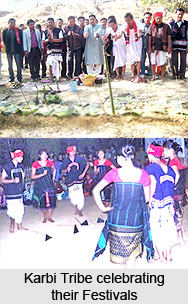 Festivals of Karbi tribe are many which they celebrate with great enthusiasm. Among the major festivals observed by the Karbis, the most popular ones are `Chojun Puja` or `Swarak Puja`, `Rongker`, `Chokkeroi`, `Hacha-Kekan`, `Chomangkan`, etc. The former four festivals that are Chojun Puja` or `Swarak Puja`, `Rongker`, `Chokkeroi`, `Hacha-Kekan`, are socio-religious in nature and `Chomangkan` is a social one.
Chojun Puja - The spot for `Chojun Puja` or `Swarak Puja` is usually selected near the house of the family willing to perform this puja. The puja is performed for the welfare and prosperity of the family.
Rongker - Rongker is another popular festival of the Karbi people. It is performed at the beginning of the New Year by propitiating different gods and goddesses for the well being of the entire village. The deities are worshipped by all the elderly male people of the village for seeking their blessings to protect the village from diseases, natural calamities during the year and also for good harvest. Interestingly, the women are not allowed to enter into the worship arena. Further, there is another kind of Rongker performed in a large scale. This type of Rongker which is performed at the beginning of every five years is called `Wofong Rongker`. This Wofong Rongker is performed for the well-being of all the people of the villages that fall within the jurisdiction of a Mauza (which means a revenue administrative region consisting of a number of revenue villages). Each revenue village is represented by the village headman and a number of village elders (male members only) in the performance of the Wofong Rongker. While the Rongker performed for a village is only of one day`s duration, the Wofong Rongker continues for two days.
Sokkerroi - Sokkerroi festival is observed when the paddy field is ripened to the fullest extent. The ripened paddy is cut and taken to a place specially cleared in the field. After that the paddy is collected. A large number of young men go and collect paddy in bags and carry it to home. There starts a great rejoicing and the young ones dance and celebrate. Sokkerroi literally means the carrying of the paddy from the field. In this festival, one person is selected as the leader who provides the leadership in dancing and singing. He is called "Lunse". He is the director of singing and dancing.
Hacha-Kekan - The next socio-religious festival is Hacha-Kekan, which is not exactly based on the folk-tales. Hacha-Kekan festival is mainly associated with after harvest rejoicings. Hence, it is assumed that the Hacha-Kekan is secular in its activities and differs substantially from other festivals. It principally differs from Rongker as this festival needs the propitiation of God.
Chomangkan - Although, the Karbis perform the funeral ceremony at the time of the cremation of the deceased, they also perform the death ceremony called "Chomangkan" and for offering prayers for the eternal peace of the deceased. This ceremony is basically the most elaborate and expensive socio-religious ceremony of the Karbis which continues for four days and four nights without any pause. The ceremony does not require any formal invitation to the people as all are welcome. In spite of the sad undertone, it is the proud day for the concerned family and they welcome all with great warmth. Everyone carries a symbolical rod with five branches and at the end of each branch; there is a wooden bird, which is called in Karbi language "Vo-rali". The whole rod is called "Jambili Athan". This is the symbolical representation of the tribe and it is also the symbol of clan unity.
Traditional Dress of Karbi Tribe
Traditional Dress of Karbi Tribe can be easily recognized by the artistic designs inherited from their forefathers. Karbis have their own traditional dresses and ornaments.
Recently updated articles in Tribes of India
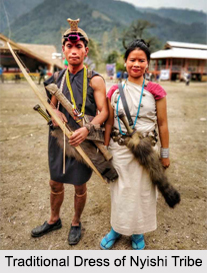
Traditional Dress of Nyishi Tribe
Traditional Dress of Nyishi Tribe is worn during festivals and social gathering. Men wear a cane helmet surmounted with the beak of the great Indian H...
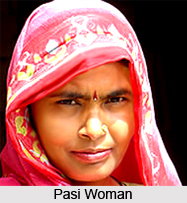
Pasi Community
Pasi is an aboriginal race of India and are mainly distributed over the northern region of the country. The traditional occupation of Pasi is the extr...

Bhojas
Bhojas have been described as a very important tribe in the Aitareya Brahmana. Historical records have said that the Bhojas were settled towards the s...
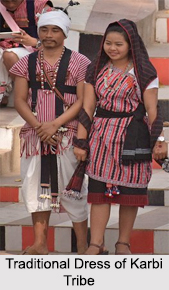
Traditional Dress of Karbi Tribe
Traditional Dress of Karbi Tribe can be easily recognized by the artistic designs inherited from their forefathers. Karbis have their own traditional...
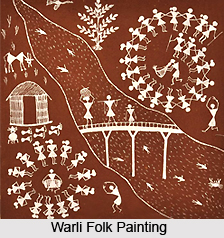
Indian Folk and Tribal Arts
Indian folk and tribal art are the exclusive handiwork of the section of people who belong to different social groups and it is richly enriched with a...
Related articles in Tribes of India
Sentinelese Tribe
Sentinelese tribal community is one of the most isolated and secluded tribes that are found in the whole world.
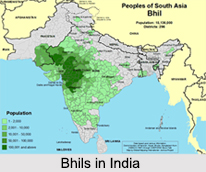
Bhil Tribe
The people of the Bhil tribe are the most widely distributed tribal groups in India.
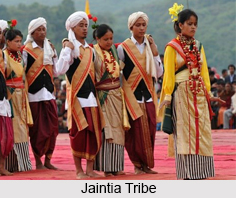
Jaintia Tribe
Jaintia Tribes are located in the Jaintia Hills of Meghalaya. They are also called the Pnars. They are famous for weaving of carpet, making of musical...
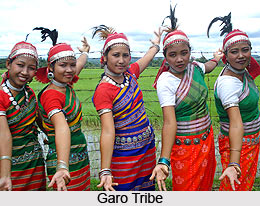
Garo Tribes
Garo Tribes are one of the matrilineal tribes of North-East India who reside in the Garo hills of Meghalaya. Historically, the tribe originated in Tib...
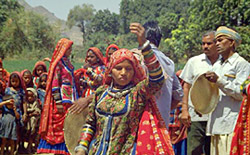
Garasia Tribe
The Garasia tribal community holds a significant position within Indian culture, renowned for their distinctive way of life and rich cultural heritage...