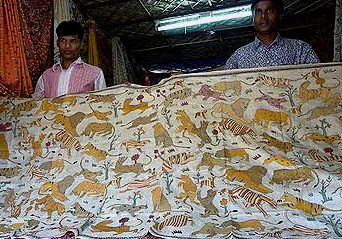
 Embroidery of India includes dozens of regional embroidery styles varying by different regions. The Indian embroidery has a wide variety due to the use of different materials. The various types of Indian embroidery contains different aspects of regional specialty like Gold embroidery of Jaipur, known as `Gota-Work`, Kantha embroidery of West Bengal, Karchobi embroidery, Kashida embroidery, Kasuti embroidery, Kathi embroidery, Patti Ka Kaam etc.
Zardozi Embroidery
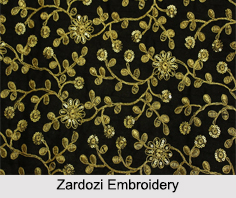
Zari is gold, and Zardozi embroidery is the glitteringly ornate, heavily encrusted gold thread work practiced in Rajasthan, Uttar Pradesh, Kashmir and Delhi. It is however synthetic or `tested` zari embroidery. Metal ingots are melted and pressed through perforated steel sheets, to be converted into wires. They are then hammered to the required thinness. Plain wire is called Badla, and round one is called Kasav. Smaller spangles are called Sitara, and tiny dots made of Badla are called Mukaish.
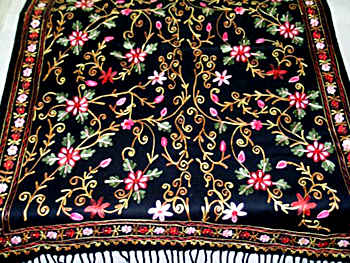 Kashmiri Embroidery
Kashmiri embroidery or Kashida is colourful. The workers often draw inspiration from the beautiful nature around. The colours are taken of flowers, creepers and chinar leaves, mango etc. The whole thing is created using one or two embroidery stitch styles. Kashmiri Embroidery is done on canvas base material with crystal threads. Pashmina and leather threads are also used in Kashmiri Embroidery. Sozni embroidery or Dorukha is often done so articulately that the motif appears on both sides of the shawl each side having a different colour. There is no wrong side. The same design is produced in different colours on both sides. Kashmir is also known for Phirans (woollen kurtas) and Namdahs (woollen rugs) with big floral embroidery having cheerful colours on them.
Papier Mache Embroidery
Another type of needle embroidery is known as Papier Mache embroidery because flowers and leaves are worked in satin stitch in bright colours. This is done either in broad panels on either side of the breadth of a shawl, or covering the entire surface of a stole.
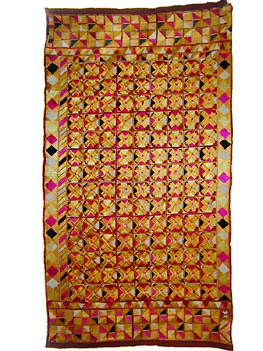 Gota Work
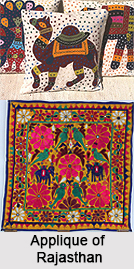
Akin to Applique, Gota work involves placing woven gold cloth onto other fabric to create different surface textures. Kinari, or edging, as the word means, is the fringed or tasselled border decoration. The art is predominantly practiced by Muslim craftsmen.
Phulkari Embroidery
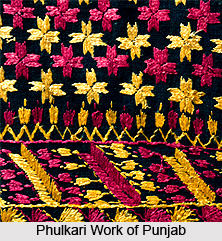
Embroidered extensively in Haryana and Punjab, the Phulkari shawl is a beautiful piece of clothing. Birds, flowers and human figures are normally embroidered on red or orange khaddar (coarse cotton cloth made of handspun yarn).The embroidery is usually done with silk or satin thread, in both a vertical and horizontal pattern so that when the phulkari is finally ready, the play of light on its shiny surface lends it magnificent beauty.
 Chamba Embroidery
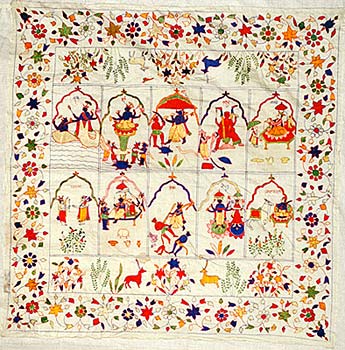
Richly embroidered with red and orange colours on silk scarves, Chamba embroidery is beautiful in design. They often depict scenes from the Mahabharata, the Ramayana and the Raslila of Radha and Lord Krishna. The embroidery is done with silk yarn on tussar (silk) or fine cotton.
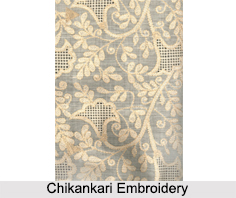
Chikankari Embroidery
Chikankari of Lucknow in Uttar Pradesh is well known for white thread embroidery on white or coloured cotton. Intricate and complex, this work is similar to what is commonly known as Shadow work. The beauty of the embroidery comes on fine muslin cloth, where one can see the stitches forming lace-like patterns on the underside.
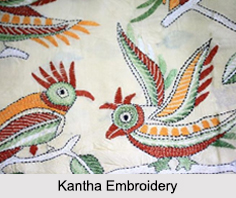
Bihar and Bengal are known for their simple embroidery called Kantha which are patterns traced in a running stitch with short gaps. Floral, animal and bird motifs embroidered on both cotton and silk are extremely popular.
Banjara Embroidery
The embroidery of the lamada gypsy tribe of Andhra Pradesh is known as Banjara which is a mix of applique with mirrors and beadwork. Bright red, yellow, black and white coloured cloth is laid in bands and joined with a white criss-cross stitch.
 Kasuti Embroidery
Dharwar (Karnataka) is home to Kasuti, a delicate single thread embroidery done on handloom saris. Motifs consist of temples, peacocks, elephants, flowering trees and geometric forms spread across the sari.
Aari Embroidery
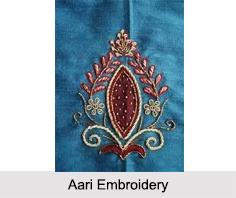
Aari work is another form of embroidery in India where the work is done by stretching the fabric on a frame and making the stitches from a long needle. The stitches are done by silk threads. This kind of work is mostly seen in Kashmir and Kutch (Gujarat).
 Other Embroideries of India
Indian embroidery gets a different recognition in Odisha and some parts of Gujarat where Pipli work is an important part of the decorative needlework. The embroidery of Kutch has an impact on the human mind for its intricate designs. The women of Rajasthan and Gujarat traditionally carry embroidered torans (frieze), dowry bags, shawls, cholis (blouses) and dupattas as part of their dowry. This kind of work can be identified by its use of tiny mirrors with colourful threads that shape floral designs. Crewel embroidery, same as chain stitch, is usually done with an awl (a small pointed tool for making holes) and is worked from underneath the fabric rather than above.