Introduction
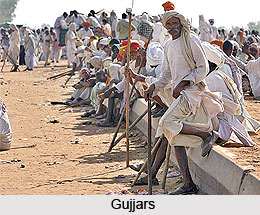
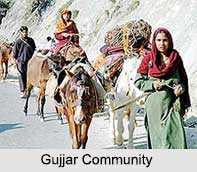 Gujjar Community, also known as the Gurjar community, are an ethnic group and caste of the Indian subcontinent. The Gujjars belong to the north-western part of India. Traditionally, the Gujjars belong to the Kshatriya Indian caste in Hinduism. However, they are mostly Muslims, a few being either Hindus or Sikhs. In India, Gujjars are categorized as "Other Backward Classes".
Gujjars are mainly found in the Indo-Gangetic plains and Himalayan Regions. Presently they are settled in Rajasthan and other parts of North India. Their languages include Gujari, Urdu language, Hindi language, Punjabi language, Pasto, Pahari, Kutchi, Gujarati language, Khowar, Balti, Kashmiri language, etc.
Profession of Gujjar Community
Conventionally, the Gujjars have been cattle breeders and milkmen. They were usually associated with herdsmen and shepherds, and were mainly pastoral people. A large number of Gujjars have now settled down and taken to farming and combine agricultural work with animal husbandry.
History of Gujjar Community
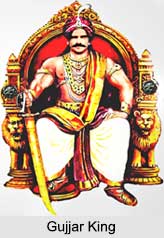 History of Gujjar Community is quite uncertain and vague. There are several references that talk about the origin and history of Gujjars. For instance, in Ramayana, a war was fought between the gods and the evil spirits. The Gujjars fought against the devils under King Dasharatha. In Mahabharata also, references suggested the references of Gurjars. They were found along with Lord Krishna who migrated from Mathura to Dwarka, Gujarat. In the past, Gujjars have also been hypothesized to be descended from the nomadic Khazar tribes.
Origin of Gujjar Community
The Gurjar clan appeared in northern India around the time of the Huna invasions of northern India. Some scholars believed that the Gurjars were foreign immigrants, possibly a branch of Hephthalites (`White Huns`). Some scholars believed that Gujjars came into India with the Hunas, and the name of the tribe was transformed to "Gurjara" in Sanskrit. They also believed that several places in Central Asia, such as "Gurjistan", are named after the Gujjars and that the reminiscences of Gujjar migration are preserved in these names.
At the end of 5th century , Hunas- a marauding tribe entered Afghanistan, Pakistan and India. Hunas were cruel people much displaced from their ancient homelands on the borders of Europe and Asia. They were, like Aryans who preceded them. Along with this rude, crude and cruel tribesmen, came lesser tribes, Gurjars being one of them. They established their fiefdoms, principalities in Punjab, Rajasthan, including but not limited to Jodhpur, Gujarat, Gujranwalla, a small town in Punjab, Gurjarkhan, also in Punjab.
Gujjars in Muslim Era
Nearly complete northern parts of India were invaded by foreigners within a short period after 1192 CE. Throughout this long period, Gujjars in the Muslim era made a lot of sacrifices to free the country from the foreigners. A majority of foreigners settled throughout India, to keep the local population in subjection. The local warrior clans like the Pathans, Somera, Sama, Chib, Gakad, Gurjars, Jats, Ahirs, Dogras, etc. were completely ousted from the cities, towns and big villages. Their places and houses were occupied by foreigners. Thus, local martial races became illiterate and nomad during the foreigner rule of slave kings (1200 CE-1290 CE).
Gujjars in Gujarat
In 1193 CE, the Gurjars gathered under the commands of a Chauhan leader to rescue Delhi from the foreigners. The rescuing army occupied Sirsa in Punjab, ousted the foreign army from Hansi and besieged Delhi. Qutbuddin hastened from Kanauj and a stubborn fight took place at Delhi where the Gurjars were Defeated. In the west Punjab, the Gurjars under the command of their chief Surka Khokhar, raised like storm from Multan, ousted the foreigners from Lahore and dispossessed the fresh intruders of their horses, and blocked the road of intrusion from Ghazana to Delhi. In 1206 CE, Mohammad Ghori himself marched from Ghazna to uproot the freedom fighters but he was killed by a Khokhar Gurjar. So in turn, many Gurjars were assassinated.
At the time of Firozshah Tuglaq from 1351 CE to 1388 CE, Gurjars looted the intruders who were coming from Central Asia through Punjab. Firozshah came to Punjab, cleared the roadways and on further march massacred the people of Nagarkot. Sukha Gurjar took possession of Lahore. He did not hand over the charge of Lahore to the foreign forces and thus he was ultimately captured. In 1399 CE, Dasrath established himself at Jalandhar and ruled the territory round about it. Sultan Adam Gurjar was the chief of Gujarat when Humayun took Kabul. Akbar adopted the policy of peace with local people and acknowledged the ownership of land of local people. The Jats became proprietors at this time in Punjab. Akbar also accepted the chieftainship of the local chiefs thus Adam Gurjar was an acknowledged chief of Gujarat. After the death of Alamgir, son of Sultan Adam, Gurjars could not select a chief and divided their possession.
Gurjars in Delhi Region
At the time of Naseeruddin 1246 CE-1266CE, the Gurjars revolted in the area between the rivers Vyas and Ganga River. Naseeruddin himself with a formidable army entered the region between Ganga and Yamuna River, and after a stubborn fight took position of the Meerut fort. In the way, the commanders subjugated the people of Vyas area and put a garrison there. The garrison dishonoured the local people, so one day Gurjars of Kaithal and Gahraon collectively attacked the garrison and killed the commander Raziul Mulk. To take the revenge, the Sultan devastated the villages.
At the time of the rule of Balban during 1266 CE-1290 CE, there was a general rising of the people through out the subcontinent throughout the foreign invasion, particularly the Gujjars of Delhi revolted, so severely that they blocked the roads, the foreigners were attacked and Delhi was sacked. Balban ordered the removal of the forest surrounding Delhi. These foreign people marched near, far from surrounding districts of Delhi. Giyasuddin Tughlak defeated Khusro Shah of Delhi. Mohammad Tughlak 1325 CE - 1351 CE impounded revenue in the doab of Ganges and Yamuna. Sher Shah Suri had to face the Gurjars in the regions of Ganges and Yamuna. The Reve Gurjars migrated from Ranthambhore in Rajasthan and occupied Junagarh fort in 1314 CE in Kathiawad. The whole area from Satluj up to Narmada divided into several principalities, which were being governed by feudal lords before 1300CE. These feudal lords and their families formed in a group the name of which is Rajput. The Gurjars joined hands whenever the Rajputs stood against as a resistance to the Muslims. The Rajputs and the Gurjars fought jointly against Sher Shah Suri and the Muslim forces who invaded their territory.
Gujjars in Mughal Era
 In the beginning of the 17th century, the decline of the Mughal emperor Aurangzeb was actually the beginning of the Gujjars in the Mughal era. There was an increased power of the Gujjars at that point of time. Finally, Aurangzeb accepted the lordship of the Gujjar leaders in various principalities.
The chief Gujjar power of the Mughal era are mentioned below -
•Gurjar in Bharatpur district
•Bhati of Dadri
•Dera Gazi Khan
•Gurjarghar
•Pawar of Landhore
•Gurjar of Maharastra
•Nangde of Parikisatgarh
•Judeo of Samther
The Gurjars and the Jats of Agra stood together at the time of Surajmal Jat. After his murder, his fourth son Ranjit Singh and the Gurjar chief Motiram Baisla of Sundraoli signed a pact of treaty. As Surajmal had taken the lead on his son Motiram Baisla became the army chief of Bharatpur. In 1803 CE, after a stubborn fight, the Gujjars and Jats were defeated, and thus, Bharatpur district remained a small territory under the British rulers.
A great body of Bhati Gurjars, along with Dave and Kala Gujjar, settled south of Delhi on both sides of Yamuna River with their headquarters at Kasna. The Bhati Gurjar occupied 360 villages. In 1540 CE, Sher Shah felt the power of the Gurjars around Delhi, and they took vigorous proceedings against them. Akbar allowed these unruly Gurjars to settle in the area. After the death of Aurangzeb, the Maratha hordes of the south plundered the north, and the Gurjars again took up arms. Another Bhati Gurjar chief, namely Rao Amra, had ousted the unruly chief of the Bhurta clan and established himself as Raja at Dadri. His successor, Raja Roshan Singh, was ruling when the British occupied the area.
Gazi Khan Baloch founded the city of Dera Gazi Khan after his name around 1710 CE. Gazi Khan Baloch was appointed as the administrator, and he proved himself to be a great administrator. Mahmood Khatana, with his Gurjar military personnel, crossed the river Indus and brought the whole area comprising the districts of Mujjafargarh and Faislabad under his total control. He constructed a fort at Dera Gazi Khan. The British annexed Gurjar Ghar to Gwalior and some portions of its area amalgamated to the districts of Bhind, Murena and Dholpur and a portion to the district Agra of Uttar Pradesh. Every Gurjar in Gurjar Ghar holds its own territory. The ancestors of the Gujjars in Maharashtra had been destroyed, and that is why they migrated to the south. The rulers of Samshergarh were actually a sub-caste of the Gujjars. They belonged to the Khatana sub-caste.
But unfortunately, most of these states and the powers of the Gujjars were finished by the British rulers.
Etymology of Gujjar Community
Well-known scholar Cunningham thinks that Gujjars are descended from Scythian (Saka) and Yuechi (Kushan) tribes who invaded Pakistan in the 1st century BC and in the 1st century AD respectively. Other scholars believe that they are descended from a Central Asian Turkic people called Kazars. Since the tribe migrated from Caspian Sea which is called 'Bahr-e-Khizar,' it was named Khizar, Guzar, Gurjar, Gurjara or Gujjar. The name Hazara was given to the district by these Guzara tribes. The name Gujjar, according to another version, is derived from the words `Gau` and `Char` meaning cattle grazers.
Some more records stating the history of Gujjars specifies that Gwalior state had a district belonging to Gujjar tribal group by the name Gurjargarh. They were, mainly distributed in the west of Aravalli mountain ranges.
Religion of Gujjar Community
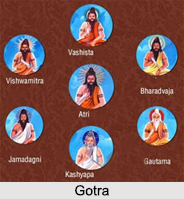
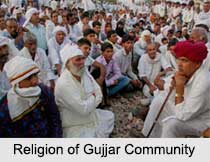 Religion of the Gujjar Communities has two endogamous religious sections and these are Hindu and Muslim. Each section is further subdivided into a number of exogamous gotra like Khatana, Chohan, Gursi, Didhar, Bhumphal, Kalarya, Parswal, Mahehria, Koli, Kautiya, Motte, Chaichi, Bhunch, Bargat, Kalas, Chhore, Ladi, Chai, Bajar and Badhana. These gotra denote its ancestry and also regulate marriage alliances. They are also aware of the varna system and place themselves along with Kshatriyas, though other communities consider them a grade lower.
Tradition has it that the Gurjars or the Gujjars are a community had no fixed abode. A large number of Gujjars have now settled down and taken to farming. In some areas, they continue to pursue agricultural activity along with animal husbandry. Traditionally, they were cattle breeders and milkmen. During the Turkish, Afghan and Persian invasions, they earned notoriety for prepping upon the dead and the wounded left in the battlefields.
Hindu Gujjars in India
The Hindu Gujjars in India are one of the endogamous religious sections. The Hindu Gujjars do not have an identity market. They are usually vegetarian and their entire diet depends upon the accessibility of the cereals. For instance, during the summer months, they take wheat and rice, and in winter months, they generally prefer maize to wheat. They are occasional non- vegetarians and take meat of goat and chicken. Their staple diet consists of wheat or maize chappati, dal, vegetables and milk products or curd. Milk and milk products occupy an important position in their normal menu as these are their own produce. They are occasional consumers of alcoholic drinks, which are taken on festive or social occasions. But women do not consume alcoholic drinks. Smoking of tobacco is common among the male members of the Hindu Gujjar community. On marriage and festive occasions, preparations of mutton and sweetened rice are a must and are cooked by all families. In the event of death in a family, non-vegetarian and spicy foods are avoided.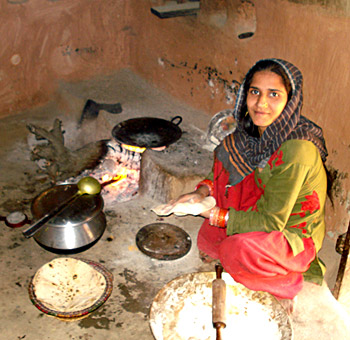 The Hindu Gurjars believe in the supremacy of the traditional joint family system. The head of the family is the eldest male member in the family whose decision in the family matters is final and is respected. However, nowadays, a change in the family structure is seen where they share the same roof, not the same kitchen. When the differences among members surface too frequently, the joint setup splits into nuclear types. The elders in the family are given due regard and respect. They are consulted and obeyed by the younger ones. The family property runs along the male line. However, a daughter can claim the property of the father in the absence of a son. Normally, if a father dies without making a will, the property is transferred to the collaterals.
In the Hindu Gujjar community, the role of a woman, both in the domestic as well as in economic sphere is significant. Gurjar women are hard working, and besides household chores, they also do other work like tending the cattle, plastering the walls and floors of the house with cow dung, etc. The major life-cycle rituals commencing with the birth of a child are according to the Hindu customs. Among them, marriage is considered an auspicious occasion. Hindu Gujjars cremate their dead. The eldest son of the family performs the last rites. The traditional economy of the Hindu Gujjars revolves around cow and buffalo herding and selling of milk products. They practice agriculture, and the majority of them are landowners. Apart from practising and animal husbandry, some of them have also taken to government service.
Enforcement of the traditional laws and social control is managed by their panchayat system, which is headed by elder experienced male members of the community. They listen to all the cases of land disputes, division of family property, divorce, separation and compensation, etc. People mostly sort out their morally binding. If a person feels dissatisfied, he may approach the law court. The Hindu Gujjars trace their lineage from the famous Nand Vansha, where Lord Krishna was brought up by Mata Yasoda. They have faith in the local gods, goddesses, and regional deities also. They also celebrate the major Hindu rituals and festivals with complete dedication.
The Hindu Gujjars in India maintain their traditional relations with several communities like Badhai, Lohar, Jheewar and Chuhra. Each of them renders their traditional services, both social and economic, at their client`s house. The impact of the various developmental programmes is evident from the overall growth, modernization and industrialisation, in terms of electricity, water supply and communication network. Under the Integrated Rural Development Programme, they have been able to secure nominal interest with heavy subsidy for opening their own dairy, buying agricultural implements, tube-wells, etc. Their girls and boys manage to secure primary and secondary level education. The several immunization programmes are implemented for the complete development of the Hindu Gujjars in India.
Muslim Gujjars in India
One of the endogamous sections of the Gujjar community is the Muslim Gujjars in India. A Muslim Gurjar male is generally recognized by his typical beard and dress. The Gurjar men generally wear a specially embroidered conical headgear called Gurjari, Jawaharcut coloured embroidered jacket, a loose kurta and a tamba, while the Muslim Gujjar women wear chooridar pyjama and loose kurta. Mostly Muslim Gurjars are non-vegetarian, but they consume mutton occasionally and on important occasions. Their staple diet consists of maize chappati, pulses and leafy vegetables. Various preparations of milk products also form part of their daily diet, which are their home products. They also consume non-alcoholic beverages like salted tea. Special dishes for marriages and other auspicious occasions are cooked.
There are basically two groups in the Muslim Gujjar community, and these are Bhatariye and Bhanariye. These groups do not intermarry. They are further segmented into exogamous gotras, such as Bhatti, Chandel, Chauhan, Banja, Lodha, Kasana, Bhensi, Chopra, Chij Khatana, Padha, which indicate their Rajput clans. Marriages in Muslim Gurjars are performed nowadays in adulthood by negotiation. A distinctive feature of their marriage is that consanguineous marriages take place. A boy can marry his cousin, either on the father`s or the mother`s side. The marriage is actually a set of elaborate ceremonies. However, the actual marriage function takes place at the bride`s place by `nikah`. In the Muslim Gujjar community, the family is mostly of the vertically extended type, but occasionally nuclear families also come up on account of bickering in the family. There is a feeling of mutual love and respect in the family. The eldest male member of the family is the head of the family matters. The inheritance of property is from father to sons.
In the Muslim Gujjar community of India, women play a considerable role in the economic activity of their pastoral economy. She is also responsible for controlling the family expenditure. The dead are buried in this community, and the mourning lasts for three days. Congregational prayers are held on Friday following the day of demise at a graveyard. Rituals connected with the dead are also observed religiously. Moreover, offerings are made on the grave of the departed soul on each death anniversary. The Muslim Gujjars continue their traditional occupation of selling milk and milk products. Women of this community are skilled in embroidery with coloured thread on caps and Jawahar jackets. They also decorate the walls of the house by making floral and animal designs.
As a majority of the members of the Muslim Gujjar community are pastoral, they do not have patron-client, landlord-tenant and cultivator-labour relationships, but those who are now leading a sedentary life have started developing these relationships. Sufficient effort has been made by the Government of India to rehabilitate the Muslim Gujjars communities by providing facilities of electricity, water, school, medicine and health care. Education is viewed by them as partly favourable. Both the boys and girls are sent for education, yet they study only up to the secondary and primary level, after which they drop out for economic and social reasons. They make moderate use of traditional and modern systems but are not in favour of family welfare programmes.
Drinking water is available through streams, springs and taps. Because of a lack of awareness and literacy, some are unable to procure loans under the Integrated Rural Department Programmes or from banks. However, a majority of the members of the Muslim Gujjar community are self-employed in agriculture. Roads and other communication media are available in the urban peripheries, and they have access to communication and mass media facilities.
Society of Gujjar Community
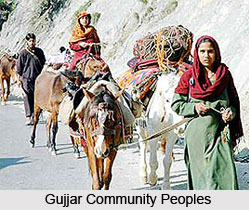 Gujjars are simple, thrifty and industrious and desire nothing better than to be left alone in peace with their cattle and fields. The Gujjars are cultivators only in the plains. In the hills they are mainly pastoral, selling milk and ghee. Cultural exuberance of this Gujjar community has nicely being depicted in several of its aspects like dancing, religious rites, customs and others.
These people are well built with the physical characteristics of the Jat. The eating habits of both the Gujjars and Jats are quite similar. The close resemblance between them suggests that they are from the same ethnic stock.
Gujjars also have certain special customs of their own. The Gujjars of Nakodar Tehsil follow a marriage custom called `pind walna.` In a sort of game, the young men from the bridegroom`s party gallop around the village and the men from the bride`s side try and prevent them from doing so. The person who is able to ride around the village is given a present by the bride`s parents. This custom is perhaps, a survival of the tradition of `marriage by capture`. A day or two before the wedding, `madha` worship is held, the beam of a plough being pitched before the entrance to the house with a little straw tied to it. A large earthen jar, with a smaller one full of water placed on it, is placed beside the beam, a red thread being fastened round the uppermost pot. This is supposedly a fertility charm.
 Early marriage of girls is fairly common among the Gujjars. Caste barriers and untouchability are declining gradually. A comparatively wealthy Gujjar family may own a camel, a horse, two oxen, two buffaloes and a few goats. Being pastoral, some Gujjars observe a regular `siapa` or mourning on the death of a buffalo. The women mourn almost as if they had lost a relative.
The dialect of Gujjars - Gujjari or Gojari - is akin to Hindi. It has strong affinities with the language spoken in Jaipur and is akin to Rajasthani. The Gujari language belongs to the famous Rajasthani language group. In ancient times, however, Rajasthani had been the main language spoken by the Gujjar tribal community. In the present day, due to rapid interaction with the people of the modern community, many members of this Gujjar tribal community have also developed fluency in several other Indian languages. These are Punjabi, Urdu, Hindi, Pahari languages (such as Dogri and Kangri), Pashto Language, Dardic languages (such as Kashmiri and Khowar), and Balti.
Following the tradition of most of the tribal communities of the Northern hilly regions of Indian Territory, this Gujjar community has adapted the occupation of a semi-nomadic tribal community. The majority of this Gujar tribal community used to herd animals like sheep, goats, and buffalo. In some way, the Gujjar tribes even cope to manage even an `old rag elegant`.
They transmigrate from the lowland plains in the winter to the upper ranges of the Himachal Pradesh during the summer season. However, to go hand in hand with the demands of the changing situations, many of the Gujar tribes of the contemporary period have taken various other occupations. Instances are found where these Gujjar tribes would even serve themselves out as `porters` or pony men for the tourists who went trekking in the Himachal Mountains.
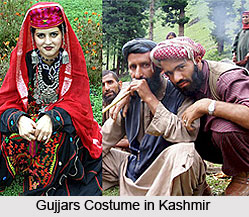
The dresses of this community are quite exquisite. Both Gujjar men and women have a distinctive style of wearing dresses. The colorful turban with the unique style of wrapping has been a style mark of this Gujjar tribal community. The aged Gujjar males tie an Afghani hat, locally known as a topi.
However, a Gujjar female`s beauty is greatly enhanced by the beautiful clothes called a dupatta. It looks like a shawl. They are very fond of the jewellery too. These Gujjar females have a fascination for the necklace with a triangle pendant, studded with a beautiful stone at its center. It has a religious significance. It symbolizes "evil eye" and is mainly utilized to avert bad luck.
There is a peculiarity in the way the Gujjar children used to dress up. Many a time, the Gujjar boys are dressed to resemble little girls to fool the evil spirits.
The societal structure also follows the trend of almost all the communities of the Indian subcontinent. Patriarchal norms are prevalent. Gujjar males are also very much family-oriented. It is the Gujjar female who has had the duty and responsibility of fulfilling all the activities of the households.
Gujjar Community During British Rule
In the eighteenth century, during the British rule, several Gujjar tribal chiefs and small kings were in power. During the reign of Rohilla Nawab Najib-ul-Daula, Dargah Singh, the Gurjar group leader of Dadri possessed 133 villages at a fixed revenue of Rs. 29,000. A fort at Parlchhatgarh in Meerut district, also known as Qila Parikishatgarh, is ascribed to a Gurjar Raja Nain Singh. This fort was constructed by Parikshita and it was restored by Nain Singh in the eighteenth century. The fort was dismantled in the year 1857, as it was to be used as a police station.
History suggests that throughout the Indian Rebellion of 1857, the Gujjars and Muslim Rajputs proved to be the "most irreconcilable enemies" of the British in the Bulandshahr area. A band of rebellious Gurjars ransacked Bulandshahr after a revolt by the 9th Native Infantry on 21st of May, 1857. Further, during the revolt of 1857, the Muslim Gujjars in the villages of Ludhiana district showed dissent to the British authorities. The British interests in Gangoh city of Saharanpur district were threatened by the revolutionary Gujjars. These Gujjars rebels were defeated by the British forces. According to British records, the Gujjar rebels plundered gunpowder and ammunition from the British and their allies. The Metcalfe House was sacked by the Gurjar rebels in Delhi, from whom the land was taken to erect the building. Moreover, the British records claim that the Gujjars carried out several robberies.
During the British rule, the Gujjars were identified as `criminal tribal groups` by the Criminal Tribes At, 1871, which was later repealed by the Government of Independent India in the year 1952. Some historians believe that the British classified the nomadic tribes as `criminal tribes` because they considered these tribes to be prone to criminality in the absence of legitimate means of livelihood, and also because of their participation during the revolt of the year 1857. During the Second World War, several Gujjars served in the British Indian Army.
The Imperial Gazetteer of India once state that the Gujjar community were impoverished because of their `lawlessness in the Mutiny`, and moreover, the Gujjar community during British rule also had a `bad reputation as thieves`.
Gujjars in Indian Freedom Struggle of India
 There was a remarkable contribution by the Gujjars in Indian freedom struggle. Like for instance, during India`s first war of Independence, known as the Sepoy Mutiny, 1857, a Gurjar called Kalyan Singh had terrorised the British forces for several years. The Sepoy Mutiny was a remarkable event in the Indian history. From 1822 to 1825, the Gujjar community held a fierce armed protest against the British rule. Several times, when the British were transporting their treasury from one place to place they were killed and looted by the Gujjar protestors. Most of the Gujjar occupied areas like Ladhora, Prikishatgharh, Samther`s boundaries were reduced by the British. The Estates of thousands of villages were reduced to only few hundred villages. Revolts in western Uttar Pradesh (Saharanpur district) during 1821 to 1825 led to the killing of thousands of Gujjars. Many were hanged and thousand of them were given life sentence. Thus, in this way the entire Gujjar community considered the British as their main rivals.
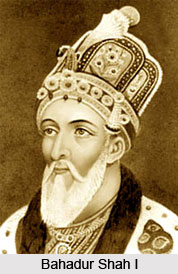
Gujjar soldiers of Meerut camp revolted in 1857 under Gujjar leader from Panchli Village. They elected the Mughal emperor, Bahadur Shah I, as their leader. Then Gujjars of Uttar Pradesh and Delhi region joined the rebellion against the British rulers. Gurjars ended the British rule for some period, disabled the postal system, sped the transportation and killed both British officers and civilians. Further, they handed over the British treasury to Mughal King Bahadur Shah Jafar. Moreover, Gujjars in Saharanpur district gave some horrible time to the British officers. Gujjars in several districts like Gurgaon, Karnal, Muradabad, Muzafarnagar and Bijnor emerged and revolted against the Britishers and they gave them a very tough time. They destroyed policed stations and district courts.
Gurjars of Bijnor were fighting under the leadership of Gurjar leaders Kadam Singh and Dulal Singh. In the whole revolt Gurjars were fighting along with the Muslims. Gurjars in Mathura and Agra region also fought against the British and gave them a horrible period. That is why when the revolt ended, the properties of the Gurjars were impounded. Gurjars in Ludhiyana, Firozpur, Gujaranwala, Sialkot, Gujarat, Jalandhar district, Kangada revolt against the British and tried to end the British rule but when the revolt failed, the properties were impounded by the British. Hundreds of villages in district Bulandshahar were ruined by the Britishers but Gujjars fought with full strength. Not only had the Britishers declared Gujjars as criminal tribe by defining Criminal Tribes Act. However, in the freedom struggle of India, Gujjars were working as the main leaders of the Non Cooperation Movement of Mahatma Gandhi in the country. History states that there were freedom fighters in each and every single Gujjar village of the country.
Gujjar Leaders in India
 The Gujjars considers themselves as the protectors of the country and its faith. The Gujjar leaders in India are known for their bravery, courage and huge sacrifices. The Gujjars sacrifice themselves to perform their duty towards the country. Further, it is on records in history that not even a single Gujjar accepted the subordination and faith of the invaders to save their domain or land or estate.
Some of the names of the greatest Gujjar leaders in India are as follows -
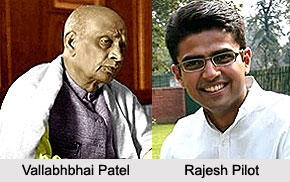
•Sardar Vallabhbhai Patel - Iron Man of India
•Vijay Singh Pathik - Indian Revolutionary, Satyagrahi & Hindi Poet
•Choudhary Rahmat Ali
•Ram Chandra Vikal - Ex Deputy Chief Minister of Uttar Pradesh
•Rajesh Pilot - Indian Political Leader
Gurjars are always considered as brave people and they became a symbol of bravery and loyalty.
Some of the greatest Indian Gujjar warriors are mentioned below -
•Manu Deo Gurjar - 712 CE fought with the Mohammad Bin Qasim
•Veer Yograj Singh Gurjar - Fought with Timur-e-Lang
•Hari Singh Nalwa - Army chieftains of Ranjit Singh of Punjab
•Partap Rao Gurjar - Army chieftains of Chatrapati Shivaji
•Gurjar Singh - Great Sikh warrior
•Dhan Singh Kotwal - Freedom Fighter of India, First revolt against British Army in Meerut
•Kamal Ram Gurjar - First Indian to Receiver First Grade Victoria Cross form George V
Vallabhbhai Patel was born on 31st October, 1875, in a farmer`s in Nadiad, Gujarat. He was a Lehva patidar or Lehva Patel Gurjar. Sardar Vallabhbhai Patel played the key role in uniting 604 different riyasats during the process of independence. He also played a decisive role in the Constituent Assembly and remained the moving spirit behind some of the landmark provisions of Indian principles. Sardar Vallabhbhai Patel was considered a man of action.
Vijay Singh Pathik was an Indian Revolutionary, Satyagrahi and also a very well known Hindi Poet. His father also took active part in the Sepoy Mutiny, 1857. During his teenage Vijay Singh joined revolutionary organisation and took active part against the British rule. Ram Chandra Vikal was the first Gujjar leader of India. He was from village Basantpur, it was in Bulandshahr. Rajesh Pilot was one of the most famous and powerful Indian politicians. His real name was Rajeshwar Prasad. He was home minister of India. He was from village Baidpura, of district Ghaziabad in Uttar Pradesh. He was a man of integrity and confidence.
These were some of the great Indian Gujjar leaders who have contributed tremendously.
Gujjar Rulers in India
According to several historical accounts, the kingdom with capital at Bhinmal (or Srimal) was founded by the Gujjar rulers in India. A small kingdom of Bharuch was the offshoot of this Kingdom. In 640-641 CE, the Chinese traveller Xuanzang (Hieun Tsahg) elaborately described the kingdoms of Su-la-cha (identified with Saurashtra) and Kiu-che-lo (identified with Gurjara) in his writings. He mentioned that the Gujjar rulers ruled a rich and populous kingdom with capital at Bhinmal. Further, it is stated in the historical records that the country of the Gujjars represents the region between the Indus River and Anhilwara. It is also said that the Pratihara dynasty that ruled a huge kingdom in the northern part of the country from the 6th to the 11th centuries, and has been mentioned as `Gurjara-Pratiharas` in an inscription, was certainly of Gurjara origin. It is also stated that the Pratihara clan of Rajputs descended from the Gurjars and this `raises a strong assumption that the other Rajput races also are the descendants from the Gurjaras or the allied foreign immigrants`. It is also believed that Pratiharas were a clan of Gujjar community.
Interestingly, some other historians are of the opinion that although some sections of the Pratihara Empire (like for instance the one to which Mathanadeva belonged) were Gurjars by caste, the imperial Pratiharas of Kannauj were not Gujjars and there was Gurjara Empire in Northern India. However, some historians believe that there is no conclusive proof that the Agnikula Rajput clans are of Gurjara origin; they also believed that there is possibility of the indigenous tribes adopting names of Gujjar tribe, when their founders were influenced by Gujjar rulers. Over the years, the Gurjars were assimilated mainly into the castes of Kshatriya varna, although some Gujjar groups of central India are classified as Brahmins.
According to many historians, the Gujjars originated in Central Asia and they came into India through Afghanistan and founded a kingdom in Rajasthan until they were defeated by the Muhammadans. They settled in the state of Gujarat. They are first referred to in the 7th century as warriors, who later migrated to the mountains for pasture for the animals. They speak Gurjari language that is close to Pahari and Urdu language. They had established a Kingdom of their own at the time of Thaneswar around 640 AD. It is alleged that about 750 AD, the Chapa dynasty of the Gujjars that had been in power for about 200 years, was displaced by the Pratiharas who seem to have carried on till about 1000 AD.
The kingdom of the Gujjar rulers in India ceased to exist by the time of Akbar when their country was captured. The migration of a part of the tribe to Jammu and Kashmir is attributed to the outbreak of a serious famine in the region inhabited by the tribe, now known as Rajputana, Gujarat and Kathiawar. It is also stated in the historical records that some part of the migrating tribes moved to the Punjab whereas others moved further north to the areas now known as Kaghan, Swat, Kashmir and Gilgit.