Architecture In South India - Informative & researched article on Architecture In South India
  Indianetzone: Largest Free Encyclopedia of India with thousand of articles Indian Monuments


in  
Art & Culture | Entertainment | Health | Reference | Sports | Society | Travel
Forum  | Free E-magazine
Indian Monuments : Indian Monuments l Palaces of India l Indian Buddhist Sites l Arts in India l Historical Buildings in Rajasthan l Indian Historical Monuments l World Heritage Monuments in India l Indian Religious Monuments l Indian Regional Monuments l Indian Monasteries
Home > Art & Culture > Indian Monuments > Arts in India > Indian Architecture > Architecture In South India
Architecture In South India
Architecture in South India consists mainly of temples built in Dravidian style and few Islamic and Buddhist architectures.

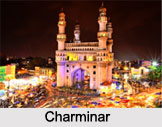
charminar, Architecture In South IndiaArchitecture in South India comprises the architectural creations in the states of Andhra Pradesh, Karnataka, Kerala and Tamil Nadu. As per history the Dravidians of South India developed the ancient Indus Valley Civilisation and moved south to avoid the constant north-south strife and to free themselves from the control of the Aryan people and the Hindi language. In Karnataka, during the middle Ages, temple building has shown its originality, in the architecture of the Hoysala period. Bijapur in Karnataka is renowned for its Muslim architecture. Kerala has wooden structures in the unique style of the west coast. The heart of Andhra Pradesh is the former feudal kingdom of Hyderabad. The symbol of this city Charminar is an Islamic memorial tower. The Mughals did not extend their empire so far south, which is why in Tamil Nadu there is little or no effect of Islam. Pure Hindu culture still thrives here. The temples here are built in the Dravidian style of architecture.

Vadakkunnatha Temple, Architecture In South India In South India more than the architecture, it is the Hindu temples linked to history and Hindu mythology that are famous and are major pilgrim centers even today. The history of South India reveals the several significant rulers and dynasties that have ruled over it, such as, the Cheras, Cholas, Pallavas, Chalukyas, Pandyas and the western Ganga dynasty. In the late medieval period south India witnessed the rise of the Muslim power. After Aurangazeb`s death the rulers of South India gained autonomy. Though the policies and ways of administration altered with changing dynasties, what remained common is their love for art and architecture. South Indian architecture, thus, received patronage from almost all the ruling dynasties.
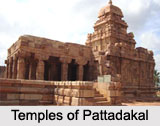
Hindu religious architecture comprises a major segment of the architecture of south India. There are a plethora of Hindu temples in the southern region of India. For example in the state of Andhra Pradesh there is a diverse style of temple building. Tirupati is the best known of the temples in Andhra Pradesh and attracts pilgrims all throughout the year. The temples of Pattadakal and Aihole in Karnataka depict the origin of the south Indian architecture. The temples in Hampi reflect some of the best Hindu architectural pattern. Badami in Karnataka is one of the fascinating places in the South. The Bhutanatha groups of temples reflect the Chalukya style of architecture. There are a large number of temples in Tamil Nadu and all of them built in the Dravidian style. The south style developed mostly in north Karnataka and around Mahabalipuram and Kanchipuram. In the 7th-8th centuries the Pallava dynasty built the stone temples. Even now in Mahabalipuram there are many small stone temples and cave temples. Rock-cut architecture was gradually replaced by structural monuments which were built with bricks and stones. During the 13th century under the Cholas the architecture of temples went through a massive metamorphosis. The temples became larger, more complex with a great number of buildings inside a wide rectangular area. The main shrine became small and could not be distinguished from the outside. The gopuras on the outer walls became larger and more magnificent, as can be seen in those at Madurai or Srirangam where the gopura stands more than seventy meters tall. Madurai is a popular pilgrim centre in the south and the renowned Meenakshi temple of this place is noted for its excellent architecture. There are few wooden temples in Kerala. The finest example of the Kerala style of temples is the Vadakkunnatha Temple. The Padmanabhaswamy Temple in Trivandrum is similar in style to that of temples in Tamil Nadu.

Rangin Mahal, Architecture In South India Apart from Hindu temples there are Islamic, Jain, colonial and Buddhist architecture that are prevalent in South India. Hyderabad, the capital of Andhra Pradesh has Charminar which is an Islamic memorial tower. Golconda was a prominent Islamic capital in the 16th and 17th centuries. There are twelve tombs of the Qutb Shahi Emperors outside the city walls. These reflect the early Islamic style of the Deccan. A cubic tomb room has been built on the foundation platform and a dome-like roof has been placed on top. In Karnataka the northern half of the state became a stronghold of Islam and the southern states continued predominantly Hindu till the end. The three cities of Gulbarga, Bijapur and Bidar in the north of Karnataka have many structures reflecting south Indian Islamic architecture. The effect of Islamic architecture is heavy in the fort and palaces. The Jami Masjid and the Haft Gumbaz of Gulbarga in Karnataka are among the most noteworthy monuments depicting Islamic architecture. The Bidar Fort is located north of the city. It is built with bricks and basalt, and decorated with tiles. Most of the many palaces and mosques inside are destroyed now. The Rangin Mahal and Sora Kamba Mosque are in good condition. A Hindu style wooden structure is seen inside the Rangin Mahal and the walls still have the Persian style tiles. Sora Kamba mosque was originally designed as Friday mosque. Bijapur means the city of victory and has the largest number of Islamic ruins in south India. In Kerala there are a few wooded mosques and this architectural pattern is exclusive in Kerala in the south India. Kolikod has the maximum number of Muslims in Kerala, and therefore a lot of mosques. The architectural style of these wooden mosques is similar to that of Hindu temples. The Mishqal Palli Mosque, the biggest in Kerala, is a four-storied structure with a tiled roof. It has a wooden ceiling over the porch, with floral patterns and verses from the Quran engraved on it.

Amba Vilas palace, Architecture In South India The soaring point of expansion in South Indian Buddhist art was attained in the Later Andhra Period in a compilation of monuments dedicated by the Andhra sovereigns at Amaravati at the mouth of the Krishna River. Chezarla, a small village in Andhra Pradesh has Buddhist temples. The temples have a Chaitya shrine with the Chaitya window sealed and Hindu sculptures carved on it. Buddhism and Jainism spread to south India from Bihar. Jain temples were built on the west coast. It is a wonder that on the east coast one finds largely, ruins, while on the west coast there are numerous shrines and many temple towns. The west coast separated from the interior by the Western Ghats receives a lot of rain and hence the wooden structures have steep roofs like that of the temple in Moodbadri. The same style continues in Kerala too, which has a similar terrain. There are few Jain temples in Pattadakal and Aihole. The pillared partitions on the outer walls, the base foundation and the parapet etc in this temple show the southern architectural style of the later ages. There are some Jain temples in the old Bhatkal town of Karnataka. The Chandranatha temple is in the new town. The sloped roofs of the shrine continue lengthwise and in the front a Mana stambha has been designed. There is a two-floored turret facing the stambha, which is also different. The open pillared corridors only around the shrine are a rarity.

Colonial architecture in south India is seen in the city of Mysore in Karnataka. The Amba Vilas palace is in the heart of the city surrounded by a fort. It is designed in the Indo- Saracen style with a blend of European, Islamic and Hindu architecture. The most impressive place is the Darbar Hall the ceiling of which is completely covered with stained glass made in Glasgow. In contrast to the Indo-Saracen style of the city palace, the Lalitha Mahal palace was designed entirely in the European style in the eastern suburbs. Chennai, the capital city of Tamil Nadu is also set up as per the colonial architecture. The colonial buildings are worth seeing from an architectural point of view. Most of the colonial buildings belong to the 19th century except the Holy Mary Church, which was built in 1680 inside the St.George Fort. The Napier museum in Trivandrum in Kerala is built on the colonial style of architecture. This beautiful museum framed by two wide towers stands majestically within a large garden on a hill. The exterior and the interior of the museum are very ornate. The large exhibition hall is an amalgamation of the western architectural styles and the traditional architectural style of Kerala. This synergy of the two styles has been achieved by a happy coalition of architecture and art, which was brought about by the local artisans involved in the project.

South India is popular mainly for the architectural hallmark of the Hindu temples but the Islamic and Buddhist structural design contribute to enhance the artistic splendor of the place. With its wide panorama of architecture south India is one of the most visited destinations on the map of India.

(Last Updated on : 14/01/2010)
  More Articles in Indian Architecture
 
History of Indian Architecture Architecture In Deccan Architecture Under Hoysala Dynasty
Architecture Of Jammu And Kashmir Architecture Of Delhi Architecture Of Himachal Pradesh
Architecture Of Punjab Architecture Of Uttar Pradesh Architecture Of Agra
Architecture Of North India Architecture In Central India Architecture In East India
Architecture In South India Indian Architecture during the Rule of Sher Shah Suri Religious Influences On Indian Architecture
Indo-Saracenic Architecture in IndiaIndo-Saracenic Architecture in India Neo-Classical Architecture in India Shilpa Shastras
Jain Architecture in India Nagara Style of Architecture  
Recently Updated Articles in Indian Monuments
  • Allahabad Fort
    Allahabad Fort is located on the banks of the Triveni Sangam. This Fort was built by Akbar in 1583. Currently the fort is occupied by the Indian Army.
  •  
  • Jama Masjid
    The Jama Masjid is Delhi`s famous mosque depicting beautiful Islamic style of architecture.
  •  
     
  • Modern Indian Art
    Modern Indian Art consists of various form of art, and ever since independence it has come a long way.
  •  
  • Kittur Chennamma Fort
    Kittur Chennamma Fort of Karnataka lies on the Pune Bangalore Highway in a small town of Kittur.
  •  
  • Madras School of Arts
    Madras school of arts was set up in the year 1850 by the British Empire. It believes in creating new ideas.
  •  
    E-mail this Article | Post a Comment
    RSS Feeds
    Forum
    Forum on Indian Monuments

    Free E-magazine
    Subscribe to Free
    E-Magazine on Indian Crafts
     
     
    Architecture In South India - Informative & researched article on Architecture In South India
    Sitemap
    Contact Us   |   RSS Feeds
    Copyright © 2008 Jupiter Infomedia Pvt. Ltd. All rights reserved including the right to reproduce the contents in whole or in part in any form or medium without the express written permission of Jupiter Infomedia Pvt. Ltd.