Dum Aloo
|
Dum Aloo is one of the popular dishes of India and is relished with main meals.
|
|
|
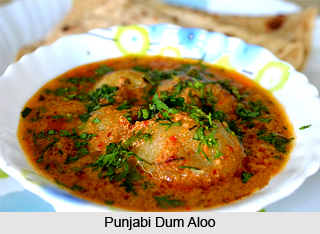 Dum Aloo is one of the vegetable dishes of India and is usually served with main meals. Dum Aloo is made in different ways in different states and is named accordingly like Kashmiri Dum Aloo, Banarasi Dum Aloo, Bengali Dum Aloo and Punjabi Dum Aloo to name a few. Dum Aloo is one of the vegetable dishes of India and is usually served with main meals. Dum Aloo is made in different ways in different states and is named accordingly like Kashmiri Dum Aloo, Banarasi Dum Aloo, Bengali Dum Aloo and Punjabi Dum Aloo to name a few.
Ingredients of Dum Aloo:
16 to 18 baby potatoes, boiled, peeled and deep-fried
4 cups roughly chopped tomatoes
2 tbsp oil
4 cloves
25 mm piece cinnamon
2 cardamoms
1/2 tsp sugar
2 tbsp fresh cream
2 tbsp finely chopped coriander
Salt to taste
To Be Ground into a Smooth Onion Paste:
2 cups roughly chopped onions
4 green chillies, roughly chopped
10 garlic cloves
1/4 cup broken cashew nuts
2 tsp fennel seeds
1/2 tsp turmeric powder
6 whole dry kashmiri red chillies, broken into pieces
1 tsp cumin seeds
For Garnishing:
1 tbsp finely chopped coriander.
Method of Preparing Dum Aloo:
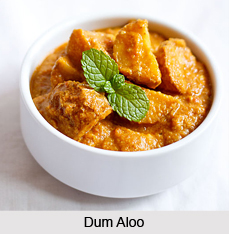 Firstly, combine the tomatoes and 3 cups of water in a kadhai, mix well and cook on a medium flame till they turn soft. Keep aside to cool.
Blend in a mixer to a smooth pur‚e. Keep aside.
Heat the oil in a kadhai, add the cloves, cinnamon and cardamom and saut‚ on a medium flame for a few seconds.
Add the onion paste and saut‚ on a medium flame for few minutes.
Add the tomato pur‚e, mix well and cook on a medium flame for few minutes and stir continuously.
Add the salt, sugar and fresh cream, mix well and cook on a medium flame for another few minutes.
Add the coriander and cook on a medium flame for 1 more minute.
Add the fried potatoes and cook on a medium flame for 1 to 2 minutes.
Garnish with coriander.
Serve hot.
Firstly, combine the tomatoes and 3 cups of water in a kadhai, mix well and cook on a medium flame till they turn soft. Keep aside to cool.
Blend in a mixer to a smooth pur‚e. Keep aside.
Heat the oil in a kadhai, add the cloves, cinnamon and cardamom and saut‚ on a medium flame for a few seconds.
Add the onion paste and saut‚ on a medium flame for few minutes.
Add the tomato pur‚e, mix well and cook on a medium flame for few minutes and stir continuously.
Add the salt, sugar and fresh cream, mix well and cook on a medium flame for another few minutes.
Add the coriander and cook on a medium flame for 1 more minute.
Add the fried potatoes and cook on a medium flame for 1 to 2 minutes.
Garnish with coriander.
Serve hot.
Dum Aloo can be prepaed in other methods also. Following is the preparation of Punjabi Dum Aloo.
Ingredients of Punjabi Dum Aloo:
10-12 baby potatoes
1 large onion
1 large tomato
Half inch ginger
2-3 garlic
2 tbsp broken cashews or 10-12 king sized cashews soaked in water for 30 minutes
1 black cardamom
1 inch cinnamon stick
1 tsp coriander powder
1 tsp fennel powder
Half tsp turmeric powder
Half tsp red chilli powder
Half tsp garam masala powder
Half tbsp lemon juice
2.5 to 3 cups water
1 or 2 tbsp coriander leaves for garnishing
2-3 tbsp cooking oil
Method of Preparing Punjabi Dum Aloo:
Firstly, rinse the baby potatoes and wipe them dry. Keep the peel on.
Then deep fry in medium hot oil till they turn golden brown and completely cooked.
Grind the soaked cashew to a smooth paste. Grind the onions, ginger and garlic to a smooth paste and blend the tomatoes to a smooth puree.
Heat 2 to 3 tbsp oil and add the black cardamom and cinnamon. Keep frying till the oil becomes fragrant and then add the onion-ginger-garlic paste.
Slow the flame and fry the paste till it becomes golden brown and the oil separates.
Add the tomato puree to the browned paste and keep stirring.
After 3-4 minutes, add the turmeric powder, coriander powder, red chilli powder, garam masala powder, and fennel powder one by one.
Stir again and fry till the oil separates.
Now add the cashew paste.
Again fry the masala paste till the oil separates.
Now add approx 2.5 to 3 cups of water. Bring the gravy to a boil.
Add fried potatoes and simmer for some 4-5 minutes till the gravy thickens.
Add lemon juice and salt.
Finally, garnish dum aloo with some chopped coriander leaves.
Serve hot.
This mouth watering side dish can be enjoyed with rotis, chapattis, or even steamed basmati rice. It is delicious as well as nutritious.
|
|
|
|





