


 Tourism in Kullu in Kullu District of Himachal Pradesh offers an enriching and memorable experience to the travellers as this place is situated against a beautiful backdrop. Kullu Valley in Himachal Pradesh is situated on the banks of Beas River. It is located at an altitude of about 3,900 ft (1,200 metres). Tourism in Kullu in Kullu District of Himachal Pradesh offers an enriching and memorable experience to the travellers as this place is situated against a beautiful backdrop. Kullu Valley in Himachal Pradesh is situated on the banks of Beas River. It is located at an altitude of about 3,900 ft (1,200 metres).
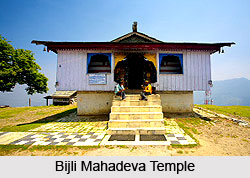
This city of Himachal Pradesh is nestled between Dhauladhar and Pir-Panjal range, with full of its mind pleasing natural beauty. Kullu is famous for apple orchards, old wooden temples and endless picturesque beauty. Tourism in Kullu comprises ample scope for trekking, climbing and angling, and big and small game are plentiful in its forests. The snowcapped mountains and the cascading rivers are reasons enough to tour this serene valley that lies in the lap of the Himalaya Mountains. Though famous for its tourist attractions, Kullu has its share of history as well. In ancient times it was known as Kulanthpitha, meaning the end of the inhabited world. Pilgrimage Tourism in Kullu Kullu is also famous for its ancient temples that add to the serenity of the place. The most remarkable temple of Kullu is that of Bijli Mahadev temple which is located a few miles away from Kullu. The temple is built of large blocks of stone without the use of cement and its 20 metres tall pole is reputed to attract lightning which, according to the local legend, is an expression of divine blessing. Interestingly, every time the flagstaff is struck by lightning, the Shiva linga inside the temple is shattered. It is put back together each time by the priest and covered with 'sattoo' (a paste of roasted gram and wheat powder) and butter. The image, thus restored, stands till another similar flash repeats 'the miracle'. Besides this temple, another popular temple is Raghunath Temple, Kullu. 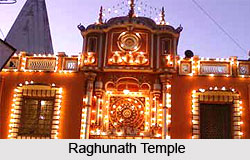 This shrine is located in the city of Raghunathpur and is at a distance of 15 minutes from the main bus stand at Kullu. As per legends the idol worshipped here is the same idol that was made by Lord Rama while performing Aswamedha Yagna. Dussehra festival is celebrated with much pomp and gaiety here attracting a large number of devotees from far and wide.Further, there is the Vaishno Devi Temple at a distance of 4 kms from Kullu and the Triyug Narayan Temple in Dyar. Parashuram Temple is another temple of Kullu that is worth visiting. Bajaura is 15 kms away from Kullu valley and is renowned for Basheshwar Mahadev Temple and its sculptural works in stone. This temple is visited by a large number of tourists throughout the year. Kullu Dussehra is another major celebration that attracts the people from far and wide. This shrine is located in the city of Raghunathpur and is at a distance of 15 minutes from the main bus stand at Kullu. As per legends the idol worshipped here is the same idol that was made by Lord Rama while performing Aswamedha Yagna. Dussehra festival is celebrated with much pomp and gaiety here attracting a large number of devotees from far and wide.Further, there is the Vaishno Devi Temple at a distance of 4 kms from Kullu and the Triyug Narayan Temple in Dyar. Parashuram Temple is another temple of Kullu that is worth visiting. Bajaura is 15 kms away from Kullu valley and is renowned for Basheshwar Mahadev Temple and its sculptural works in stone. This temple is visited by a large number of tourists throughout the year. Kullu Dussehra is another major celebration that attracts the people from far and wide.
Nature Tourism in Kullu Kullu, also known as the 'Silver Valley', is the favourite haunt for the adventure seekers. Trekking, river rafting on Beas River, paragliding, skiing, mountaineering, camping and other adventure sports are common in this valley. Besides this, Kullu has numerous places for trout fishing. These include Katrain, Raison, Kasol and Naggar, along river Tirthan near Larji, in the Sainj Valley and in the Hurla Khud. The valley is the nucleus of several trek routes. Some major ones are over the Chander Khani Pass. Another quaint place is Kaisdhar. Here nature is in its pristine forms. Kaisdhar, too, is situated at a distance of 15 kms from Kullu. Kasol, 40 kms away, is perched on the banks of river Parvati. The well-known hot springs of Manikaran are just 45 kms from Kullu town. The road from Kullu to Manali runs along the swift and rushing torrents of the Beas River. It is flanked by lofty mountains and spreading forests. On this road is Katrain, famous for its fruit orchards and its trout hatchery. Near Katrain, across the river, is a small town Naggar, where the medieval world still survives. The town has been made famous by the late Russian painter, Nicholas Roerich, whose gallery can be seen there. Visiting Information 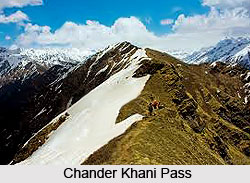 The nearest railway stations are at Chandigarh The hill station of Kullu is easily accessible by railways, roadways and airways. The airport at Bhuntar is 10 km from Kullu. Taxis and buses are easily available to reach the valley. The nearest railway stations are at Chandigarh (Punjab ) and Kiratpur, Uttar Pradesh. The closest narrow gauge railhead is at Jogindernager, 95 km from Kullu.
Kullu is at a distance of 530 km from Delhi via Mandi and 240 km from Shimla. From Delhi and Shimla, luxury buses are available for Kullu. Kullu is easily accessible from all the major cities of Himachal Pradesh like Shimla, Dharamsala, Manali and Dalhousie.
The best time to visit Kullu is October, when the Dussehra festival is celebrated. The main highlight of the fair is the dance competition held every evening. Kullu in Himachal Pradesh is also famous for its handicrafts and caps. All the places of Kullu are worth seeing. The nearest railway stations are at Chandigarh The hill station of Kullu is easily accessible by railways, roadways and airways. The airport at Bhuntar is 10 km from Kullu. Taxis and buses are easily available to reach the valley. The nearest railway stations are at Chandigarh (Punjab ) and Kiratpur, Uttar Pradesh. The closest narrow gauge railhead is at Jogindernager, 95 km from Kullu.
Kullu is at a distance of 530 km from Delhi via Mandi and 240 km from Shimla. From Delhi and Shimla, luxury buses are available for Kullu. Kullu is easily accessible from all the major cities of Himachal Pradesh like Shimla, Dharamsala, Manali and Dalhousie.
The best time to visit Kullu is October, when the Dussehra festival is celebrated. The main highlight of the fair is the dance competition held every evening. Kullu in Himachal Pradesh is also famous for its handicrafts and caps. All the places of Kullu are worth seeing.
|
| |||



Home > Travel > Hill Stations in India > Hill Stations in Himachal Pradesh > Kullu > Tourism in Kullu
Tourism in Kullu
| Tourism in Kullu provides ample scope of exploring the true beauty of the nature by offering visits to several tourist sites including temples. Tourism in Kullu also attracts adventure lovers by offering scope of trekking, climbing and other adventure sports. |
| ||||||||||||||||||||||||||||

