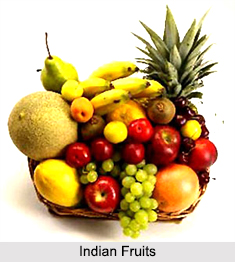
 Indian fruits are sweet and fleshy products of a tree or plant and have seeds. Indians know the importance of fruits and the wholesome utility of the same since time immemorial. Thus, fruits form a part of a nutritious diet. Being one of the largest countries and consisting of one of the richest natural vegetation in the world, India is a home to a wide variety of fruits.
The Indian fruits can be classified in various categories from juicy to solid fruits, etc. Indian fruits have earned immense recognition and reputation for their taste, all over the world. India holds a unique position in the field of fruit production, amongst other countries. India accounts for 10 percent of the world`s total fruit production.
Indian fruits are sweet and fleshy products of a tree or plant and have seeds. Indians know the importance of fruits and the wholesome utility of the same since time immemorial. Thus, fruits form a part of a nutritious diet. Being one of the largest countries and consisting of one of the richest natural vegetation in the world, India is a home to a wide variety of fruits.
The Indian fruits can be classified in various categories from juicy to solid fruits, etc. Indian fruits have earned immense recognition and reputation for their taste, all over the world. India holds a unique position in the field of fruit production, amongst other countries. India accounts for 10 percent of the world`s total fruit production.
History of Indian Fruits
Many fruits and vegetables have grown in the wild for thousands of years. To eat them as food, people simply gathered wild fruits and vegetables. The less important and so-called underutilized fruits were kept uncared for, mainly in natural wild, semi-wild and semi-domesticated conditions. But now these fruits are cultivated. About 11,000 years ago, people began to plant fruits and vegetables to eat and keep themselves healthy. Farmers indulged themselves in experimentation and have grown new breeds of wild fruits and vegetables.
 Different Indian Fruits
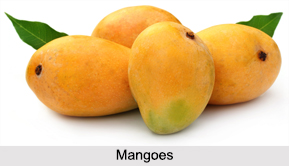
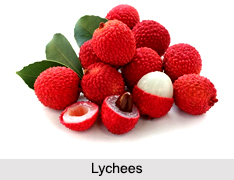
India is gifted with a variety of tropical fruits. Some of the most famous and popular Indian fruits include mango, banana, jackfruit, lakoocha, cherimoya, custard apple, wood apple, elephant apple, cashew apple, soursop, ramphal, loquat, ceylon peach, tamarind, carambola, bilimbi, sour orange, sweet lime, calamondin, citron, white sapote, langsat, bignay, star gooseberry, yellow mombin, lychee, Surinam cherry, karanda, husk tomato, tree tomato, kubani, jamun, chiku, khajoor, kharbooja, anar, etc. Bananas and mangoes are the chief fruits grown in India.
National Fruit of India
Mango is the national fruit of India and is one of the most widely grown fruits in tropical countries and also in India. Mango is cultivated in almost all parts of India, with the exception of hilly areas. A poet namely, Kalidasa has written immortal poetry in its praise. Alexander indulged in its richness and so did the Chinese pilgrim namely, Hieun Tsang. Mango is known to be a rich source of vitamins, A, C and D. Mangoes can be found in various sizes ranging from 10 to 25 cm in length and 7 to 12 cm in width. A single mango can weigh as much as 2.5 kg. There are many varieties of mango available in the market. Some of them include alphonso, amrapali, chausa, himsagar, mallika, langda and Bombay. Usually a mango tree lives for a long period of time. A few specimens are more than 300 years old and still bear fruits.
 States Producing Indian Fruits
The major fruit-producing Indian states are Andhra Pradesh and Maharashtra. Andhra Pradesh contributes about 19 percent of the total fruit production, whereas Maharashtra accounts for about 18 percent of the total fruit production. Some of the other fruit producing states of India are Gujarat, Karnataka, Uttar Pradesh, Bihar, West Bengal, Madhya Pradesh and Jammu and Kashmir.
Significance of Indian Fruits
Indian fruits have several essential nutritional values. There is a huge international demand for certain Indian fruits and vegetables. Some of the Indian fruits have also become one of the highest selling fruits in the international market. India ranks 5th in the world in cropped area under cultivation. Most of the fruits available in India are native to the country. However, there are several other fruits that have been brought to India from outside and cultivated on a large scale. Fruits coming from outside have naturalized in the wild. More than 90 percent of India`s exports of fresh products, including fruits go to West Asia and East European markets.
Vegetative propagation methods, advertisement of numerous species to farmers and provision of market support to them, would ensure commercial cultivation and add to the deglamourized state of Indian horticulture. In addition to being potential horticulture species, fruits are incidentally storehouses of genes for adaptation to hot climate and being tolerant of salt and diseases.