


|
Description: Bharatanatyam, rooted in ancient Indian traditions, finds its origins in the Natya Shastra and the temple traditions of devadasis. Despite facing suppression during the colonial era, Bharatanatyam experienced a remarkable resurgence and revival due to the efforts of visionaries like E. Krishna Iyer and Rukmini Devi Arundale. Bharatnatyam, one of the oldest dance forms of India, has a rich and fascinating history that dates back thousands of years. It originated in the temples and courts of southern India and was nurtured under the Devadasi system, where women dedicated themselves to serving deities as dancers and musicians. The art form was passed down from generation to generation, with the devadasis and male gurus (nattuvanars) being the custodians of this ancient tradition. 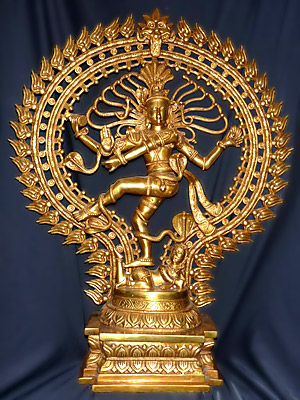 Origin of Bharatnatyam Origin of Bharatnatyam
The roots of Bharatnatyam can be traced back to the Natyashastra, an ancient treatise on theatre written by the mythic priest Bharata. Initially, Bharatnatyam was primarily a temple dance performed by women to express Hindu religious stories and devotions. The dance movements are characterized by bent legs and rhythmic footwork, while the hands use symbolic gestures, called mudras, to convey stories and emotions. 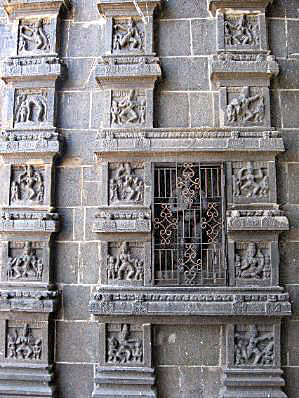 Etymology and History of Bharatnatyam Etymology and History of Bharatnatyam
The term "Bharatnatyam" derives from the chief exponents of the dance form in ancient times, the devadasis, who were women in the service of the gods. The term itself means "the dance of the devadasis." However, in the early 20th century, there was a shift in perception, and the educated elite sought to separate the art from the devadasis, who were deemed disgraceful practitioners. This led to the adoption of the term "Bharata Natyam," which could apply to any of the chief schools of classical dance in India, all of which were based on Bharata's work. In 1932, E. Krishna Iyer and Rukmini Devi Arundale played a significant role in reviving Bharatnatyam and giving it a measure of respect. They proposed renaming the dance form from Sadiraattam to Bharatanatyam at a meeting of the Madras Music Academy. They also made modifications to the Pandanallur style of dance. The word Bharatam is seen as a backronym, with "bha" standing for bhavam (feelings, emotions), "ra" for ragam (melody), and "tam" for talam (rhythm). The term Natyam is a Sanskrit word for "dance." Thus, Bharatanatyam came to connote a dance that harmoniously expresses feelings, melody, and rhythm. 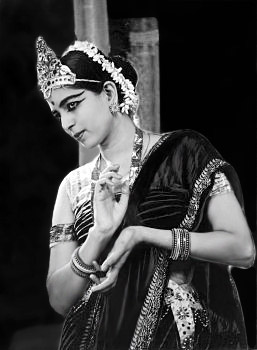 Nataraj, the Lord of the Dance, played a significant role. The temples in South India, such as the Chidambaram temple, were adorned with sculptures and carvings depicting various dance postures. These sculptures provided the basis for the 108 karanas or body postures in dance described in the Natya Shastra. Nataraj, the Lord of the Dance, played a significant role. The temples in South India, such as the Chidambaram temple, were adorned with sculptures and carvings depicting various dance postures. These sculptures provided the basis for the 108 karanas or body postures in dance described in the Natya Shastra.
The Vaishnavite temples at Belur and Halebid also contributed to the history of Bharatnatyam. The sculptures and legends related to Lord Vishnu and his avatar Krishna added new songs and stories to the dance's repertoire. The kingdom of Vijayanagar further flourished Bharatnatyam, and the influence of the Muslims introduced new terms and elements into the dance form. Bharatnatyam in Colonial Era During British colonial rule, classical Indian dance forms, including Bharatnatyam, faced ridicule and discouragement. The colonial authorities associated these dance forms with debased erotic culture and sought to suppress them. In 1910, the Madras Presidency of the British Empire banned temple dancing, which effectively ended the tradition of Bharatnatyam performances in Hindu temples. However, in the early 20th century, the revival and renaissance of Bharatanatyam gained momentum with the efforts of individuals like E. Krishna Iyer and Rukmini Devi Arundale. They played a significant role in bringing Bharatanatyam out of the temples and into the public domain, giving it a new life and recognition as a respectable art form. Resurgence and Revival of Bharatanatyam E. Krishna Iyer, an advocate and cultural activist, worked tirelessly to revive Bharatanatyam and restore its glory. He believed in the significance of preserving India's cultural heritage and promoting its traditional art forms. Alongside him, Rukmini Devi Arundale, a theosophist and renowned Bharatanatyam dancer, dedicated herself to the revival and transformation of the dance form. Arundale was instrumental in modifying and refining the Pandanallur style of Bharatanatyam, bringing it closer to its current form. She also played a crucial role in establishing Kalakshetra, an academy for the arts in Chennai, which became a center for learning and promoting Bharatanatyam. With their combined efforts, E. Krishna Iyer and Rukmini Devi Arundale brought Bharatanatyam back into the limelight and encouraged the participation of dancers from various social backgrounds. Reforming Bharatanatyam The revival of Bharatanatyam not only transformed the perception of the dance form but also brought about a significant shift in the demographics of its practitioners. Previously, the dance was primarily performed by the devadasis, who were women dedicated to serving the Gods in temples. However, with the revival, Bharatanatyam became accessible to women from different backgrounds, including high-caste families. This opened up opportunities for aspiring dancers to learn and perform Bharatanatyam without the restrictions imposed by the devadasi system. The efforts of E. Krishna Iyer, Rukmini Devi Arundale, and other pioneers of the revival movement paved the way for the establishment of numerous schools, academies, and institutions dedicated to teaching Bharatanatyam. Today, there are several renowned gurus and institutions across India and abroad that impart training in this classical dance form. Bharatanatyam has also gained international recognition and is performed and appreciated by artists and audiences worldwide. The history of Bharatanatyam is a testament to its resilience and adaptability. From its origins as a temple dance performed by devadasis to its revival and transformation into a widely recognized classical dance form, Bharatanatyam has evolved and grown over the centuries. It has embraced new influences and incorporated elements from other dance forms while retaining its essence and cultural significance. |
| |||



Home > Art & Culture > Indian Dances > Classical Dances of India > Bharatnatyam > History of Bharatnatyam
History of Bharatnatyam
| History of Bharatnatyam hails from south India and was initially known as Dasi attam. |
| ||||||||||||||||||||||||||||

