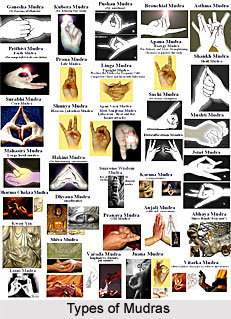
Mudras are the postures of hand that are practiced from time immemorial by the people worldwide. Different types of Mudras follow a few steps to travel into the consciousness and heal. The various types of Mudra enable the Chakra energy and mood whilst lifting the inner self. The various types of mudras are utilized at three different levels: In classical Indian dance as symbols of animals, states of mind, feelings, etc, in Indian ritual and worship various types of mudras are utilised and also in tantra different types of mudras are used to increase the evolution by opening up energy flows in the tissues, nerve channels and organs of the body.

There are also different types of mudras such as hand mudras, eye mudras, whole body mudras, mental mudras, etc which allows one to balance mind and body and release energy. There are mudras related to Mana, Kaya, Dhyana etc, all support in the further development of the self.
Mana mudras utilize the sense organs of the eyes, ears, nose, tongue and lips. Mana mudras need concentration and focus on internal consciousness whilst elevating the cognizance. Contraction mudras or the dhyana mudras involve the engagement of subtle skeletal muscles, mostly in the area of the pelvis. These types of mudras centralize the prana in the body and prime the energy channels for the awakening of Kundalini.
Kaya mudras are similar to asana, but meld the other types of simple mudras with Pranayama and concentration. These are the most complicated mudras and require the most amounts of concentration and focus to hold. Kaya mudras reinvigorate the prana in the body and direct the prana into specific chakras which are considered as energy centers.
Hasta (hand) mudras encompass the involvement of hands and are used primarily in meditation, but can also be incorporated in asana and pranayama as well as in daily activities. Hasta mudras channel the prana into a new direction. These mudras are the most common of the categories of mudras. Amongst the various types of mudras Om Mudra is one of the most well known Mudras.
Om Mudra is practised with the thumb and the index finger. This Mudra is indeed helpful to attain peace and tranquility in life. Another important mudra is the
Smiling Buddha Mudra. This mudra has been made world famous in paintings and statues. This is a gesture and exercise of happiness as it opens the flow of energy to the heart. Be it any other emotions like fights, worry, depression, impatience, anger, fear and others, this Mudra can be done anywhere.
Ganesh Mudra, another important mudra, helps to strengthen the heart muscles and open the bronchial tubes and release tension. It also opens the fourth chakra and boosts confidence in the practitioner.
Hakini Mudra is a mudra that engages hand especially fingers. This mudra , if practiced daily can be beneficial for the brain.
Bronchial & Asthma Mudra are very good for respiratory problems and engages with both hands. The Bronchial and the Asthma Mudras can be done for a few minutes one after the other until the breathing calms down.
Apart from the above mentioned different types of mudras, the
Prana Mudra is indeed another important type, which activates the root chakra and increases vitality of `Prana`. The
Linga Mudra promotes the body`s immune system and loosens the mucous that has been collected in the lungs and it is believed to make the body more resistant to colds and chest infections. This Mudra is considered to be beneficial in reducing weight.
Apan Mudra is regarded one of the important types of mudra and is also referred to be the energy Mudra. This Mudra helps to remove the toxins stagnant in the body. This Mudra balances the mind , soul and body and also controls the develops the inner balance and confidence.
Another most reckoned mudra is the
Shankh Mudra which is very good for problems of the throat. In this Mudra, the positioning and clasping of the fingers simulate and resembles a conch shell. The conch gesture or Shankh mudra is extremely valuable as it helps to alleviate and reduce any bodily inflammation. It also helps restore calm and rids the mind of any anxiety or tension that you suffer from. Amongst the various types of mudras the
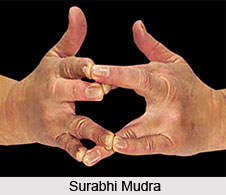
Surabhi Mudra seems a bit complicated and almost looks like a puppet player`s fingers in action. This mudra is supposed to be curative of all stomach problems, removes bodily impurity and helps to balance the five main substances or tattvas in human body. It is supposed to be an effective tool against rheumatism.
Vayu Mudra supports the holistic treatment and helps to assuage diseases like arthritis, trembling in Parkinson`s disease. The
Prithvi Mudra activates the root chakra, which houses the vital energy or elemental force of human entity. A sound vital energy optimizes the physical potential in a person who is then in a position to actualize both his physical and metaphysical goals. Practice of this mudra promotes to the improvement of spiritual power and leads to inner peace.
Varuna Mudra is reckoned as an important type of mudra. Varuna is the connotation of water. This mudra balances the water component of the human body. This mudra involves touching the tip of the little finger with the tip of the thumb and the other fingers are kept upright. This Mudra works as an effective tool for getting rid of the excess mucous that collects in the stomach or lungs. Apart from these
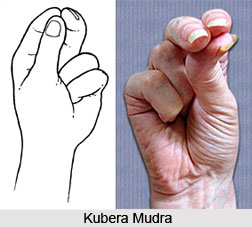
Bhudi Mudra , Apan Vayu Mudra , Back Mudra , Kubera Mudra , Kundalini Mudra , Gyan Mudra, Tranquility Mudra, Namaste Mudra or Prayer Pose and the Surya mudra are some of the important types of mudras.