 Indian plants are diverse and can be divided into various categories. They are known for their wide range of characteristics, benefits and appearance. Some Indian plants grow throughout the year, while others bloom only twice a year. Further, there are certain Indian plants that are used for medicinal purposes and there are some plants that serve solely the purpose of decoration and ornamentation. Indian plants have ornamented every nook and corner of the nation with their bright colors and lovely flowers.
Types of Indian Plants
Indian Plants can be grouped into several categories like annual plants, biennial plants, perennial plants, bulb plants, shrubs, herbs, medicinal plants and vines, creepers and climbers. These categories are described below.
•Indian Annual Plants
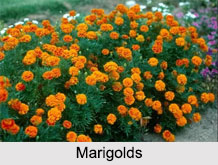
Indian annual plants live for a year or less than a year. These plants are popularly known as seasonal flowering plants, as they produce flowers only for three to four months, maximally. Annual plants normally grow through seeds. They grow, produce flowers, reproduce more seeds and finally die, within a year. Asters, marigolds, balsam, basil, dianthus, petunias and salvias are some of the important Indian annual plants.
•Indian Biennial Plants
Indian biennial plants take two years to grow from seed, bloom and then die. These seasonal flowering plants bloom in the second year of plantation. In order to have flowers one year after another, one would have to plant seeds of biennial flowers every year. Foxglove is the most common biennial plant in India.
•Indian Perennial Plants
Indian perennial plants bloom throughout the year. These plants mainly grow in acidic soils. Watering should be to a deeper level, sporadic and applied directly to the soil for the proper growth of these plants. Bleeding heart, gerberas, anthuriums, geraniums and water lily are some of the widespread perennials in India.
•Indian Bulb Plants
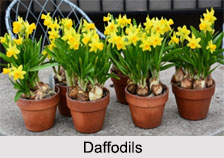
Indian bulb plants are particular stem structures, which are planted underneath the soil. These plants grow and produce flowers. The leaves remain for sometime and then fade away completely. Daffodils, tulips, bluebells are the best examples of bulb plants in India.
•Indian Shrubs
Shrubs in India are a common sight. They are basically woody plants having slightly short stems with branches almost near the ground. Shrubs are generally used for ornamental purposes. Flowering shrubs are bushy. The flowers blossom throughout the year. Ixora, mosanda, pentas, hibiscus and lantana are the most common shrubs in India. Ornamental shrubs are found with evergreen foliage throughout the year, but do not have any flower. Juniperus, aralia, acalypha and crotons are the common ornamental shrubs found in India.
•Indian Herbs
Indian Herbs refer to leafy green or flowering parts of a plant, either fresh or dried.
They are used for flavoring in food and creating medicines, cosmetics and fragrances. Some of the Indian herbs are thyme, basil, lavender, parsley and sandalwood.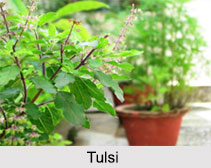
•Indian Medicinal Plants
Indian medicinal plants are used in different treatment methods like Ayurveda and Aromatherapy. Kariyat, also known as "creat" has medicinal value. It is an annual herb, which grows erect up to a height of 1.4 feet. It has smooth leaves, white flowers and tastes bitter. Since ancient times this plant is being used for medicinal purposes. Kariyat is the main ingredient of Ayurvedic medicines. Malabar Nut is a common name in the world of Ayurvedic medicines and is mentioned in Sanskrit scriptures. It is useful for curing common cough, cold and asthma. Blue Pussy Leaf is often used as a salt substitute and the sap of this plant is very useful for dealing with insects and worms. Mountain Knot Grass is very useful for addressing the issues related to kidney and gall bladder. Ayurveda suggests internal intake of decoction of the plant to help dissolve the stone and also clear the urinary tract. Other medicinal plants grown in India are tulsi, ashwagandha, amla, brahmi, guggulu and kharjuri.
•Indian Vines, Creepers and Climbers
Vines and creepers are vertically growing plants with a support and are often used as fences and borders. Climbers also require support to grow, as they have soft stems.
Indian Plants
Indian plants are of various types and each of the species has a specialty of its own. Some plants are used for decoration, while others are used for treatments. The different categories of Indian plants are annual plants, biennial plants, perennial plants, etc. The names of some of the Indian plants are marigolds, balsam, foxglove, daffodils and tulsi.