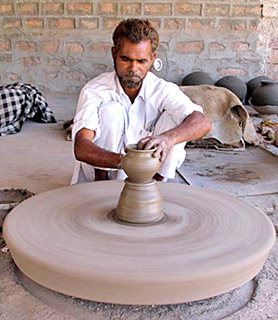
Chamar, Dalit sub caste from India, are generally involved with leather works. The word Chamar is derived from the Sanskrit word `Charmakara` meaning tanner. They generally reside in certain parts of the northern states of India. Some are scattered around Himachal Pradesh, Delhi, Haryana, Bihar, western Punjab, Uttar Pradesh and in Nepal. In fact, they are mostly found in hindi speaking states of the country. The Chamars are also called by the names of Chambar Boli, Chambari and Chamari. The Chamars are considered as a Scheduled Caste in India.
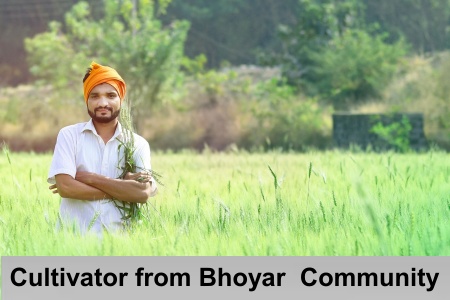
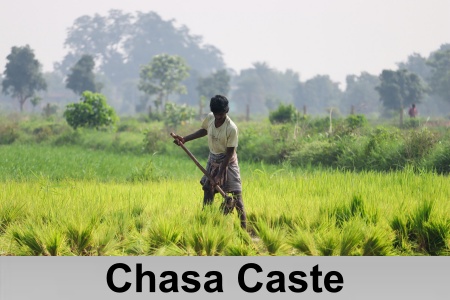
Though the name of the Chamar suggest the meaning of hide workers, the people of this community are also engaged in some other occupations like agricultural activities, field workers, weaving etc. Sometimes they work as coolies and some are engaged in taking care of the hides and the animals and some related works for making hide materials. Though the Chamars are engaged in other jobs, basically their main occupation is agriculture. It has been said that the Chamars residing in some parts of Nepal are of Indo-Aryan lineage. 300 years ago, this group migrated from Bihar and Uttar Pradesh. The Chamars residing in Punjab are ramified in groups like Ravidasis and Ad-dharmis. Most of the Chamars are concentrated in Punjab near the Doaba region. In this region, the Chamars have proper education and are affluent. Some of them are engage din different services in India and some are migrated to abroad. Thus the economic status of the Chamars of this region is better from the other groups residing in different parts of India.
There are several traditions suggesting the origin of Chamars. The name Ravidasi Chamars basically derived from the term `Ravidasias`. The people of this group were influences by the Saint Ravidass and those who follow the paths said by the Saint are called Ravidassia Chamars. Another group of Chamars are called Raigar, which is considered as the sub caste of the Chamars. Though Raigar is not directly the sub caste of Chamars, but there are similarities in economic and occupation that made them similar to the Chamars. The people of Raigar community are leather tanners inhabiting in some parts of Delhi. The Raigar community is divided in three major groups namely Lashkaria Raiger, Sindhi Raiger and Raigar and these sub groups have a number of clans. As per history, the Chamar group either came from the Aryans or there is a chance that they are the descendants of the original community of the Chamars. According to Manu, the Kara Vera or worker in leather has descended from a Nishada father and Vaidiha mother. Again, on the same authority, the Nishada is the offspring of a Brahman husband and Sudra wife. And Vaidiha has been born of a Vaishya husband and Brahmin wife. If the workers in leather of the present day are lineal descendants of the workers in leather in Manu`s time, the Chamars may fairly consider themselves of no mean degree as they may hold up their heads boldly in the presence of the superior castes. The Chamars of the past were the followers of Hinduism. Apart from following Hindu religion, the Chamars also follow Islam, Sikhism, Buddhism and Christianity. Some of the Chamars are the part of smaller religious groups namely Ravidasi, Ad-Dharm and Arya Samaj. They took part in the small movements that were conducted by these groups.
The Chamars are divided into various endogamous sub-castes and some of these sub-castes are of occupational nature. Further, Chamar community is also divided into a number of exogamous groups or sections, whose names suggest huge diversity of character. Like for example, some are taken from Rajput clans, as Suryavanshi, Gaharwar and Rathor; while others have been taken from Gond tribe. They have certain indigenous customs and they are religious by nature. Apart from being engaged in some other professions, the Chamars take active parts in politics. History says that a huge number of Chamars were involved in military service and took active part in several major wars. During the British rule, many were recruited in the army for World War I and II in British India Army.