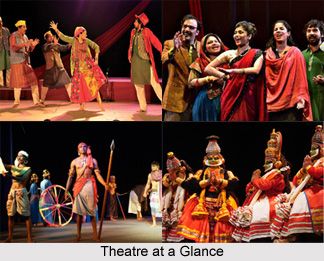
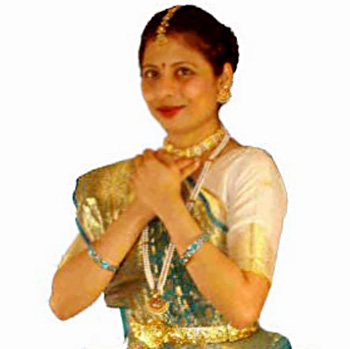
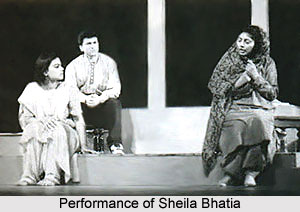
 Sheila Bhatia was born in the year 1916. She was the director of Delhi Art theatre. Sheila Bhatia was a playwright and a composer as well. She has over sixty major productions to her credit. Her pioneering work in musical theatre i.e. in Punjabi language, Hindi language, and Urdu language brought her honours from various institutions. In all, she has prepared about fifty `operas` in which poetry, recitation, music, dance, mime, and movement freely combine to give the impression of what has been called total theatre. What distinguishes this opera from its Western counterpart is her insistence upon singing and acting to function in unison. Also, instrumentation is not as important as in the European form, which makes abundant and sophisticated use of the orchestra. Therefore, her opera is closer to the soil in its ethos. Bhatia started working in Punjabi theatre in the 1940s. Her first musical, Call of the Valley, dates from the early 1950s. Her poetic compositions ranged from Punjabi folk songs to Urdu ghazals, passages from tales of love and utterances from scriptures. However, it is Punjabi folklore that inheres in the cultural unconscious of her operas. The roots of their texture lie in the collective memory though their structure may be acquired from distant sources. For example Tere mere lekh i.e. `Our Destiny` in 1984 comprises patches of folk lyrics, romantic narratives, and Sufi poetry, but its structure derives from Garcia Lorca`s Blood Wedding.
The operas that brought her the highest laurels are Hir-Ranjha i.e. `Hir and Ranjha` in 1956 and Chann badlan da i.e. Moon behind the Clouds` in 1966. The former enacts the most popular love story that in course of time inspired scores of Punjabi poets, most hauntingly transformed by Waris in 1723. Bhatia`s work owed its inception to this classic. Like a musical collage, Chann badlan da taps Punjabi folklore of diverse heritage to construe that Punjab, first fractured into Indian and Pakistani parts and then fragmented further with portions going to Haryana and Himachal Pradesh, remains indivisible. Bhatia also composed operas in Urdu language, such as Qissa yeh aurat ka `This Is Woman`s Story` in 1972, Hawa se hippy tak i.e. `From Eve to Hippy` in 1972, and Yeh ishq nahin asan i.e. `This Love Isn`t Easy` in 1980. Sadly, nobody of her genius has appeared to continue with her tradition or extend its scope.