





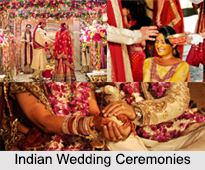
 Indian Wedding Ceremonies is a very complex one with abundance of rituals. The shades of a marriage ceremony varied greatly due to factors like region and language. The modern couples often make up custom weddings and thus highlight the meaningful and special traditions of their Indian heritage. Indian Wedding Ceremonies is a very complex one with abundance of rituals. The shades of a marriage ceremony varied greatly due to factors like region and language. The modern couples often make up custom weddings and thus highlight the meaningful and special traditions of their Indian heritage.
An Indian Hindu marriage is a union of two souls. It is not just exchange of vows and rings, but also start of a beautiful bond between two families and their cultures. The detailed steps of an Indian Wedding Ceremonies are given below in brief: Indian Pre-Wedding Ceremonies The Indian Weddings signify much more than mere decorations, fineries, entertainment, wedding planners, mehendi-walis and flowers. 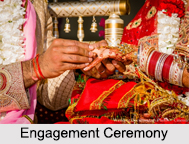 Engagement Ceremony deals with the exchange of rings between the bride and the groom. This ceremony is mainly conducted to fix the marriage date. Merriment and entertainment to their best extent is seen to get actually started from the event of engagement. This is the main attraction of Indian weddings. Engagement Ceremony deals with the exchange of rings between the bride and the groom. This ceremony is mainly conducted to fix the marriage date. Merriment and entertainment to their best extent is seen to get actually started from the event of engagement. This is the main attraction of Indian weddings.
Tilak Ceremony is a pre-wedding ceremony that happens to be the formal engagement of the bride and groom. This was conventionally distinguished at the home of the groom’s family where the bride’s family might be present. The ceremony is held in different styles according to different traditions and caste. Mehendi Ceremony is a pre-wedding ceremony, traditional in India. This ceremony has been prevailing since ages and forms such an essential part of the wedding ceremony that it cannot be imagined without it. Furthermore, Mehendi is one of the sixteen adornments of the bride and her beauty is thought to be incomplete without it. Sangeet Ceremony is one of the vital pre-wedding rituals in an Indian wedding. The sangeet ceremony is either held along with the mehndi ceremony or in the morning of marriage day. This ceremony is the musical announcement of the couple's union, their love and prayers for their happy married life. Indian Religious Wedding Ceremony Eventually a more cherished religious ceremony takes place on the Wedding day which is performed by a Hindu priest. The priest offers many mantras or chants to gods and goddesses on behalf of the couple. Baraat Ceremony is considered to be more public ceremony. The groom, his family, and friends arrive at the bride's dwelling in a parade called a Barat or baaraat, usually after midnight. 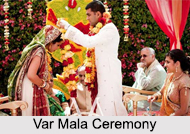 Var Mala ceremony is a significant main wedding day ceremony. It is also known as Jaimala ceremony and basically involves exchange of garlands between the bride and the groom. Alike all other customs and rituals, this Var Mala ceremony is also a significant ceremony which finds a position even in the Vedic literature. It is an ancient practice and is still conducted in India. The Var Mala ceremony takes place after the groom reaches the venue for the wedding, along with the Baraat. Var Mala ceremony is a significant main wedding day ceremony. It is also known as Jaimala ceremony and basically involves exchange of garlands between the bride and the groom. Alike all other customs and rituals, this Var Mala ceremony is also a significant ceremony which finds a position even in the Vedic literature. It is an ancient practice and is still conducted in India. The Var Mala ceremony takes place after the groom reaches the venue for the wedding, along with the Baraat.
Mandap ceremony holds supreme importance on the day of the wedding. This is because all the major rituals are performed during the mandap ceremony. In this part of the ceremony and the vows are conventionally performed under an ornamented canopy in front of the ‘holy fire’. The bride and the groom follows the invocations from the priest, the bride and groom will participate in a ceremony that is called the ‘Saat Phera’. This is the portion of the Indian wedding ceremony where the couples take their vows. Each vow will be verbalized with the couple walking around the ‘holy fire’. A traditional wedding gift by the groom to the bride during the Indian wedding ceremony is the gold Mangalsutra. He may also give a pinch of red powder in the part of her called the vermillion as a visual signification of the marriage. Vidai ceremony is denoted as a sad event of marriage. After the marriage rituals are completed and blessings of the elders are taken in this ceremony. This is the ceremony where the groom takes away the bride to his household. The friends and relatives of the bride bid her tearful good bye, as she leaves her father's house to start a new journey with her life partner. Indian Post Wedding Ceremony A post-wedding function is organised by the groom’s family in which, all the elder members, friends and relatives from both the families gather to celebrate with the newly wedded couple. It is a first public appearance of the couple together after wedding where they get the blessing and gifts from the society and relatives. Reception ceremony is a post wedding ceremony and one of the most important rituals in India. However, the particulars of the reception ceremony may vary from religion to religion and place to place. Usually, the reception ceremony is celebrated the day after wedding. Hence each of the Indian marriage rituals is guided by their own customs and norms. |
| ||||||||||||||||||||||||||||

