 Maratha community is the military caste mainly residing in western and partly southern region of the country. Maratha community is a Hindu community largely comprising castes like warriors and landowners. They are primarily distributed over the states of Maharashtra, Gujarat, Karnataka and Tamil Nadu and also in some parts of Madhya Pradesh. Maharashtra occupies one-tenth of the land area of India. It marks the southernmost boundary of the spread of Sanskrit based languages. It is a culturally significant region because it is the link between north and south, between the Indo-European culture and the Dravidian culture that was indigenous but was pushed down to South India. In its language and culture it accommodates both.
The term Maratha signifies an inhabitant of a region where mostly Marathi language is used and secondly to a member of the caste to which the name Maratha has been given. Maratha caste claims their origin from Rajputs. Further, several clans of Maratha community include the names of Rajput tribes like Panwar, Suryavansi, Chauhan and Solanki. Maratha caste history prior Chatrapati Shivaji is not very bright. The Marathas comprise 96 Kuli Marathas as well as Kunbis and represent the largest single community of Maharashtra. A Kuli is a group, all the members of which generally bear the same name. Their skin complexion may vary from light brown to very dark. They are of medium height and generally have high cheekbones and dark eyes. They seem to belong to regions of Daulatabad, Aurangabad, Beed and Parbhani. In earlier times they have been landowners and soldiers in Maharashtra for many centuries. Besides these 96 clans there are some other sub-castes too.
The Maratha community follow certain indigenous customs and social traditions. Like for instance, a man is not permitted to marry within his own clan or of his mother`s clan. Their marriage ceremony is quite similar with that of the Kunbis. Some clans allow widow remarriage. Divorce is not apparently allowed. They also follow certain funeral rites. They worship Lord Shiva and his consort, Parvati. The worship of the `Devak` is found only among them. The Kuladevata or family deity is worshipped on all special occasions, such as, weddings or naming ceremonies. It is also visited during the teerthas. The Kunbis were originally land workers. They make no differentiation regarding cooked food as food from all castes re accepted by them. The principal deity of Maratha community is Khandoba, which is a fighter incarnation of Mahadev. During the Dussehra festival, the people of this community worship their swords and horses.
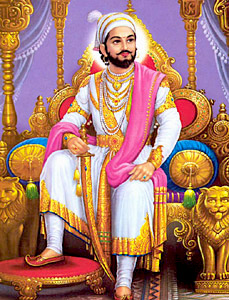
Shivaji Bhonsle, the most eminent Maratha, was born in 1630 and it was he who first made the bid for establishing a Maratha kingdom. Maratha community is considered as one of the most powerful communities in Maharashtra, not only because it is the largest but because it has entered modern post-independence politics with an assurance that can come only of many generations` experience in the art of ruling and manoeuvring. Marathas have flourished considerably over the past few centuries.
Maratha Community
Maratha Community, tracking its ancestry back to Shivaji, is known for its intellect and bravery. History of Maratha Empire forms a big portion of the history of medieval India.