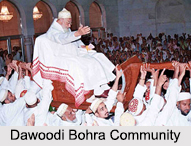
 Dawoodi Bohra Community comprises the main branch of the Bohras, a Mustaali sub-sect of Isma"ili Shia Islam. The Bohras comprise a small but close-knit community of the Muslims. They believe in an obscure interpretation of the Holy Quran behind the manifest meaning. Since they lost political rule in Egypt in the 12th century and Yemen in the 16th century, they have kept their strange faith intact from the persecuting Sunni rulers by practising the doctrine of "Taqqiya". It permits them to deny their identity to outsiders when under extreme pressure.
Origin of Dawoodi Bohra Community
The Dawoodi Bohras call themselves "Fatimid", the followers of Fatemi Imamat. They have a continuation from the Fatimid era of Egypt, Yemen. The word "Bohra" itself is derived from the word in the Gujarati language "Vehwahar", which is interpreted as “tradingâ€.
History of Dawoodi Bohra Community
The small Muslim sect of the Dawoodi Bohras numbering around 1 million and is spread over 35 countries, dates back to the 10th century AD. The Isma"ilias organized a secret religio-political movement in Iraq in order to counter the prevailing circumstances of the Abbasid Empire. It was required of each and every member of the sect to take a secret oath of allegiance, called a "Misaq", to the head of the community. This oath did not just cover religious matters but also seeped into many other aspects of life. Breaking this oath meant rather serious repercussions for the transgressors.
Society of Dawoodi Bohra Community
In India, the community had its origins in Gujarat. It is probably because of this reason that there are lots of customs that are quite similar to that of the Hindus. With good business skills and aptitudes, they took advantage of the new opportunities offered in foreign trade and contracting which appeared in the 19th century with the establishment of British rule in India.
The same structure that was originally advocated continues to be in existence among the Dawoodi Bohras who are directly descended from the Isma"ilia sect. The Misaq has to be taken by every Bohra at the age of 15. This oath of allegiance to a living human being and the concept of a priestly class mark the Bohras as apart from the rest of Islam.
The head of the community, the Dai-ul-Mutlaq, appoints the next successor. The chief of the Bohras, the "Sydena" exercises immense control over the community. He collects taxes and how these funds will be utilized is left for him to decide. No one is allowed to question the lifestyle of the Sydena or the feasibility of the oath in this day and age. The Sydena remains practically invincible. Like others belonging to the Shia sect, this particular Muslim community recognizes the hereditary rights of Ali over the first three elected Caliphs.
Religion of Dawoodi Bohra Community
The Bohras offer prayers 3 times a day instead of five by combining the afternoon and evening prayers. Unlike other followers of Islam, they have no sermon on Friday. They use the astronomical lunar calendar to determine the beginning of each month and place a special paper (raqqa) in the hands of the dead person.
The Dawoodi Bohra community has keen business acumen, and organization has a major role to play in their social formation.