
Bhatia community is basically the enterprising mercantile community of India. Originally a warrior race, Bhatia community is now mostly involved in trade and commerce. In the past, Bhatias were called Bhattis. They claim to be the descendents of Kshatriyas or Rajputs. It is believed that they have originated from the Sindh province. Today, this community is mostly found in the north western province of the country. They are concentrated in the states of Rajasthan, Punjab, Uttar Pradesh, Himachal Pradesh, Uttarakhand, Gujarat, Haryana, Jammu and Kashmir and Delhi.
Origin of Bhatia Community
In the 6th century, Raja Bhoopat reigned in Lahore. He acquired fame for his valour, courage and administrative shrewdness. His dynasty came to be known as Bhatti or Bhati Dynasty from which the name Bhatia has been derived. They successively established Tannot, Deraval and Jaisalmer in around 1156 AD. During the reign of Raja Mulraj, 1316 AD was a crucial year for the Bhatias as they were threatened with extinction. It was at this time that Ala-ud-din Khilji invaded Jaisalmer and besieged it for a year.
Society of Bhatia Community
Among the Bhatias, prominent ones are Jakhar, Jats, Halai, Pavrai, Navgam, Pachisgaam, Thattai, Kutchi, Veha, and Punjabi. Further, Bhatias from Kutch region are known as Kutchi Bhatias and those from Jamnagar district are Halai Bhatia, those from Sindh (presently in Pakistan) are called as Sindhi Bhatias, and those from Punjab are popularly known as Punjabi Bhatias. In their community, the boys and girls whose blood relationship was beyond seven generations could marry. In their society, widow remarriage is not allowed. This decision marked the beginning of the formation of groups or clans. In different regions the Bhatias acquired different styles of dressing.
Religion of Bhatia Community
As far as religion of Bhatia community is concerned, a majority of the people follow Hinduism. Further, they accepted the Pushtimarg (a sect of Hindu religion). In Bhatia community, Upanayana is performed. Upanayana is the initiation ceremony of a young boy who is invested with a sacred thread, symbolising a promise made to fulfil his debt to the creditor, his preceptor and his father. The guru initiates the boy, giving him the Gayatri Mantra.
Occupation of Bhatia Community
The Bhatia community successfully made their mark in the field of trade and commerce. The Bhatias were and still are inherently enterprising people and successfully entered many spheres of commerce and industry such as the textiles, cotton, iron and steel, mining and shipping industries.
Punjabi Bhatias are considered as most prominent in India. They are mostly settled in Punjab and Delhi regions. A large number of them have also settled down abroad.
Bhatia Community
Bhatia Community is mostly found in the north-western region of the country. Bhatia Community claims that they are descendents of the Kshatriya Rajputs.
Recently updated articles in Religion in India
Chasa Caste
Chasa caste is a prominent agrarian community native to Odisha. Traditionally associated with cultivation and farming, Chasas have historically played...
Vigneswara, A Form of Lord Ganesha
Lord Vigneswara is another form of Lord Ganesha or Vinayaka, prominently worshipped as the God of intelligence and good luck in the Indian subcontinen...
Maheswara
Maheswara, meaning “the Great Lord,” is a revered name of Lord Shiva in Hindu tradition. It represents Shiva’s supreme authority over creation, preser...
Anganyasa and Karanyasa
Anganyasa and Karanyasa are preparatory rituals in Hindu worship that sanctify the body and hands through the recitation of sacred mantras and symboli...
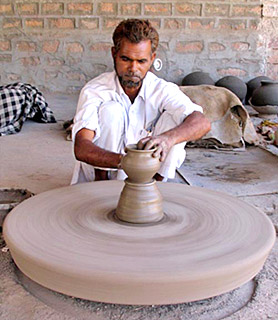
Kumbhakar / Kumhar Caste
Kumbhakar or Kumhar caste is a traditional artisan community in India known for pottery making. Derived from Sanskrit word Kumbhakar, meaning potter,...
Related articles in Religion in India
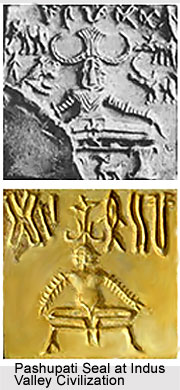
Religion in Indus Valley Civilization
Religion in Indus Valley Civilisation included Hinduism, Buddhism and Jainism. Details about the religion in Indus Valley Civilization have been gathe...
Iyer Brahmin
Iyer Brahmins are originally from Tamil Nadu of South India. They are known for their adherence to Advaita philosophy and Smarta traditions. Tradition...
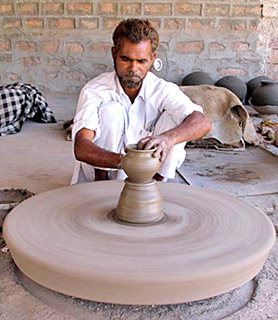
Kumbhakar / Kumhar Caste
Kumbhakar or Kumhar caste is a traditional artisan community in India known for pottery making. Derived from Sanskrit word Kumbhakar, meaning potter,...

Gujjars in Mughal Era
Gujjars in the Mughal era enjoyed great power. Further their power increased with the decline of Aurangzeb, Mughal emperor.
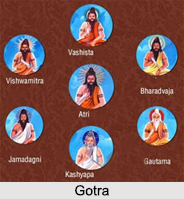
Gotra in Hinduism
In Hinduism, gotra refers to a lineage system tracing descent from ancient sages, primarily through the paternal line. Originating from Vedic traditio...