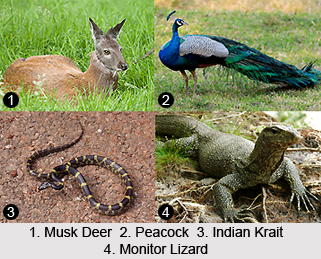
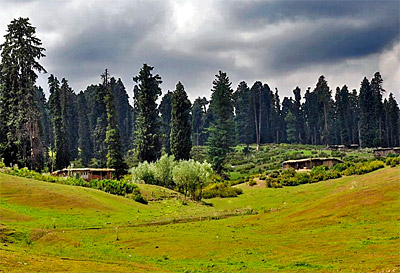
 Indian flora and fauna are representatives of the country"s rich biodiversity. Favorable climate has led to the thriving of Indian flora and fauna. India is blessed with mountains, plains, deserts, dense forests, islands, sanctuaries, swamp lands, highlands and several other eco zones. These eco zones differ in terms of flora and fauna, which are scattered throughout the subcontinent. Indian flora and fauna is helpful in promoting tourism in the country. It is considered to be a gateway to explore the striking natural beauty that enwraps India.
 Indian Flora
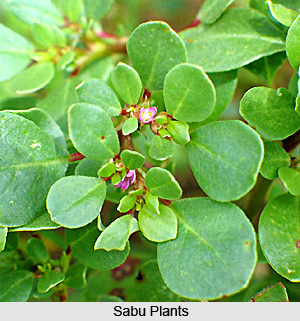
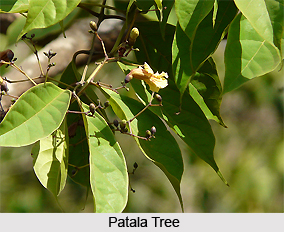
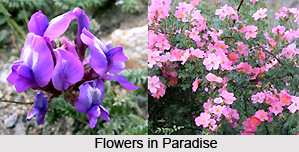
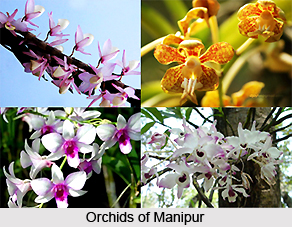
Indian flora consists of a wide variety of indigenous or native plant types, which have economic, religious and cultural significance. Abundance of flora adds resplendence to the pristine Indian nature. The floral wealth of India ranges from alpine to temperate thorn, thick tropical forests to temperate woods, cone-bearing trees to evergreen trees and scrubs to deciduous forests. Indian forests range from tropical rainforest to coniferous forest. Other forest types are sal-dominated moist deciduous forest, teak-dominated dry deciduous forest, babul-dominated thorn forest etc. There are more than 45000 plant species in India. Indian plants can be grouped into several categories like annual plants, biennial plants, perennial plants, bulb plants, shrubs, herbs, medicinal plants and vines, creepers and climbers. Indian trees can be grouped into gardening trees, timber trees, medicinal trees, evergreen trees, deciduous trees, flowering trees, flowerless trees, coastal trees and sacred trees. The national tree of India is Banyan tree. Mango is officially the national fruit of India, which grows on mango tree. Indian flowers present a delightful sight along with their fascinating fragrance. Lotus is the national flower of India. As per the distribution of flora, the country can be classified into several zones namely, eastern Himalayas, western Himalayas, Indus plain, Ganga plain, Assam, Malabar, Deccan and Andamans.
 Indian Fauna
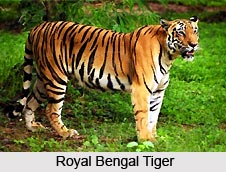
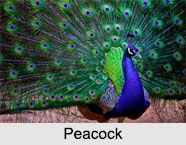
Indian wildlife comprises of about 410 types of mammals, nearly 1301 species of birds and 30,000 types of insects. Further, a broad variety of animals, amphibians, reptiles and fishes are found in India, as per the census estimate. Mammals found in India include lions, elephant, rhinoceros, wild bison, deer, monkeys, wild goats, etc. The national animal of India is royal Bengal tiger. Reptiles include a large number of lizards, snakes, crocodiles, etc. The national bird of India is peacock. Some of the common Indian birds are geese ducks, mynas, pigeons, cranes, pheasants, parakeets and hornbills.
Protection of Indian Flora and Fauna
The virgin forests provide perfect habitats to the Indian wildlife. To protect the wildlife, over 120 national parks, wildlife sanctuaries, bird sanctuaries, etc are maintained by the Government of India. These protected areas are known to spread over an area of about 156,700 square kilometers, as of May, 2004. Indian states like Rajasthan, Karnataka, Gujarat, Uttar Pradesh, West Bengal and others are renowned for their national parks. Similarly, wildlife sanctuaries, bird sanctuaries, etc are situated in different parts of India.
Indian Flora and Fauna
Indian flora and fauna comprise of numerous forest types, trees, plants, flowers, animal, birds, reptiles etc. The rich and diverse flora and fauna receive support from favorable climatic conditions in India and are preserved in the protected areas of the nation.