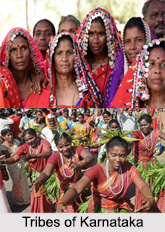
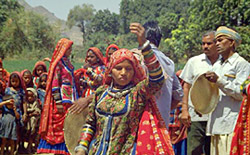
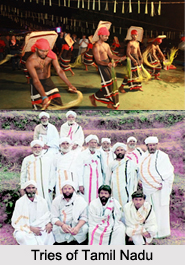
 Tribes of Tamil Nadu are concentrated mainly in the district of Nilgiris. Of all the distinct tribes, the Kotas, the Todas, the Irulas, the Kurumbas and the Badagas form the larger groups, who mainly had a pastoral existence. Other tribes include, Kattunayakan and Paliyan amongst others.
According to census 2001, tribal population in Tamil Nadu is 6, 51,321. There are around 38 tribes and sub-tribes in Tamil Nadu. The tribal people are predominantly farmers and cultivators and they are much dependant on the forest lands.
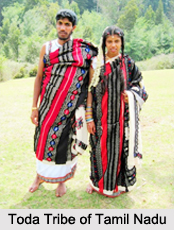
Toda Tribe of Tamil Nadu: Men from the family of the tribes are occupied in milking and grazing their large herds of buffaloes. Their settlements are known as "Munds". They do not worship any god and their consciousness is cosmic. Today, there are about a thousand Todas left.
Badaga Tribe of Tamil Nadu: The Badagas belong to the backward class and are not classified as tribals. They are an agricultural community, dwelling in the higher plateau of the Nilgiris district in the state of Tamil Nadu. They are engaged in tea cultivation and potato growing. They form the largest group of tribes and boast a rich oral tradition of folktales, songs and poetry. These tribes are Hindus and belong to the Shiva sect.
 Kota Tribe of Tamil Nadu: The Kotas are mainly concentrated in the Tiruchigadi area in the Nilgiri Hills. They are distinguished by their colourful folk dances and are basically musicians, who play at Badaa funerals. They are mainly engaged in producing handicrafts. These tribes of Tamil Nadu are expert iron smiths, potters and carpenters. In order to maintain distance and status in society, the Kotas implement elaborate tattoos.
Kurumba Tribe of Tamil Nadu: The Kurumba tribes of this state inhabit the intermediate valleys and forests in villages and were known for their black magic and witchcraft in the past. Their way of living today has changed from their original gathering and hunting existence to working in coffee and tea plantations as labourers. Kurumbas are perhaps the only main caste in southern India that has a specialized and distinctive Kurumba Language.
Irula Tribe of Tamil Nadu: The Irula tribes of Tamil Nadu occupy the lower slopes and forests at the base of the Nilgiri Hills. They constitute the second largest group of tribes after the Badagas and are similar to the Kurumbas in many ways. This tribe produces honey, fruits, herbs, roots, gum, dyes etc., and trades them with the people in the plains. In the recent times the Irulas help in catching snakes and collect the snake venom.
Paliyan Tribe of Tamil Nadu: They are of the food gathering communities of Tamil Nadu. It is believed that the Paliyan originally belonged to the Palani hills. They are distributed in the districts of Madurai, Thanjavur, Pudukkotai, Tirunelveli and Coimbatore.
Related Articles
Indian Tribal People
Indian Tribes
Indian Scheduled Tribes
South Indian Tribes
Tamil Nadu