


 Yoga for Athletes is vital to strengthen all muscle groups and build better balance and flexibility. Sports training also require a holistic approach, unifying the body and mind through yoga. Yoga integrates movement, strength and breath work to help athletes excel, no matter their sport or ability level. Yoga will help by improving balance, flexibility, power and stamina which can result in improved performance, preventing injuries and faster recovery for everyone and athletes of all levels. Yoga for Athletes is vital to strengthen all muscle groups and build better balance and flexibility. Sports training also require a holistic approach, unifying the body and mind through yoga. Yoga integrates movement, strength and breath work to help athletes excel, no matter their sport or ability level. Yoga will help by improving balance, flexibility, power and stamina which can result in improved performance, preventing injuries and faster recovery for everyone and athletes of all levels.
Yoga Regimens for the Athletes According to some studies, athletes can be benefited by adding yoga to their training regimen. Yoga series of highly effective strengthening and stretching exercises that are key to the demands of an elite athlete, no matter what sport one is involved in. This routine works on flexibility, balance, agility, endurance, core and overall strength-all tools that help prevent injury and aid in recovery. This yoga regimen is specifically designed to target common areas of muscle tightness in athletes. Sport Modified Autogenic Training Sport Modified Autogenic Training teaches to self-produce a feeling of warmth and heaviness throughout the body, thereby experiencing a profound state of physical relaxation, bodily health and mental peace. Various psychological preparations make the athlete ready for the upcoming competition. The ultimate goal of psychological preparation is self-control of emotions and control of the mind. Autogenics can help one find an inner place of calmness and emotional peace. It can also overcome addictions such as smoking or gambling, change unwanted behaviours such as nail biting and resolve phobias. Benefits of Yoga for Athletes 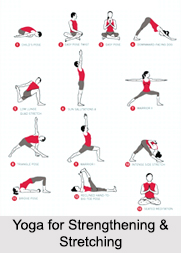 Yoga is the perfect complement to any sport or activity. It’ll help strengthen and lengthen the muscles and relax the mind from a stressful day. Yoga asanas can be used for warm-up, cooling down, regeneration, compensation of muscle disbalance, synthesis of mind and body, activation or deactivation of the body and as supplemental exercises. Yoga is the perfect complement to any sport or activity. It’ll help strengthen and lengthen the muscles and relax the mind from a stressful day. Yoga asanas can be used for warm-up, cooling down, regeneration, compensation of muscle disbalance, synthesis of mind and body, activation or deactivation of the body and as supplemental exercises.
Basic Steps of Yoga for Athletes An Athlete should make it a habit to include all the 4 basic steps as a part of his/her regular warm up and cool-down routine. Due to the synthesis of the mind and body, many positive advantages can be achieved by practicing yoga. The 4 necessary basic steps towards self-mastery are as follows: There is an interrelationship among the 4 basic exercises. Body awareness facilitates breath awareness and conversely, breath awareness facilitates body awareness. Similarly, body and breath awareness facilitates attention focus and the latter facilitates body awareness and leads to the development of concentration. Thus, practising each step facilitates the improvement of the remaining others. After practising and mastering the four basic steps, one should start practicing meditation and autogenic training. Athletes should also combine their practise of yoga asanas with some type of aerobics, exercises like running, swimming, walking, jogging, biking, etc, which are very useful. Since such exercises always rejuvenate and re-energize the body. Athletes should keep practicing Yoga to improve their sports performance and their quality of life. |
| |||



Yoga for Athletes
| Yoga for Athletes is very important for rejuvenating one’s self and achieving greater synthesis of the mind and body of an Athlete. |
| ||||||||||||||||||||||||||||

