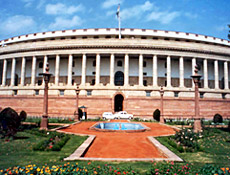
 Parliament consists of the President and the two Houses i.e. the Council of States and the House of the People. While the two Houses continue to be recognised by these names in the Constitution, they are in actual practice known respectively as the Rajya Sabha and the Lok Sabha.
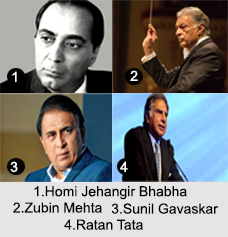
The maximum strength of the Rajya Sabha is 250 out of which the President nominates 12 members and 238 are representatives of the States and of the Union territories. The members nominated by the President are persons having special knowledge or practical experience in respect of such matters as literature, science, art and social service. The allocation of seats to be filled by representatives of States and the Union territories is laid down in the Fourth Schedule to the Constitution of India. The representatives of States are elected by the elected members of the Legislative Assemblies of the respective States in accordance with the system of proportional representation by means of the single transferable vote. The representatives of the Union territories are chosen in such manner as Parliament may, by law, prescribe.
Part IVA of the Representation of the People Act, 1950, provides for the manner of filling seats in the Rajya Sabha allocated to Union territories. Section 27A of that Act provides that for the purpose of filling any seat or seats in the Council of States allotted to any Union territory in the Fourth Schedule to the Constitution, there shall be an electoral college for each such territory. Prior to the enactment of the Government of National Capital Territory of Delhi Act, 1991 (1 of 1992), the Electoral College for the Union territory of Delhi consisted 18-19 of the elected members of the Metropolitan Council of Delhi constituted under the Delhi Administration Act, 1966 (19 of 1966). The Electoral College for the Union territory of Delhi now consists of the elected members of the Delhi Legislative Assembly constituted under the Government of National Capital Territory of Delhi Act, 1991. The Electoral College for the Union territory of Puducherry consists of the elected members of the Puducherry Legislative Assembly constituted under the Government of Union Territory, Act, 1963 (20 of 1963). The Union territories of Andaman and Nicobar Islands, Lakshadweep, Dadra and Nagar Haveli, Daman and Diu and Chandigarh do not have any representatives in the Rajya Sabha. The four representatives of Jammu and Kashmir were chosen by the President on the recommendation of the State Government as required by the Constitution (application to Jammu & Kashmir) Order, 1950. In actual practice, the State Government acted upon a unanimous resolution of the Constituent Assembly of that State in recommending the names of the persons to be chosen by the President.
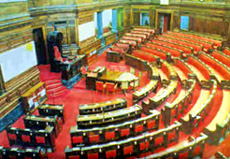
The declarations containing names of candidates elected to fill the seats at the elections were published under section 67 of the Representation of the People Act, 1951, on 31 March 1952. The names of members elected by the elected members of the Legislative Assemblies of Part A and Part B States, by members of the electoral colleges for Part C States, nominated members of Jammu and Kashmir and 12 members nominated by the President under article 80 of the Constitution, were published under section 71 of that Act on 3 April 1952. Thus the Rajya Sabha was initially constituted under the Constitution on that day.