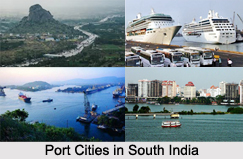
Mumbai is a beautiful city, rising like the wave and then tapering off as it touches the shore, apt for a towering construction, whose natural altitude demands that it lie prostrate before the Arabian Sea.
The name Mumbai is a derivative, linguistically derived form `Mumba`, standing for the name of the Goddess Mumbadevi and `Aai`- mother in Marathi. During the 16th century, the Portuguese named the area `Bom Bahia` (Good Bay), later corrupted to `Bomaim` or `Bombaim`, by which it is still known in Portuguese. After the British gained domination, it became `Bombay`.
History of Mumbai
Mumbai was a cluster of seven islands namely Colaba, Mazagaon, Old Woman`s Island, Wadala, Mahim, Parel, Matunga and Sion in the earlier times. The history of Mumbai recounts the growth of these seven islands and became the commercial capital of India. The earliest known settler of these islands is the Kolis, a fishing community. These islands were under the control of the Maurya Empire during the 3rd century BC. After that several other dynasties took the possession over these islands. The first Indian railway line was started between Mumbai and Thane in the year 1853 by the British East India Company. Mumbai was the epicentre of Indian independence movement. The name was officially changed to Mumbai in 1995, but the former name is still in use by prestigious institutions.
Geography of Mumbai
Mumbai is located on Salsette Island, off the West Coast of Maharashtra. An original seven islands were amalgamated to form the city. The location of Mumbai is ideal as it is easily accessed by the national and international tourists. Sahara International Airport of Mumbai lies at a proximal distance of 30 kilometers from the city. It offers flight connectivity to all the major cities in the world. The main railway station is Chattrapati Shivaji Terminus is located in the centre of the city and both local and outstation trains ply from here.
 Demography of Mumbai
According to the Population Census in the year 2011, Mumbai has a population of 3,145,966 of which male and female are 1,711,650 and 1,434,316 respectively. Mumbai`s population constitutes 2.80 percent of total Maharashtra population.
Culture of Mumbai
Culture of Mumbai is an amalgamation of traditional festivals, food, music and theatre. Mumbai is the birth place of first Indian cinema. The famous festival of Mumbai is Gudi Padwa. It is the celebration of Maharashtra New Year. Ganesh Chathurti, Diwali, Elephanta festivals are also important festivals in Mumbai. The night life of this city is very colourful. The traditional costume of Mumbai is saree for women and dhoti-kurta for men. But today various modern dresses are worn both by males and fem ales.
Education of Mumbai
The average literacy rate of Mumbai in 2011 is 88.48 compared to 86.40 of 2001. The male and female literacy is 90.54 and 86.03 respectively. The literate in Mumbai City District were 2,551,669 of which male and female are 1,423,020 and 1,128,649 respectively. Two prominent research institutions have found their home in this city namely, Tata Institute of Fundamental Research (TIFR), and the Bhabha Atomic Research Centre (BARC). Many prestigious colleges are there in this city.
Administration of Mumbai
 Mumbai is the seat of the Bombay High Court, which exercises jurisdiction over the states of Maharashtra and Goa, and the Union Territories of Daman and Diu and Dadra and Nagar Haveli. Mumbai also has two lower courts, the Small Causes Court for civil matters, and the Sessions Court for criminal cases. Mumbai also has a special TADA (Terrorist and Disruptive Activities) court for people accused of conspiring and abetting acts of terrorism in the city.
Economy of Mumbai
Mumbai is India`s largest city by population. It is also the financial and commercial capital of the country. It generates 6.16% of the total Gross Domestic Product (GDP) in the country. It serves as an economical centre of India. It contributes 10% of factory employment, 25% of industrial output, 33% of income tax collections, 60% of customs duty collections, 20% of central excise tax collections, and 40% of India`s foreign trade. Most of India`s major television and satellite news and general entertainment channels as well as the major publishing houses are concentrated in Mumbai. It is also the centre of the Hindi Film industry, Bollywood. It is the largest film industry in India and in the world as well. Marathi Cinema, the regional film industry, enjoys equal popularity.
Tourism in Mumbai
Mumbai is not only legendary for its edifices within the city; its reputation stretches even far away from the city also. With prehistoric creations, standing tall and mysterious, they invoke a sense of awe within the traveller, with massiveness speaking out from every angle of the structures.
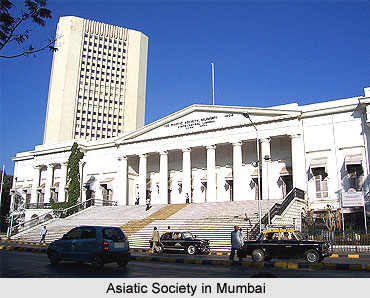
 Mumbai is the place where one can find caves, forts, natural elements and many other tourist spots. Some of the tourist spots in Mumbai are Essel World, Aksa Beach, Adlabs Imagica, Alibaug, Asiatic Society of Mumbai, Brabourne Stadium, Bassein Fort, Banganga Tank, Cathedral of the Holy Name, Mumbai, Chowpatty Beach, Haji Ali Mosque, Hanging Gardens, Juhu Beach, Kamala Nehru Park, Marve Beach, Powai Lake, Shivaji Park, Sanjay Gandhi National Park (Borivali National Park), Hotel Taj Mahal, Wankhede Stadium, Veermata Jeejabai Bhosale Udyan, Vihar Lake, Worli Fort, Walkeshwar, Taraporewala Aquarium, Shri Swaminarayan Temple, Mumbai, Rajabai Clock Tower, Palais Royale Skyscraper, Basilica of Mount Mary Bandra, Mumba Devi Temple, Mahalaxmi Temple, Salsette Island, Tikuji-Ni-Wadi, Tulsi lake and many other tourist spots.