
Lord Kuber is the actual God of wealth in Indian mythology. This is well known to the traditional trading and business communities of India who used to, and still continues to worship him in their homes on the occasion of Diwali. The temples of Hindus, Buddhists and Jains have Kuber prominently associated with them. It would seem therefore that Kuber belonged to the ancient deities of India, the guardians and protectors of the very land itself, the Yakshas who were once mighty and powerful over the land. He is often depicted as a fair dwarf with a big belly. He holds a rod, a pomegranate or a money bag in his hand.
The very name Yaksha comes from the phrase they were supposed to have uttered when Brahma created them, "Yakshamam! - We shall protect!" It is therefore not surprising to realize that Kuvera is the guardian of the North Quadrant of the earth and has under him all other Yakshas who did not make it to divine status. Those who did included Laxmi, Ganapati, Hanuman and Kali who all seem to have been local Yaksha deities to begin with before assuming Pan-Indian importance. The fact that the Sapta-Matrikas, the Seven Great Mother Goddesses are always represented in sculpture being protected by Kuber on one side and Ganapati on the other is clear enough indication of their common origins.
In Hindu mythology Kuber is represented as the son of Lord Brahma. He is the ruler over a hidden city in the Himalayas called Alkapuri, which has all the stored up wealth of the Earth. This is close to the abode of Shiva, Kailasha. Kuvera is supposed to be a Shiva- worshipper as well as close friend of the great god hence his name Isasakha - which is just a mythological acknowledgement of the process of assimilation. He happens to be immortal and as a good Yaksha, one of the guardians of the Earth. His half brother was the famous Ravana, who caused him no end of trouble and took away his other kingdom, the fabled city-state of Lanka.
His wife is called Yakshi. In Buddhist mythology she was called Hariti - the stealer, as she had the distressing habit of spiriting away children until Buddha gave her a taste of her own medicine by concealing her child for a while and affecting a cure. Yakshi is also a matrika, who have peculiar ambivalent responsibilities - allowed to plague children till sixteen after which they have to protect them for life.
Lord Kuber
Lord Kuber is one god that all the three religions of India namely Hinduism, Buddhism, Jainism claim to be their own.
Recently updated articles in Religion in India
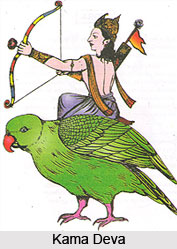
Kusumayudha
Kusumayudha is a name of Kamadeva, the Hindu God of Love. Depicted with a sugarcane bow and flower-tipped arrows, he represents attraction and longing...

Bhoyar Caste
Bhoyar Caste is largely found in the Central Provinces of the country. Traditional occupation of Bhoyars is agriculture. They are good cultivators and...
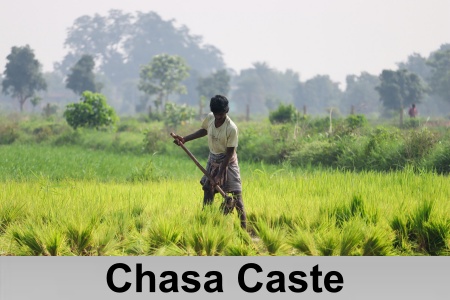
Chasa Caste
Chasa caste is a prominent agrarian community native to Odisha. Traditionally associated with cultivation and farming, Chasas have historically played...
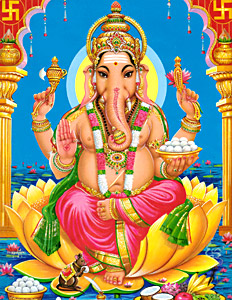
Vigneswara, A Form of Lord Ganesha
Lord Vigneswara is another form of Lord Ganesha or Vinayaka, prominently worshipped as the God of intelligence and good luck in the Indian subcontinen...
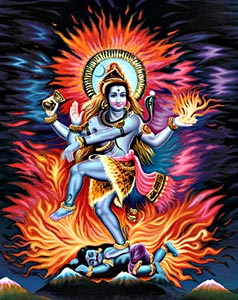
Maheswara
Maheswara, meaning “the Great Lord,” is a revered name of Lord Shiva in Hindu tradition. It represents Shiva’s supreme authority over creation, preser...
Related articles in Religion in India
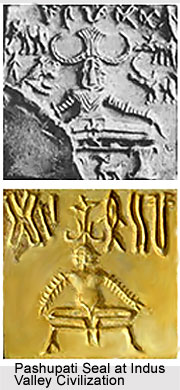
Religion in Indus Valley Civilization
Religion in Indus Valley Civilisation included Hinduism, Buddhism and Jainism. Details about the religion in Indus Valley Civilization have been gathe...
Iyer Brahmin
Iyer Brahmins are originally from Tamil Nadu of South India. They are known for their adherence to Advaita philosophy and Smarta traditions. Tradition...
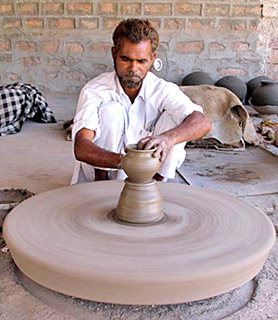
Kumbhakar / Kumhar Caste
Kumbhakar or Kumhar caste is a traditional artisan community in India known for pottery making. Derived from Sanskrit word Kumbhakar, meaning potter,...

Gujjars in Mughal Era
Gujjars in the Mughal era enjoyed great power. Further their power increased with the decline of Aurangzeb, Mughal emperor.
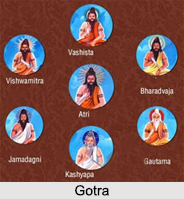
Gotra in Hinduism
In Hinduism, gotra refers to a lineage system tracing descent from ancient sages, primarily through the paternal line. Originating from Vedic traditio...