


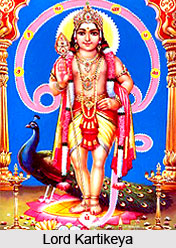
 Lord Kartikeya, also known as Murugan, Subrahmanya and Skanda, is a Hindu God who is ardently worshipped by the devotees. The alternate version, Murugan is particularly worshipped by Tamil Hindus. Other than India, Lord Kartikeya is also worshipped in many countries like Malaysia, Singapore, Mauritius and Reunion Island and Sri Lanka. Lord Kartikeya is the son of Goddess Parvati and Lord Shivaand is the brother of Lord Ganesha. His other names include Shadanana, Sanmuga, Saravana, Shantakumar, Senthil, Guha and Sanmukha, Swaminatha, Arumugam, Kumaran, Guruhuha and Velan. He indicates an individual of perfection. He is incredibly brutal and most masculine amongst all the gods. Lord Kartikeya, the god of war and victory, was formed by all the gods to guide the magnificent hosts and vanquish the demons. Lord Kartikeya is usually seen with a Peacock, his vahana, surrounded by serpents. Lord Kartikeya, also known as Murugan, Subrahmanya and Skanda, is a Hindu God who is ardently worshipped by the devotees. The alternate version, Murugan is particularly worshipped by Tamil Hindus. Other than India, Lord Kartikeya is also worshipped in many countries like Malaysia, Singapore, Mauritius and Reunion Island and Sri Lanka. Lord Kartikeya is the son of Goddess Parvati and Lord Shivaand is the brother of Lord Ganesha. His other names include Shadanana, Sanmuga, Saravana, Shantakumar, Senthil, Guha and Sanmukha, Swaminatha, Arumugam, Kumaran, Guruhuha and Velan. He indicates an individual of perfection. He is incredibly brutal and most masculine amongst all the gods. Lord Kartikeya, the god of war and victory, was formed by all the gods to guide the magnificent hosts and vanquish the demons. Lord Kartikeya is usually seen with a Peacock, his vahana, surrounded by serpents.
In India, the 6 most prominent shrines of Lord Kartikeya are the Arupadaiveedu temples, which are in Tamil Nadu. Lord Kartikeya is most worshipped in South India, particularly amongst Tamil populace, popularly identified as Thamizh Kaduvul, which means God of Tamils. In West Bengal, during Durga Puja, Kartikeya is worshipped along with his sisters Lakshmi and Saraswati and his brother Lord Ganesha. Mythological Origin of Lord Kartikeya The origin of Lord Kartikeya has been defined in various ways in Hindu mythology, epics and Puranas. These are discussed as below: Lord Kartikeya in Hindu Epics The initial intricate description of Lord Karthikeya's genesis arises in the Mahabharata. He is believed to be born from Svaha and Agni and his purpose was to destroy Mahisha Asura. Lord Indra eventually attacked Karthikeya, but Lord Shiva interfered and made Karthikeya the Commander-In-Chief of the Army of the Devas. Lord Karthikeya is married to Devasena, the daughter of Indra. Lord Kartikeya in Vedas The Atharva Veda explains Lord Kartikeya as the son of Agni or Agnibhuh, the god of fire. The Satapatha Brahmana identifies to Kartikeya as the son of Rudra and the 9th form of Agni. The Taittiriya Aranyaka consists of the Gayatri mantra for Shanmukha. In the Chandogya Upanishad, his form of Skanda is referred to as the way that leads to wisdom. The Baudhayana Dharmasutra describes Lord Kartikeya as Subrahmanya and Mahasena. The Aranya Parva, verse of the Mahabharata, also provides details about the legend of Kartikeya. The Skanda Purana is contains intricate details related to the origin and legends of Kartikeya. Moreover, in the Bhagavad Gita (Ch.10, Verse 24), Lord Krishna, states, "Among generals, I am Skanda, the lord of war", while naming the most perfect being, mortal or divine, explaining his omnipresence. Lord Kartikeya in Puranas 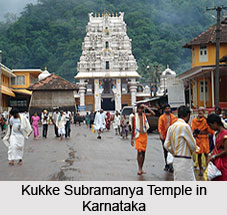 The Puranas also describe Lord Kartikeya in the same line as in the Vedas, although slight variations are included. The Skanda Purana states that Lord Shiva's first marriage to Dakshayani, the daughter of Daksha, led to the self- immolation of his wife. Later, by the efforts of Devas, Shiva was married to Parvati, by making Kama, the God of love awaken him from his reparation. But Kama faced Lord Shiva's anger, signified by the opening his third eye. Shiva submitted his divine effulgence of the third eye to Agni, who gave it to Goddess Ganga, as it was unbearable even for Agni. Ganga deposited it in a lake in a forest of reeds. Goddess Parvati had taken the form of the lake and a child was born, with six faces, eesanam, sathpurusham, vamadevam, agoram, sathyojatham and adhomugam. The child was nurtured by 6 women, known as Kritika in Sanskrit. Thus he was named Karthikeya, who eventually annihilated Taraka.
The version explained in the Ramayanais also very similar to the above version. In some customs, Kartikeya is considered as a bachelor, while other traditions portray him as married with 2 wives, Deivayanai and Valli. Lord Kartikeya in History Various Archaeological findings and historical artifacts of relics and pottery have been unearthed in Tamil Nadu, especially from Adichanallur which contained ideographic inscriptions bearing Kartikeya's name and reveal that the fierce god was worshipped during 10th century B.C. Lord Kartikeya is also related with the Indus Valley deity named Ahmuvan. He is also evident in various Gupta sculptures and also in the temples of Ellora and Elephanta Caves. Attributes and Symbols of Lord Kartikeya Being the God of War and Victory, Lord Kartikeya carries a number of weapons, like the Divine Spear or Lance, known as the Vel. His other weapons are a Mace, a Bow, a Sword, a Discus, a Javelin. But mostly he is portrayed using a Spear, known as Sakti. He is also seen riding a Peacock, which is his Vahana. He is the symbol of cleansing of all human evils. His spear indicates his long range of protection, the mace indicates strength, the discus expresses his knowledge of the truth and the bow demonstrates his capacity to defeat all evil. The peacock is the symbol of destruction of the ego. The 6 different heads indicate Lord Kartikeya's 6 heads represent the six siddhis granted upon yogis for their spiritual development. Worship of Lord Kartikeya In Tamil Nadu, Lord Kartikeya has been worshipped since the Sangam age. During the Tamil month of Aippasi, a six day period of fast and prayer, known as Skanda Shasti, takes place. In the Tamil month of Thai, Murugan or Kartikeya is worshipped at Thaipusam. Every Tuesday, during the Tamil month of Adi, is devoted to the worship of the god of war. Lord Kartikeya, locally known as Subramanya, is worshipped with greatest devotion in Dakshina Kannada and Udupi in Karnataka, where the unique ritual of Nagaradhane is conducted. Kartikeya was worshipped during the Gupta age as well. Although he is not popularly worshipped in North India, yet he is held in high respect in Haryana. In Bengal, Lord Kartikeya is worshipped during the festival of Durga Puja. Moreover in the month of Kartikeya, the lord is worshipped through out Bengal. There is another tradition prevalent in Bengal that images and idols of Kartikeya are secretly put in the premises of houses who intend to have a son as a newborn member in the family. Temples of Lord Kartikeya The most significant temples of Lord Kartikeya are present in Southern India, like Aru Padaiveedu, Thirupparangunram, Thiruthani, Swamimalai, Thiruchendur, Pazhamudircholai, Palani, Sikkal, Marudamalai, Vadapalani, Kandakottam, Kundrathur, Thirumalaikoil, Vallakottai, Pavalamalai, Thirumalaikoil and others. Temples in other regions include, Malai Mandir in Delhi, Pehowa temple in Haryana, Payyannur Subramanya Swamy temple in Payyanur, Kukke Subramanya Temple in karnataka, Kartik swami Temple in Kanachouri Chamoli district, Uttaranchal. Mantra of Lord Kartikeya The Mula Mantra of Lord Kartikeya is Om Saravana Bhava or Om Saravana Bhavaya Namah. Saravana Bhava, which literally means born of the forest of reeds, is formed out of six syllables denoting the spirit of the six-faced Kartikeya. |
| |||



Home > Society > Indian Religion > Types of Religion in India > Hinduism Religion > Hindu Gods > Lord Kartikeya
Lord Kartikeya
| Lord Kartikeya, also known as Murugan, is the son of Lord Shiva and Parvati and is considered as the Hindu God of War and Victory. |
| ||||||||||||||||||||||||||||

