





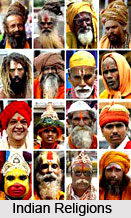
 Indian Religion is considered to form a subgroup of the larger class of ‘Eastern religions’. Religion in India is the most prominent feature and it has found its expression in various art forms, literature and other activities. India is land of diversified religion. The development of religion has taken many forms in various cultures. It considers psychological and social roots, along with origins and historical development. Indian Religion is considered to form a subgroup of the larger class of ‘Eastern religions’. Religion in India is the most prominent feature and it has found its expression in various art forms, literature and other activities. India is land of diversified religion. The development of religion has taken many forms in various cultures. It considers psychological and social roots, along with origins and historical development.
A religion is a set of symbols, beliefs and practices, often combined with a supernatural quality. A religion can be rightly termed as an abstract set of ideas, values or experiences developed as part of a cultural milieu. History of Indian Religion History of Indian Religion is very extensive and quite interesting. The ancient culture of South Asia, about 4,500 years ago, had come down to India primarily in the form of religious texts. Moreover, the artistic heritage, as well as intellectual and philosophical contributions, has always owed much to the religious thought and symbolism. Types of Religion in India Religion plays a central and definitive role in India. The country is one of the most religiously diverse nations in the world, with some of the most deeply religious societies and cultures. India has been an important part of three major world religions including Hinduism, Buddhism and Islam. Apart from these varied types of religion in India, the country is also the cradle of Jainism and Sikhism, Judaism, Christianity, Zoroastrianism and Baha’ism. Indian Religious Festivals The multitude of faiths which are prevalent in India gives augment to Indian Religious Festivals. Religious festivals are widely observed with great importance by the people of the subcontinent. India is a secular country, thus, this character enables the land to celebrate each of the religious festivals with much prominence. Hindus are engaged in celebrating festivals such as Diwali, Ganesh Chaturthi, Holi, Durga Puja, Ugadi, Dussehra, Sankranti and Pongal. Among Islamic festivals, Eid-ul-Fitr and Eid-ul-Adha have gained popularity. Notable Sikh festivals, among the other Indian religious festivals include birthdays of Gurus, Baisakhi, Bandi Chorr Divas and Hola Maholla. Christmas and Buddha Jayantiare the major festivals of the Christians and the Buddhists respectively. Moreover, a number of festivals are common to most parts of India with a variety in regions depending on prevalent religious and linguistic approach. 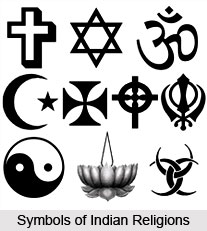 Religious Thinkers in India Religious Thinkers in India
India has been home to a large number of religious thinkers and spiritualists. Religious Thinkers in India plays vital role in shaping the religions in the country by and large. A majority of the religious thinkers have also advocated themselves as reformers. The great religious figures in India include Buddha, Mahavira and Guru Nanak. All of them have influenced the Indian religion in their own way. The religious thinkers have propagated new horizon and added unique religious significance. Indian Religious Customs and Rituals Religion plays a major role in the Indian way of life. A wide variety of Indian Religious Customs and Rituals are performed in the country. These customs and rituals organise the social life of the people in the country. The vast majority of Indians engage in religious rituals on a daily basis. However, Indian religions can only be understood after understanding its religious beliefs and practices. Contacts between India and other cultures have led to the spread of Indian religions throughout the world, resulting in the extensive influence of Indian thought and practices. Thus, Religion can be said to be a social coherence based on a common group of beliefs or attitudes concerning an object, person, unseen or imaginary being or system of thought which is considered to be sacred, a code of ethics and a philosophy of life. |
| ||||||||||||||||||||||||||||

