
 Indian Puranas constitute one of the richest sources of Hindu Literature as well as mythology. They contain some important components of both Hinduism as well as Buddhism. The Puranas narrate various stories about the Gods and the Goddesses, rights and rituals and hymns. These scriptures have been passed from one generation to the other, either by word of mouth or stored scriptures. There are about 18 major Puranas along with some minor ones, which have been merged in various ideas from different faiths. The Indian Puranas are classified into the Mahapuranas (great) and the Upapuranas (lower, additional) and the classification of Puranas depends on the importance of each of these Indian Puranas.
Indian Puranas
Indian Puranas serve as the encyclopaedias of religion and culture. The popularity of the Puranas lies in the fact that they are narrated in simple, lucid language unlike the four Vedas.
Introduction
Indian Puranas constitute one of the richest sources of Hindu Literature as well as mythology. They contain some important components of both Hinduism as well as Buddhism. The Puranas narrate various stories about the Gods and the Goddesses, rights and rituals and hymns. These scriptures have been passed from one generation to the other, either by word of mouth or stored scriptures. There are about 18 major Puranas along with some minor ones, which have been merged in various ideas from different faiths. The Indian Puranas are classified into the Mahapuranas (great) and the Upapuranas (lower, additional) and the classification of Puranas depends on the importance of each of these Indian Puranas.Origin of Puranas
 Indian Puranas is a religious text which was structured in the ancient times. These manuscripts are considered to be important by Hindus, Janis and the Buddhists. The Puranas are group of religious texts that narrates the history of the Universe, its creation, destruction, and genealogies of the kings, heroes, sages, and demigods, and descriptions of Hindu cosmology, philosophy, and geography. Vyasa, the sage who had narrated the Great Indian epic Mahabharata, is traditionally considered to be the compiler of the Puranas. Though the actual Origin of Indian Puranas is not known, yet they can be identified to be the texts of antiquity.
Since the Origin of Indian Puranas, the texts give prominence to particular deities and attach plenty of religious and philosophical concepts. The Puranas are written in the form of stories and they are transferred to one generation from another orally or in written record. According to history, the earliest written versions can be traced to the reign of the Gupta Empire in the third-fifth century CE. Moreover, through the historical references, it was probably in India that the texts were composed. Furthermore, evidences trace that the written texts have been modified into the medieval times and perhaps till the present day.
In reference to the Origin of Indian Puranas, an early reference is found in the Chandogya Upanishad 500 BCE. The Brhadaranyaka Upanishad refers to Purana as the "fifth Veda" and reflects the early religious importance of these myths. The term also appears in the Atharvaveda. According to Pargiter, it is believed that, the original Purana were written during the final redaction of the Vedas. In addition to that, Gavin Flood also connects the commencement of the written Purana.
According to historical chronicles, the Puranas are related to each other. However, each of them presents a view of ordering of the world from a particular perspective. Since the Origin of Indian Puranas, these texts are given due importance and they were compiled by particular groups of Brahmins to propagate a particular vision. The texts narrate tale and legends of several deities such as Vishnu, Shiva or Goddess Durga. The Puranas come in various vernacular translations and are spread by Brahmin scholars. These texts are disseminated from one generation to another orally.
With the Origin of Indian Puranas, the civilisation was introduced to various cosmic concepts. The mass can learn about the Sarga; The creation of the universe, the Pratisarga; Secondary creations, mostly recreations after dissolution, the Vamsa; Genealogy of gods and sages, the Manvantara; The creation of the human race and the first human beings. The epoch of the Manus` rule, seventy one celestial Yugas or 308,448,000 years and the Vamsanucaritam: Dynastic histories.
Meaning and Characteristics of Indian Puranas
Puranas are the compilation of an ancient Indian Genre of Hindu and Jaina Literature. Following the etymological meaning of the Puranas, ancient scholar Vayu depicted Puranas as "that which lives from ancient times". In a way the Puranas can be ascribed as the post Vedic texts narrating the history of Universe, from its creation to destruction, genealogies of kings, heroes and demigods with a detailed discussion of Hindu Cosmology and Philosophy. With the passage of time Puranas has attained the sanctity of a holy book to the Hindus.
Following Vayu, the other renowned scholars have also depicted the meaning of Puranas in their own way. Matsya described the Puranas as `containing the records of past events`. Originally, therefore, the term Puranas signified `ancient tale` or `old narrative` in the Brahmana literature, as compared with itihasa and narashamsi. After a long period of time the Puranas became associated with the class of literature. Although in the ancient period there was no separate genre of Purana literature, the Puranas in the form of legendary lore existed even prior to the revelation of the Vedas.
Apart from the definitions provided by the ancient scholars, the allusions of the legendary lore of the Puranas are also available in the antique texts of ancient Indian Literature. References in the Artharva Veda imply that the Puranas had assumed some independent form of composition, which had a unique essence than the other contemporary literary texts. But it is not clearly mentioned in Atharva Veda, whether at that time the Puranas meant actual books. The Chhandogya-Upanishad, however, shows that a definite work was intended by the term, but it is only the Sutras that reveal the existence of the real Puranas.
However the scholars have made a prolonged research about the contents and the subject with which the Puranas deals. According to those scholars, both Itihasa and Purana denoted history and both are mentioned together in Vedic literature, sometimes as separate and sometimes as compound words. But whatever is the process of compilation both the Puranas and Itihasa are almost always associated with gathas, narashamsi, vakovakyas, etc., which were all subjects of study in those days. In the later Vedic Age, Itihasa overshadowed the legendary lore of Purana, but gradually the latter asserted itself with its uniqueness in composition and construction.
Puranas being uniquely different from the other contemporary literary texts, several researches have been made to determine the characteristics of the Puranas. Many renowned ancient texts however have the references of the characteristics of the Puranas. However the ancient recorded definition and characteristics of Puranas has been provided by Amarasimha. The classical definition as provided by Amarasimha in the 5th century AD is also found in some Puranas. According to Amarasimha, the Puranas have five basic characteristics or panchalakshana. These are Sarga (creation), Pratisarga (dissolution and recreation), Vamsha (divine genealogies), Manvantara (ages of Manus), and Vamshanucharita (genealogies of kings). A variant has world geography in place of genealogies of kings.
But the characteristics of Puranas as described by Amarasimha hardly is in complete agreement with the existing Puranas. Some texts contain much more than these five characteristics, while the other text hardly discusses with panchalakshana rather these texts deals with some other materials. According to the latest researches Panchalakshana covers a trivial part (about 1/40) of the extant Puranas.
Following the later researches of the characteristics of Puranas, it has been made clear that the Puranas does not solely endeavor to provide religious instruction, nor the sectarian purpose was the primary aim of its composition. Description of gifts, religious observances, sacred places, etc., have now become the concerning subjects of the bulk of the Puranas. As a result nowadays the Panchalakshana definition appears merely theoretical.
The later composers however solved this difficulty by stating that the panchalakshana definition applied only to the Upa Purana (minor Purana), and that the Maha Purana (major Purana) should have ten characteristics or dashalakshana. According to them the dashalakshana includes several additional topics like vritti (means of livelihood), raksha (incarnation of gods), mukti (final emancipation), hetn (jiva, unmanifest) and apashraya (Brahman). According to the research scholars these characteristics, however, missed several basic features of the Puranas, such as glorification of Brahma, Vishnu, Surya and Rudra, termination and preservation of the world, dharma (righteous conduct), artha (economics and polity), kama (erotic) and Moksha (emancipation). But in spite of providing a comprehensive description of the Puranas , the definition of Puranas given by Matsya does not cover the entire ground traversed by the Puranas.
The Pitrana tradition, like that of Mahabharata, has been dynamic. Hence the texts of the Pitrana tradition have been subjected to numerous revisions. In the courses of several revisions many additions, omissions and modifications have been made in those texts. Shifted from dynamism, antiquity is the only feature that can characterize the Puranas. According to the observation of Haraprasad Shastri "Anything old may be the subject of a Puranas," and it covers all the aspects of life.
Following Vayu, the other renowned scholars have also depicted the meaning of Puranas in their own way. Matsya described the Puranas as `containing the records of past events`. Originally, therefore, the term Puranas signified `ancient tale` or `old narrative` in the Brahmana literature, as compared with itihasa and narashamsi. After a long period of time the Puranas became associated with the class of literature. Although in the ancient period there was no separate genre of Purana literature, the Puranas in the form of legendary lore existed even prior to the revelation of the Vedas.
Apart from the definitions provided by the ancient scholars, the allusions of the legendary lore of the Puranas are also available in the antique texts of ancient Indian Literature. References in the Artharva Veda imply that the Puranas had assumed some independent form of composition, which had a unique essence than the other contemporary literary texts. But it is not clearly mentioned in Atharva Veda, whether at that time the Puranas meant actual books. The Chhandogya-Upanishad, however, shows that a definite work was intended by the term, but it is only the Sutras that reveal the existence of the real Puranas.
However the scholars have made a prolonged research about the contents and the subject with which the Puranas deals. According to those scholars, both Itihasa and Purana denoted history and both are mentioned together in Vedic literature, sometimes as separate and sometimes as compound words. But whatever is the process of compilation both the Puranas and Itihasa are almost always associated with gathas, narashamsi, vakovakyas, etc., which were all subjects of study in those days. In the later Vedic Age, Itihasa overshadowed the legendary lore of Purana, but gradually the latter asserted itself with its uniqueness in composition and construction.
Puranas being uniquely different from the other contemporary literary texts, several researches have been made to determine the characteristics of the Puranas. Many renowned ancient texts however have the references of the characteristics of the Puranas. However the ancient recorded definition and characteristics of Puranas has been provided by Amarasimha. The classical definition as provided by Amarasimha in the 5th century AD is also found in some Puranas. According to Amarasimha, the Puranas have five basic characteristics or panchalakshana. These are Sarga (creation), Pratisarga (dissolution and recreation), Vamsha (divine genealogies), Manvantara (ages of Manus), and Vamshanucharita (genealogies of kings). A variant has world geography in place of genealogies of kings.
But the characteristics of Puranas as described by Amarasimha hardly is in complete agreement with the existing Puranas. Some texts contain much more than these five characteristics, while the other text hardly discusses with panchalakshana rather these texts deals with some other materials. According to the latest researches Panchalakshana covers a trivial part (about 1/40) of the extant Puranas.
Following the later researches of the characteristics of Puranas, it has been made clear that the Puranas does not solely endeavor to provide religious instruction, nor the sectarian purpose was the primary aim of its composition. Description of gifts, religious observances, sacred places, etc., have now become the concerning subjects of the bulk of the Puranas. As a result nowadays the Panchalakshana definition appears merely theoretical.
The later composers however solved this difficulty by stating that the panchalakshana definition applied only to the Upa Purana (minor Purana), and that the Maha Purana (major Purana) should have ten characteristics or dashalakshana. According to them the dashalakshana includes several additional topics like vritti (means of livelihood), raksha (incarnation of gods), mukti (final emancipation), hetn (jiva, unmanifest) and apashraya (Brahman). According to the research scholars these characteristics, however, missed several basic features of the Puranas, such as glorification of Brahma, Vishnu, Surya and Rudra, termination and preservation of the world, dharma (righteous conduct), artha (economics and polity), kama (erotic) and Moksha (emancipation). But in spite of providing a comprehensive description of the Puranas , the definition of Puranas given by Matsya does not cover the entire ground traversed by the Puranas.
The Pitrana tradition, like that of Mahabharata, has been dynamic. Hence the texts of the Pitrana tradition have been subjected to numerous revisions. In the courses of several revisions many additions, omissions and modifications have been made in those texts. Shifted from dynamism, antiquity is the only feature that can characterize the Puranas. According to the observation of Haraprasad Shastri "Anything old may be the subject of a Puranas," and it covers all the aspects of life.
Age of Puranas
Age of Puranas contains various valuable materials for the sociological study of ancient India. No definite date can be suggested for the Puranas. In some cases, different chapters of a single Purana appear to have been composed or assembled in different periods. By and large the early Puranas came into being approximately between the 2nd century and the 6th century AD. The researches of the scholars have revealed that the Puranas are antique in its character and composition. The references of the Puranas in the ancient texts reveal that the Puranas existed even before the advent of the Vedic texts, though not as a form of literary genre. Modern scholarship has varied its attitude towards the Puranas at different times.
In the last decades of the 18th and the beginning of the 19th centuries, the Puranas were not provided enough importance for depicting history. This is so because the Puranas represent a confused accumulation of their legendary and historical events, thereby depicts a weird idea of age. Hence the confused and disintegrated idea of age reduces the historical importance of the Puranas. In the early decades of the 19th century, H.H Wilson made a systematic study of the Puranas and brought out an English translation of the Vishnu Purana. The English translation of Vishnu Purana made by Wilson opens with an exhaustive introduction and critical and comparative notes which attracted the attention of European scholars to this important branch of Sanskrit literature.
One of the objects of the Puranas was to give freedom to women and Sudras in certain religious rites and practices. They were denied the right to Vedic rites, and had been groaning under the grinding weight of repression and feeling an urge for liberation in this field. The result was that a large number of them embraced Buddhism which allowed the same privileges to all irrespective of any discrimination. This caused an erosion of the Brahmanical society, and the sacerdotal class, which depended on the people for their maintenance, felt the need for works like the Puranas. During some centuries preceding and following the birth of Christ, three unorthodox faiths exerted wide and deep influence on the populace. These were Buddhism, Jainism and Ajivakism. The semi-Vedic worship of the Trinity, Lord Brahma, Lord Vishnu and Lord Shiva, and the non-Vedic Shaktism were powerful forces to reckon with.
The Vaisnavas were broadly divided into two sects, namely Pancaratra and Bhagavata. Bhagavatism was very popular among the non-Brahmanical and foreign tribes. The rights and privileges in religious matters, denied to women and Sudras in the traditional Brahmanical Shastras, have been given to them by the Vaishnava; women and Sudras were allowed directly to worship Lord Vishnu. The Puranas tell that the political sway of the Nandas, Mauryas, Andhras etc. dealt a severe blow to the traditional Brahmanical religion. Sudra kings are known to have themselves performed Asvamedha sacrifice. They extended very liberal support to Buddhists and Jains. The Buddhists advocated mendicancy and the Jains severe asceticism. The privileges in religious performances, given by them to women and Sudras, considerably undermined the Brahmanical society. There were other reasons also for the weakening of this society. One was the invasions by foreigners from the north-west and the other the spread of Tantricism among the masses.
Onslaughts on the Brahmanical religion and society continued till the first quarter of the 4th century A.D when the Guptas came to power. The Gupta kings revived the Brahmankul religion battered by hostile forces for a long time. Tantric religion spread through Vaishnavism and Saivism. The Buddhists also had many Tantras. Tantric influence is noticeable roughly from the fifth century onward. In course of time, Tantras influenced Indian Puranas and Smriti. The embracing of Buddhism and the adoption of Tantric practices led to the decadence of the traditional Brahmanical religion and society in the Puranic age. It was at this stage that the Brahmanas tried, in various ways, to restore their lost glory through the Puranas. Among the revivalist tactics was the introduction of a network of Vratas designed to secure various kinds of material welfare. Gift to Brahmanas in Vratas was declared to be conducive to happiness. Gift to one having a large family to maintain was considered to be particularly useful. Among the articles of gift were such daily necessities as oil, salt, umbrella, sandals etc. Dishonest economy has been condemned. This means that one should spend in gift as much as one`s purse permits.
In the early decades of the 20th century the methodical research of F.E Pargiter placed before the world a critical survey of the historical material of the age of Puranas. Before the advent of the detailed study of F.E Pargiter the Puranas were in the darkest oblivion as a literary genre. The modern scholars have opined that the present view is to accept the Puranas as one of the important sources of traditional history of ancient India. Nowadays the Puranas are being critically studied in order to extract the traditional historical data stored in it. Modern historians also depend on the Puranic materials for their own works.
Being the ancient existing literary genre, the Puranas are significant to throw light to the comprehensive history of Indian culture. The age of Puranas embody the vastness of the rich Indian culture and civilisation. It has sections dealing with polity, sociology, administrative institutions, fine arts, architecture, etc. which articulate the very spirit of Indian culture and civilization. The function of a modern historian should be to disentangle legendary, fictitious or mythological material from the purely historical or cultural data. However the Puranas stand unique as the literary genre in its antiquity of age.
In the last decades of the 18th and the beginning of the 19th centuries, the Puranas were not provided enough importance for depicting history. This is so because the Puranas represent a confused accumulation of their legendary and historical events, thereby depicts a weird idea of age. Hence the confused and disintegrated idea of age reduces the historical importance of the Puranas. In the early decades of the 19th century, H.H Wilson made a systematic study of the Puranas and brought out an English translation of the Vishnu Purana. The English translation of Vishnu Purana made by Wilson opens with an exhaustive introduction and critical and comparative notes which attracted the attention of European scholars to this important branch of Sanskrit literature.
One of the objects of the Puranas was to give freedom to women and Sudras in certain religious rites and practices. They were denied the right to Vedic rites, and had been groaning under the grinding weight of repression and feeling an urge for liberation in this field. The result was that a large number of them embraced Buddhism which allowed the same privileges to all irrespective of any discrimination. This caused an erosion of the Brahmanical society, and the sacerdotal class, which depended on the people for their maintenance, felt the need for works like the Puranas. During some centuries preceding and following the birth of Christ, three unorthodox faiths exerted wide and deep influence on the populace. These were Buddhism, Jainism and Ajivakism. The semi-Vedic worship of the Trinity, Lord Brahma, Lord Vishnu and Lord Shiva, and the non-Vedic Shaktism were powerful forces to reckon with.
The Vaisnavas were broadly divided into two sects, namely Pancaratra and Bhagavata. Bhagavatism was very popular among the non-Brahmanical and foreign tribes. The rights and privileges in religious matters, denied to women and Sudras in the traditional Brahmanical Shastras, have been given to them by the Vaishnava; women and Sudras were allowed directly to worship Lord Vishnu. The Puranas tell that the political sway of the Nandas, Mauryas, Andhras etc. dealt a severe blow to the traditional Brahmanical religion. Sudra kings are known to have themselves performed Asvamedha sacrifice. They extended very liberal support to Buddhists and Jains. The Buddhists advocated mendicancy and the Jains severe asceticism. The privileges in religious performances, given by them to women and Sudras, considerably undermined the Brahmanical society. There were other reasons also for the weakening of this society. One was the invasions by foreigners from the north-west and the other the spread of Tantricism among the masses.
Onslaughts on the Brahmanical religion and society continued till the first quarter of the 4th century A.D when the Guptas came to power. The Gupta kings revived the Brahmankul religion battered by hostile forces for a long time. Tantric religion spread through Vaishnavism and Saivism. The Buddhists also had many Tantras. Tantric influence is noticeable roughly from the fifth century onward. In course of time, Tantras influenced Indian Puranas and Smriti. The embracing of Buddhism and the adoption of Tantric practices led to the decadence of the traditional Brahmanical religion and society in the Puranic age. It was at this stage that the Brahmanas tried, in various ways, to restore their lost glory through the Puranas. Among the revivalist tactics was the introduction of a network of Vratas designed to secure various kinds of material welfare. Gift to Brahmanas in Vratas was declared to be conducive to happiness. Gift to one having a large family to maintain was considered to be particularly useful. Among the articles of gift were such daily necessities as oil, salt, umbrella, sandals etc. Dishonest economy has been condemned. This means that one should spend in gift as much as one`s purse permits.
In the early decades of the 20th century the methodical research of F.E Pargiter placed before the world a critical survey of the historical material of the age of Puranas. Before the advent of the detailed study of F.E Pargiter the Puranas were in the darkest oblivion as a literary genre. The modern scholars have opined that the present view is to accept the Puranas as one of the important sources of traditional history of ancient India. Nowadays the Puranas are being critically studied in order to extract the traditional historical data stored in it. Modern historians also depend on the Puranic materials for their own works.
Being the ancient existing literary genre, the Puranas are significant to throw light to the comprehensive history of Indian culture. The age of Puranas embody the vastness of the rich Indian culture and civilisation. It has sections dealing with polity, sociology, administrative institutions, fine arts, architecture, etc. which articulate the very spirit of Indian culture and civilization. The function of a modern historian should be to disentangle legendary, fictitious or mythological material from the purely historical or cultural data. However the Puranas stand unique as the literary genre in its antiquity of age.
Content of Puranas
The Puranas are texts that represent the Indian culture and civilization as well as the history and the geography of the world since its creation. Geography in the Puranas is the chief topic of discussion from early times in connection with recreation; and many of the existing Puranas contain chapters on these topics. According to Puranic tradition, the earth consisted of seven dvipa or continents, such as Jambu dvipa, Plaksa dvipa, Saimali dvipa, Kusa dvipa, Kraunca dvipa, Saka dvipa, Puskara dvipa. According to the description given in the Puranas, each of these seven dvipa or continents was divided into a number of varsas or subcontinents. These dvipas were surrounded by seven oceans containing water which salt, sugarcane-juice, wine, clarified butter, curd, milk and good drinking water mixed in the water of the ocean.
The Indian Puranas speak quite extensively about the battle between the Gods and the Demons. The Puranas give detailed account of Hindu lore, religious practices - Yoga, prayers, sacrifices and everyday customs and they complement the metaphysical seriousness of the Upanishads, the magical and sacrificial lore of the Atharva Veda, and the orthodoxy of the Rig Veda.
Indian Puranas also speak at length about the various gods and goddesses. Puranic Deities of India includes Lord Brahma, Vishnu and Shiva. According to the Puranas, Vishnu and Shiva were visualized as forming a harmony with Brahma. These Puranic deities were introduced to the religions during the 4th and 5th century A.D. These gods were witnessed as almighty. Moreover, the gods were given a particular identity depending on their power. The Puranas also narrate the incidents of various influential kings, their supremacy as well as the rivalry between princely clans.
The Puranas are works that represent the deep mystic structuring of Indian civilization. They are viewed as expanding, modifying, and transforming the orthodox Brahmanism of the Vedas, through bhakti or devotion.
The Indian Puranas speak quite extensively about the battle between the Gods and the Demons. The Puranas give detailed account of Hindu lore, religious practices - Yoga, prayers, sacrifices and everyday customs and they complement the metaphysical seriousness of the Upanishads, the magical and sacrificial lore of the Atharva Veda, and the orthodoxy of the Rig Veda.
Indian Puranas also speak at length about the various gods and goddesses. Puranic Deities of India includes Lord Brahma, Vishnu and Shiva. According to the Puranas, Vishnu and Shiva were visualized as forming a harmony with Brahma. These Puranic deities were introduced to the religions during the 4th and 5th century A.D. These gods were witnessed as almighty. Moreover, the gods were given a particular identity depending on their power. The Puranas also narrate the incidents of various influential kings, their supremacy as well as the rivalry between princely clans.
The Puranas are works that represent the deep mystic structuring of Indian civilization. They are viewed as expanding, modifying, and transforming the orthodox Brahmanism of the Vedas, through bhakti or devotion.
Significance of Puranas
 Indian Puranas teach Mythology, cosmogony, astronomy, geography, grammar and many more that adds to the significance of Puranas. The name signifies traditional old story. It is considered that these narratives have been compiled by Krishna-dvaipayana who was also the arranger of the Vedas and the Mahabharata. Its origination has checked the rise of Buddhism considerably by stimulating the worship of Lord Vishnu and Lord Shiva. In the Puranas they are represented as rival gods.
This department of Sanskrit literature also teaches anatomy, medicine and genealogies of kings. However the main objective was evidently the exaltation of Lord Brahma, Lord Vishnu and Lord Shiva in their different manifestations. At times they are called a fifth Veda. They also impart Vedic doctrines to women and the lower caste men, who are unable to comprehend the complicated works.
One of the major features of the Indian Puranas is pantheism. According to Sanskrit writers these texts reveal the creation and renovation of the universe, the division of time, the institutes of law and religion, the genealogy of the patriarchal families, and the dynasties of kings. The myths and legends form correct pictures of the times to which they belong. A view of mythology and religion of the people of that time is clearly visible and indirectly reveal much of true history. These texts also contain instructions to sacred rituals and the ways to lead a life. Indian Puranas are a treasure of mythical knowledge of ancient India.
Classification of Puranas
 Classification of Puranas has been made according to the importance of the respective Puranas. Accordingly, they are divided into Mahapuranas and Upapuranas. According to myths and the traditional scriptures, both of these are said to narrate five subjects, namely Sarga (deals with the mystery of Creation), Pratisarga (deals with the process of recreation after dissolution), Vamsha (deals with the genealogy of kings and sages), Manvantara (creation of human races and first human beings) and Vamshanucharita (Dynastic histories). In the Puranas themselves the number of existing Puranas "composed by Vyasa" is unanimously given as eighteen, and also with reference to their titles there is almost complete agreement. Most of the Puranas also agree in the order in which they enumerate the eighteen Puranas. The eighteen Puranas in order are Brahma Purana, Padma Purana, Vishnu Purana, Vayaviya or Shiva Purana, Bhagavata Purana, Naradiya Purana, Markandeya Purana, Agneya Purana, Bhavisyat or Bhavishya Purana, Brahmavaivarta Purana, Linga Purana, Varaha Purana, Skanda Purana, Vamana Purana, Kurma Purana, Matsya Purana, Garuda Purana and Brahmanda Purana.
 It is quite strange to note that this list of "eighteen Puranas" is given in each one of them, as though none were the first and none the last, but all had already existed when each separate one was composed. All these Puranas point out in extravagant terms the advantages to be attained both in this world and in the world beyond, by reading and hearing these works. In some places the length (number of Slokas) of the various Puranas is mentioned, but the texts which have come down are mostly shorter.
Of the eighteen Puranas, six are Sattvic Puranas which glorify Lord Vishnu, the symbol of eternity; six are categorized as Rajashik and glorify Lord Brahma, the creator; six are Tamasic and glorify Shiva. In one passage of the Padma Purana (I, 62) all of the eighteen Puranas are enumerated as parts of Vishnu`s body (the Brahma Purana is his head, the Padma Purana is his heart, etc.), and are thus all stamped as sacred books. In another text of the same work, on the other hand, one can find the Puranas classified according to the three Gunas from the standpoint of Vaishnavism. According to this classification, only the Vishnuite Puranas (Vishnu, Narada, Bhagavata, Garuda, Padma, Varaha) are of the quality of "goodness" (Sattvika) and lead to salvation. The Puranas dedicated to Brahman (Brahmanda, Brahmavaivarta, Markandeya, Bhavisya, Vamana, Brahma) are of the quality of "passion" (rajasa) and only serve to attain heaven, while the Puranas in praise of Shiva (Matsya, Kurma, Linga, Siva, Skanda, Agni) are described as charged with "darkness" and as leading to hell. The texts which have come down to us, only partially agree with this artificial classification. All this is additional confirmation of the fact that none of the Puranas has come down to us in its original form.
 Besides the eighteen Puranas, which are often called the "great Puranas" (Mahapurana), some of the Puranas themselves make mention of so-called Upapuranas or "secondary. Puranas," whose number also is occasionally given as eighteen. However, there is no definite agreement as regards the titles of the Upapuranas. No uniformity in the enumeration of the Upa Puranas is noticed. This is because these Upa Puranas were more sectarian in character, and of a composite nature. Since these Upa Puranas are composed much later than these traditional Maha Puranas, there historical value is less in comparison to the traditional ones. This possibly indicates that while there was a definite tradition about the existence of eighteen Puranas, any modern religious text could assume the title of an Upapurana if the author did not declare his work as a part of one of the eighteen Puranas.
Classification of Mahapuranas
The Maha Puranas can be classified into the following divisions: - Brahma Purana (depicting the creation of the world); Padma Purana (it depicts sage Pulastya describing the religion and true essence of religion to Bhisma and description of cosmos with special reference to Bharat varsa); Vishnu Purana (considered as Puranratna, it introduced the conception of Yugas, battle between the Asuras and the Devas, and the avatars of Lord Vishnu who came to save the world), Bhagavata Purana (this is concerned with the tales of the exploits and deeds of the Vishnu avatars and the tenth canto narrates the deeds of Lord Krishna as a child), Naradiya Purana (composed as a conversation between sage Lord Narad and Sanat Kumar, this Purana depicts the description of various pilgrimages), Markandeya Purana (composed in the style of a dialogue between the sage Jaimini and the sage Markandeya containing the accounts of the period of human beings and glorify the great goddess. It includes the account of the Puranic genealogies), Agni Purana (includes the description of various incarnations of Vishnu and number of verses dealing with ritual worship, cosmology history, warfare, and even sections on Sanskrit grammar, meter, law, medicine, and martial arts etc. it was recited by Agni to sage Vasistha), Bhavishya Purana (contains tales signifying the prophecies of future. It also includes legendary stories regarding the royal genealogies), Brahmavaivarta Purana (deals with the creation of universe and all beings, relates to description and histories of different goddesses and also the life and deeds of Ganesha and Lord Krishna), Varaha Purana (depicts the exploits of the Varaha as the incarnation of Lord Vishnu, who rescue the earth), Linga Purana (deals with the origin of cosmos, origin of linga, emergence of Brahma and Vishnu. It also includes the teaching of lord Shiva signifying the importance of worship of Linga), Skanda Purana (depicts the life and deeds of the Kartikeya and contain parables, legends and stories, with multiple versions), Vamana Purana (depicts the stories regarding the Vamana incarnation of Lord Vishnu on earth), Kurma Purana (deals with the Kurma avatar or the tortoise incarnation of Lord Vishnu, who holds the Mainaka mountain in its back during the churning of the sea), Matsya Purana (depicts the story of the Matsya avatar incarnation of Lord Vishnu, who appeared before sage, Manu, a Surya Vamshi and save the world from Rasatal), Garuda Purana (deals with the details of the astronomy, medicine, grammar, gemstone structure and the qualities. It is a Vaishnava Purana), Brahmanda Purana (containing the detail description of creation of cosmos, discussion of time, details of Kalpa and Yuga, religion and geography, description of dynastic genealogies and Adhyatma Ramayana).
 Classification of Upapuranas
After a thorough consideration the scholars have classified the Upa Puranas into eighteen parts. The Upa Puranas are classified into the following divisions:- Sanatkumar, Narasimha, Nanda, Shivadharma, Durvasa, Naradiya, Kapila, Vamana,Ushanas, Manava, Varuna, Kali Maheshvara, Samba, Saura, Farashara, Maricha, Bhargava etc.
It may be mentioned here that the Panchalakshana definition is considered as the standard to determine the date and chronology of the Puranas. The Puranas can be classified into ancient and late according to their degree of conformity to this definition. The less the number of additions to the five characteristics mentioned in the Amarakosha, the older the Purana. Hence judging from this point of view Vayu, Brahmanda, Matsya and Vishnu are considered as the ancient group of Puranas. The Puranas can also be classified on the preferential basis of the scholars in the later ages. For this, several other facts should be taken into consideration.Those which mainly deal with Tirthas and Vratas such as Padma, Skanda and Bhavishya, can be ascribed to the groups of the traditional Puranas. Brahmanda Puranas can be included in the groups of the historical Puranas. The Linga, Vamana and Markandeya can be categorized in the group of the Sectarian Puranas. The first two are Shaiva Puranas while the last one principally deals with Devi. The revised version of the Old Puranas can be ascribed to the Varaha, Kurma and Matsya.
List of Indian Puranas
 Laced with its religiousness and spirituality Purana with its heavenly aura offers a divine meaning to life itself. There are eighteen Puranas:
Vishnu Purana
The Vishnu Purana has been known as the `Puranaratna` meaning gem of Puranas.
Naradiya Purana
This ancient book is written in a form of narration. Narada narrates to Sanatkumara the dharmas of Brhatkalpa.
Padma Purana
The Padma Purana houses the major sections named as the Srishti Khanda (Book of the Universe), Bhumi Khanda (Book of the Earth), and many more.
Garuda Purana
This Purana is generally read by the Hindus of India during the cremation of dead bodies.
Varaha Purana
In this Purana, Varaha, the third incarnation of Vishnu narrates the story about holy places and mantras.
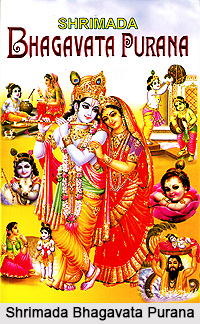
Bhagavata Purana
Stories of devotees, the various avatars of Krishna or Vishnu are described in the earlier section of the Purana.
Brahmanda Purana
The different sections of the Purana cover the comprehensive description of the creation of cosmos, discussion about the time as a dimension and the details of Kalpa and Yuga.
 Brahmavaivarta
The Brahmavaivarta contains eighteen thousand verses and is regarded as holy.
Markandeya Purana
The beginning of the Markandeya Purana is from the mouth of Jaimini asking four questions to Markandeya.
Bhavishya Purana
There are certain portions on the text, which has been drawn from the law book of Manu.
Vamana Purana
The Vamana Purana boasts ten characteristics apparently- Sarg, Visarg, Sthaan, Poshan, Uti, Vritti, Raksha, Manvantara, Vansh and Upaashraya.
Brahma Purana
It is believed that if this Purana along with Jaladhenu is gifted in the month of Vaisakha (May), the donor will attain heaven.
 Matsya Purana
The first and the oldest of the all the Puranas, Hindu scriptures and texts, is the Matsya Purana.
Kurma Purana
Kurmamurti (incarnation of Vishnu as Kurma or tortoise) taught this Purana while narrating the story of Indradyumna at Patala.
Linga Purana
The prominence of Lord Vishnu, and the emergence of Brahma as the creator of cosmos are described in this Purana.
Shiva Purana
Actually it contains the instructions of Shiva to Dharma sitting in the form of `linga` or `Phallus`.
Skanda Purana
The popular stories that are contained in the Skanda Purana are, the yagna (sacrifice) of Prajapati Daksha, the churning of ocean and many more.
Agni Purana
In this Purana there are a number of verses dealing with cosmology, history, warfare, law, medicine, martial art, and a lot more.
Translation of Puranas during Ahom Age
Translation of the Puranas was a path breaking event during the Ahom age which opened new doors and vistas to the pathway of Religious literature.There was much activity during this period in the direction of translating the Indian Puranas, and of composing kavyas on different themes of these texts. The translation of the Puranas provided kings and common people with not only a mythology, a magnificent sacramental literature, and a series of love-romances, but also a code of law which the Ahom kings needed very much.
Translation of Vishnu Purana
A portion of the Vishnu Purana was translated at some time in the seventeenth century A.D. by Bhagavat Misra who was also known as Raghunath Misra. He made metrical renderings of the Satvata Tantra also. A complete and literal translation of Visnu Purana was made by Parasu Ram Dvija in the first half of the- 19th century (1836). Though the author imitated the Vaisnava poets in language and method of narration, his work on the whole shows no literary skill or accomplishment. The Visnu Parvan of the Harivamsa was rendered into Assamese by Kavi Sekhar Vidyacandra Bhattacaryya during the reign of the Ahom king, Rajeswar Singha (1751-1769). The work gives an account of Krsna`s birth and his subsequent doings and exploits amongst the cowherds at Gokula or Vrindavan. But one noticeable feature of the work is the presence of Radha as the mistress of Krsna. In the original Sanskrit version, the Rasa-krida of Krsna at Vrndavana with the milkmaids is described in the twentieth chapter of Visnu Purana, but the name Radha is singularly absent there. The Assamese poet, in course of his description of the Rasa-krida episode, narrates the pangs of separation and the love at first sight of Radha and Lord Krishna. The introduction of Radha as the devoted mistress of Krsna was perhaps made under the influence of Brahmavaivarta Purana, which gained popularity in the contemporary Ahom Court. Under the orders of King Siva Singha (1714-1744) and his queen Pramatheswari, Brahmavaivarta Puranawas translated by the Court Poet, Kaviraj Cakravarti. Kaviraj Cakravarti`s work is not a complete translation; the poet adapted only the episodes relating to Krsna`s early life.
His" description of the Rasa-krida episode with erotic sentiments and suggestions is rather pleasing. Kaviraj Cakravarti alias Ram Narayan Cakravarti was the most outstanding poet of this period. He was Poet-Laureate under several Ahom Kings. Cakravarti`s important literary contributions are Sankhasura-vadha, Geetagovinda and Sakuntala-kavya .The episode of Sankhasura-vadha was taken from the Prakrti Khanda of the Brahmavaivarta Purana. The Sankhasura-vadha begins with the birth of Tulasi and then gives a detailed account of her marriage with Saftkhasura, the demon king, and of the exploits of the latter.
The rape of Tulasi by Krishna, the fight between Sankhasura and Mahadeva, and the eventual death of Sankhasura and his metamorphosis into a conch-shell are narrated in an entertaining manner. Kaviraj Cakravarti`s version of the Geeta Gobinda is done in the stereotyped hexameter couplets and does not have the same songs and speeches as in the original. Consequently, it fails to bring out the intense lyrical feeling of the original, and the intimate sentiments of the characters. Kaviraj Cakravarti is considered to be the translator of the Madhava-Sulochana episode occurring in the fifth chapter of Kriya -yoga-sara appended to the Uttara Khanda of the Padma Purana. The story is narrated with a view to showing the merits of bathing in the Ganga-Sagara-Sangama. It should be noted that a complete translation of the entire Brahmavaivarta Purana was made under the patronage of Prince Hayanarayan, a Koch king who ruled in Darrang District. The work was done in collaboration by four poets, namely, Ratikanta Dvija, Nandesvar Dvija, Norottama Dvija and Khargesvar Dvija, at some time in the Sakaera 1717. Rucinath Kandali is the first translator of the Candi episode from the Markandeya Purana. In this translation, made during the reign of King Rajeswar Singha, Rucinath introduces episodes from Kalika Purana, Vamana and Brahmavaivarta Puranas to fill the rifts in the story narrated in the Markandeya Purana. Another book, Kalki Purana, is also ascribed to Rucinath Kandali. King Siva Singha and his consort Ambika Devi patronized Kavicandra Dvija and set him to translate Dharma Purana. Dharma Purana is a voluminous work describing eloquently the duties of men and the need of their observance. Along with these, the work narrates many a didactic story. Some of the incidents of this Assamese version, such as the origin of the Ganges, the fight between Andhakasura and Siva, the quarrel of Kadru and Vinata, the stealing of nectar by Garuda, are drawn from other Puranic lore. These Assamese versions of the Puranas are not literal renderings of the originals. Mostly they are epitomes or free adaptations with emphasis on the story (akhyana) element. Many of the translators and adaptations came from the common people and were in perennial contact with the soil. Therefore they wrote in a simple style and enshrined in their writings many popular myths, legends, folklores, and cultural traditions. Highly philosophical disquisitions were avoided, but, where given, were interpretative. Their works were interspersed with devotional songs to replace the metaphysical elements, and these rendered the Puranas popular. The authors` paid little attention to literary decorations as their principal aim was only to popularise the Pauranika akhyanas and Hindu ideals. Portions of these translations are breezy and racy but not because of quaint humour: a feature rare in earlier literature. These poems may not have high literary merit but they are read by our village people even now with avidity as they are rich in didactic passages and embody popular philosophy.
Translation of Vishnu Purana
A portion of the Vishnu Purana was translated at some time in the seventeenth century A.D. by Bhagavat Misra who was also known as Raghunath Misra. He made metrical renderings of the Satvata Tantra also. A complete and literal translation of Visnu Purana was made by Parasu Ram Dvija in the first half of the- 19th century (1836). Though the author imitated the Vaisnava poets in language and method of narration, his work on the whole shows no literary skill or accomplishment. The Visnu Parvan of the Harivamsa was rendered into Assamese by Kavi Sekhar Vidyacandra Bhattacaryya during the reign of the Ahom king, Rajeswar Singha (1751-1769). The work gives an account of Krsna`s birth and his subsequent doings and exploits amongst the cowherds at Gokula or Vrindavan. But one noticeable feature of the work is the presence of Radha as the mistress of Krsna. In the original Sanskrit version, the Rasa-krida of Krsna at Vrndavana with the milkmaids is described in the twentieth chapter of Visnu Purana, but the name Radha is singularly absent there. The Assamese poet, in course of his description of the Rasa-krida episode, narrates the pangs of separation and the love at first sight of Radha and Lord Krishna. The introduction of Radha as the devoted mistress of Krsna was perhaps made under the influence of Brahmavaivarta Purana, which gained popularity in the contemporary Ahom Court. Under the orders of King Siva Singha (1714-1744) and his queen Pramatheswari, Brahmavaivarta Puranawas translated by the Court Poet, Kaviraj Cakravarti. Kaviraj Cakravarti`s work is not a complete translation; the poet adapted only the episodes relating to Krsna`s early life.
His" description of the Rasa-krida episode with erotic sentiments and suggestions is rather pleasing. Kaviraj Cakravarti alias Ram Narayan Cakravarti was the most outstanding poet of this period. He was Poet-Laureate under several Ahom Kings. Cakravarti`s important literary contributions are Sankhasura-vadha, Geetagovinda and Sakuntala-kavya .The episode of Sankhasura-vadha was taken from the Prakrti Khanda of the Brahmavaivarta Purana. The Sankhasura-vadha begins with the birth of Tulasi and then gives a detailed account of her marriage with Saftkhasura, the demon king, and of the exploits of the latter.
The rape of Tulasi by Krishna, the fight between Sankhasura and Mahadeva, and the eventual death of Sankhasura and his metamorphosis into a conch-shell are narrated in an entertaining manner. Kaviraj Cakravarti`s version of the Geeta Gobinda is done in the stereotyped hexameter couplets and does not have the same songs and speeches as in the original. Consequently, it fails to bring out the intense lyrical feeling of the original, and the intimate sentiments of the characters. Kaviraj Cakravarti is considered to be the translator of the Madhava-Sulochana episode occurring in the fifth chapter of Kriya -yoga-sara appended to the Uttara Khanda of the Padma Purana. The story is narrated with a view to showing the merits of bathing in the Ganga-Sagara-Sangama. It should be noted that a complete translation of the entire Brahmavaivarta Purana was made under the patronage of Prince Hayanarayan, a Koch king who ruled in Darrang District. The work was done in collaboration by four poets, namely, Ratikanta Dvija, Nandesvar Dvija, Norottama Dvija and Khargesvar Dvija, at some time in the Sakaera 1717. Rucinath Kandali is the first translator of the Candi episode from the Markandeya Purana. In this translation, made during the reign of King Rajeswar Singha, Rucinath introduces episodes from Kalika Purana, Vamana and Brahmavaivarta Puranas to fill the rifts in the story narrated in the Markandeya Purana. Another book, Kalki Purana, is also ascribed to Rucinath Kandali. King Siva Singha and his consort Ambika Devi patronized Kavicandra Dvija and set him to translate Dharma Purana. Dharma Purana is a voluminous work describing eloquently the duties of men and the need of their observance. Along with these, the work narrates many a didactic story. Some of the incidents of this Assamese version, such as the origin of the Ganges, the fight between Andhakasura and Siva, the quarrel of Kadru and Vinata, the stealing of nectar by Garuda, are drawn from other Puranic lore. These Assamese versions of the Puranas are not literal renderings of the originals. Mostly they are epitomes or free adaptations with emphasis on the story (akhyana) element. Many of the translators and adaptations came from the common people and were in perennial contact with the soil. Therefore they wrote in a simple style and enshrined in their writings many popular myths, legends, folklores, and cultural traditions. Highly philosophical disquisitions were avoided, but, where given, were interpretative. Their works were interspersed with devotional songs to replace the metaphysical elements, and these rendered the Puranas popular. The authors` paid little attention to literary decorations as their principal aim was only to popularise the Pauranika akhyanas and Hindu ideals. Portions of these translations are breezy and racy but not because of quaint humour: a feature rare in earlier literature. These poems may not have high literary merit but they are read by our village people even now with avidity as they are rich in didactic passages and embody popular philosophy.
Geography in the Puranas
The Puranas are the ancient extant texts, which represents not only the Indian culture and civilization, but also the history and the geography of the world since its creation. Among other subjects of interest, which the Puranas dealt with, one of the significant is geography. The geography seems to be the chief subject of discussion from early times in connection with recreation; and many of the extant Puranas contain a few chapters each on these topics. According to Puranic tradition, the earth consisted of seven dvipa or continents, namely: Jambu dvipa, Plaksa dvipa, Saimali dvipa, Kusa dvipa, Kraunca dvipa, Saka dvipa, Puskara dvipa.
According to the description of geography in the Purana, each of these was divided into a number of varsas or subcontinents. These dvipas were surrounded by seven oceans containing water which salt, sugarcane-juice, wine, clarified butter, curd, milk and good drinking water mixed in the water of the ocean.
The Jambu dvipa, which occupied the central position, among the seven dvipas, had in its middle a golden mountain called Meru, with a ring of land. The Mount Meru is in the central and from which a number of other mountains including the Himalaya radiated in different directions like the petals of a lotus. According to the geography of Puranic tradition this dvipa was divided into nine varsas or subcontinents, one of which was Bharata-varsa (India). Moreover according to the Puranic tradition, the Mount Meru is considered as the axis of the spherical earth.
The Puranas provide ample information about all the seven dvipas, thereby gives the description of the geography of the universe during its creation. The Puranas supply the information about the measurements, their mountains and rivers, their residents, their presiding deities, the longevity and general standard of morality of the people, and other details. But surprisingly the Puranas are found to give special emphasis to the physiographic description of Jambu dvipa and, more particularly, of Bharata varsa, which in early times occupied a much bigger area. In the ancient times the land of Bharata varsa had been praised as the karma bhumi or place of work. It is also considered as the blessed land of God or the creator Brahma. It was a favorable land for those who aspire for heaven or final liberation.
Jambu Dvipa is separated from the next dvipa Plakshadvipa by an ocean of salt. Plakshadvipa in turn forms a concentric circle surrounding the Jambu Dvipa and so on to give a proper form to the total seven continents. These continents are divided from the neighbor continents by ocean of different composition. Apart from the thorough description of these two dvips, the information about the other dvipas is too small.
The Puranic geographical accounts though provide ample information about the topographical features of the universe, when it was created, it has several shortcomings according to the modern scholars. According to them, the description provided by the Puranas is considerably influenced by mythology instead of the scientific description. Hence the Puranic description has undergone several modifications and changes in the later years.
According to the description of geography in the Purana, each of these was divided into a number of varsas or subcontinents. These dvipas were surrounded by seven oceans containing water which salt, sugarcane-juice, wine, clarified butter, curd, milk and good drinking water mixed in the water of the ocean.
The Jambu dvipa, which occupied the central position, among the seven dvipas, had in its middle a golden mountain called Meru, with a ring of land. The Mount Meru is in the central and from which a number of other mountains including the Himalaya radiated in different directions like the petals of a lotus. According to the geography of Puranic tradition this dvipa was divided into nine varsas or subcontinents, one of which was Bharata-varsa (India). Moreover according to the Puranic tradition, the Mount Meru is considered as the axis of the spherical earth.
The Puranas provide ample information about all the seven dvipas, thereby gives the description of the geography of the universe during its creation. The Puranas supply the information about the measurements, their mountains and rivers, their residents, their presiding deities, the longevity and general standard of morality of the people, and other details. But surprisingly the Puranas are found to give special emphasis to the physiographic description of Jambu dvipa and, more particularly, of Bharata varsa, which in early times occupied a much bigger area. In the ancient times the land of Bharata varsa had been praised as the karma bhumi or place of work. It is also considered as the blessed land of God or the creator Brahma. It was a favorable land for those who aspire for heaven or final liberation.
Jambu Dvipa is separated from the next dvipa Plakshadvipa by an ocean of salt. Plakshadvipa in turn forms a concentric circle surrounding the Jambu Dvipa and so on to give a proper form to the total seven continents. These continents are divided from the neighbor continents by ocean of different composition. Apart from the thorough description of these two dvips, the information about the other dvipas is too small.
The Puranic geographical accounts though provide ample information about the topographical features of the universe, when it was created, it has several shortcomings according to the modern scholars. According to them, the description provided by the Puranas is considerably influenced by mythology instead of the scientific description. Hence the Puranic description has undergone several modifications and changes in the later years.
Genealogy of Kings in Indian Puranas
 Genealogy of Kings in Indian Puranas has proven to be an important storehouse of information on Indian history. In the Indian Puranas are found the genealogical lists of the ancient royal households, continued from the first kings, whose origin is traced back to the sun and moon, down to the heroes of the great war of the Mahabharata. As the Puranas are ascribed to Ved Vyas, who is said to have lived at the beginning of the Kaliyuga, a contemporary of the heroes of the Mahabharata, the history of the past ends with the death of the Pandavas or shortly afterwards. However, in several of the Puranas, the royal dynasties of the past are followed by lists of the kings of the "future" in the form of prophecies.
In the lists of kings of the Kali era, one can see among others, Om dynasties of the Sisunagas, Nandas, Mauryas, Sungas, Andhras and Guptas which are well known in history. Among the Sisunagas are Bimbisara and Ajatashatru, who are mentioned in Jain and Buddhist writings as contemporaries of Lord Mahavira and Lord Buddha (6th to 5th century B. C.); and with the Maurya Chandragupta, who came to the throne in 322 B.C., we emerge into clearly identifiable history. These can be used as quite reliable historical sources, though a little caution and discrimination needs to be exercised.
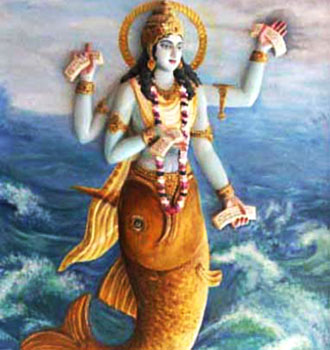 The Vishnu Purana is very a very reliable source of information as regards the Maurya dynasty (326-185 B. C.). Similarly, the Matsya Purana is also very reliable as regards the Andhra dynasty (which came to an end about 225 A. D.) while the Vayu Purana describes the rule of the Guptas as it was under Chandragupta I (about 320-330 A. D.)-
At the end of the lists of kings, these Puranas enumerate a series of dynasties of low and barbarian descent (Sudras and Mlecchas), such as Abhiras, Gardabhas, Sakas, Yavanas, Tusaras, Hunas and so on. Following this is a description of the Kali age.
The data given in the Puranas cannot be accurately verified until the point where there are clear historical references. For instance, as an explanation of the Kaliyug there is the account given by the Chinese pilgrim Sung-yun of the barbarian invasions in the northern Punjab in about 465 A. D. and of Kalhana`s vivid description of the rule of the Hun chieftains Toramana (about 500 A. D.) and Mihirakula (about 515 A. D.) who ruled "like the god of death in the kingdom swamped by the barbarian hordes," and, surrounded day and night by thousands of murderers, took no pity even on women and children. Moreover, foreign dynasties ruled in India over and over again as early as in the first centuries of the Christian era. It is possible that we may have to interpret the prophecies about the evil Kaliyuga as an echo of these various barbarian invasions and foreign rules. The data are, however, too confused to serve as a basis for safe conclusions as to the date of origin of the Puranas. All that we can safely conclude is that the earlier Puranas must have come into being before the 7th century, for neither later dynasties nor later famous rulers such as for instance Harsha Vardhana, occurs in the lists of kings.
The Puranas are valuable to the historian and to the antiquarian as sources of political history for their genealogies, even though they can only be used with great caution and careful discrimination. At all events they are of inestimable value from the point of view of the history of religion, and on this head alone deserve far more careful study than has earlier been devoted to them.
Recently updated articles in Indian Puranas
Mandakini, Holy River
Mandakini River is a significant Himalayan river in Uttarakhand, renowned for its ecological, cultural, and religious importance. Originating near the...
Kausika, Son of Vasudeva
Kausika is a minor figure in Hindu mythology and is identified in the Vishnu Purana as the only son of Vasudeva and his wife Vaishali. He is recognize...
Tandu, Attendant of Lord Shiva
Tandu is revered as the divine attendant of Lord Shiva and the foremost exponent of the Tandava dance. According to the Natya Shastra, he instructed S...
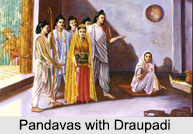
Niramitra, Mahabharata
Niramitra was a son of Nakula and Kareṇumati in the Mahabharata. A descendant of the Pandavas and the Kuru dynasty, he fought on the Pandava side duri...
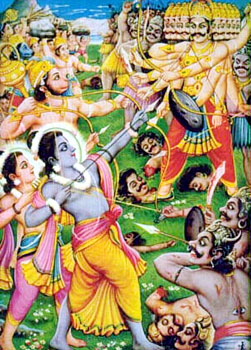
Mahodara, Ramayana
Mahodara was a prominent Rakshasa warrior, minister, and army chief who served under Rāvaṇa during the Battle of Lanka in the Ramayana. Celebrated for...
Related articles in Indian Puranas
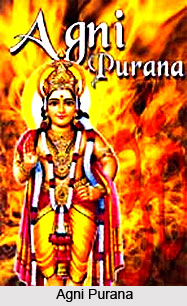
Adhyayas in Agni Purana
Adhyayas in Agni Purana are all encompassing. The chapters have dealt with a variety of subjects related to human lives. A large number of chapters ha...
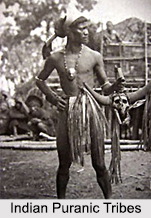
Indian Puranic Tribes
The existence of Indian Puranic tribes is often mixed with mythology and fiction that depict them as superhuman or sub.
Puranic Texts
Puranic Texts are vital according to Hindu, Jain or Buddhist religion; they describe the history of the Universe.

Puranic Shaivism
Puranic Shaivism established during the Gupta Dynasty. This puranic religion developed and expanded, and was accompanied by the development of Brahman...
Nilamata Purana
Nilamata Purana is a Kashmiri Purana that is referred by Kalhana. It is considered as one of the sources of ancient history of Kashmir.