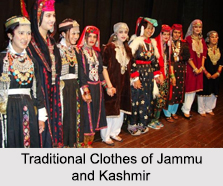
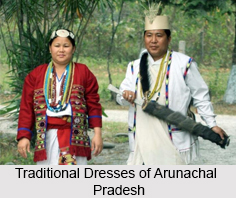
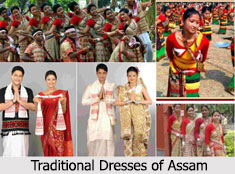
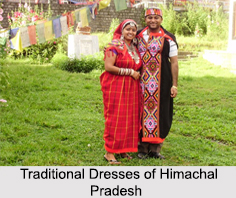
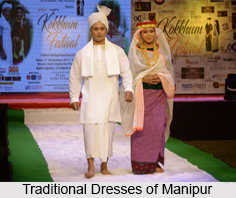
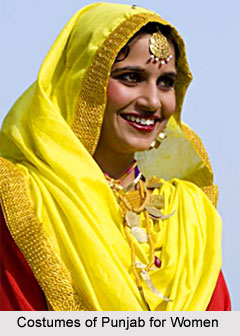
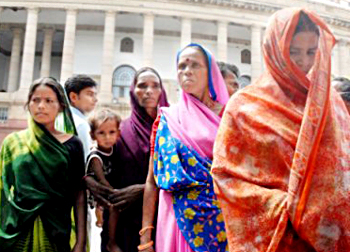
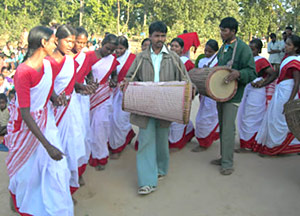
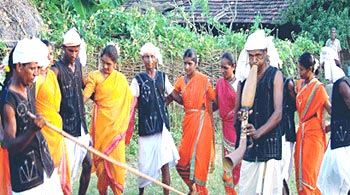
 Costumes for children in India come in a great variety. There are a number of options for the children to choose from. Their options range from loose pajamas, trousers, slacks, quarter pants, T-shirts, Shirts for the boys and skirts and dresses, salwar suits and lehenga cholis for the girls. The style and preference for clothing also varies regionally. It is generally seen in the rural areas that the children stick to traditional clothing such as Dhoti Pyjamas, loose lehengas and Zablas. The traditional clothing is also popularly worn by the children in urban areas during festivities and celebrations.
Costume for Infants
The costumes for toddlers are of varied types. In India the tradition of making clothes at home for the child is very old. Even before the child is born the expecting mother begins to make socks made of wool if the child is due to born in winter season. Generally small babies need more clothes and so zablas and loose clothing are preferred during summer season. Normally babies who are of 2 to 3 months are generally wrapped in a zippered garment. Baby clothes are available in neutral colours and younger designs in India and they are of stretchy fabrics where the clothes have large head openings. Overall in India generally babies and toddlers are made to wear clothing like pyjamas, zablas, track suit, sleep suits and zippered clothing. Socks are also worn by the toddlers.
Costume for Boys
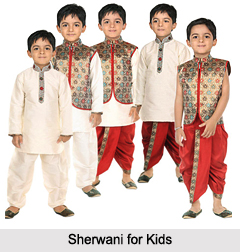
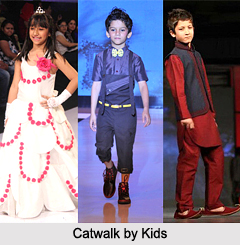
Indian boys can be seen attired in a variety of costumes depending on the region, occasion and even age. Whereas the little boys can be seen wearing t-shirts and shorts or pyjamas, the younger-teenaged boys are usually seen wearing jeans and a t-short. For festive occasions, the boys come out in their formal best in traditional outfits like the sherwani-churidar and kurta pajama.
Kurta Pajama- Kurta and Pajama are worn during special occasions like weddings, while performing pooja and festival time. Today some boys wear kurta with jeans for formal as well as casual wear. A kurta is a traditional piece of clothing comprising of a long shirt, usually worn knee length.
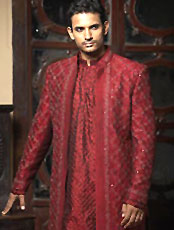
 Sherwani- Sherwani means a coat-like garment buttoned in the front, which reaches down to the knees, or lower. It usually has some kind of embroidery work on it. This is most often worn during weddings and other formal parties. The sherwani coat fits close to the body.
Regional clothing is also very famous in India. For instance, the most common garment worn by boys in Kerala is the "dhoti" or a kind of short skirt, although some might wear longer lengths. In southern India, boys prefer `lungis` to pants.
Costumes for Girls
The traditional dress worn by the girls in India is most often the salwar kameez dupatta or churidar kurta. This was traditionally the dress worn in Punjab, but is now worn almost everywhere, particularly by girls. Nowadays, children and teenagers alike can be seen wearing a variety of western clothing such as jeans, t-shirts skirts and frocks. The dresses worn by the children also differ significantly based on the different regions that they come from. For instance, the traditional dress for girls in Rajasthan and Gujarat is the lehenga choli or ghagra choli.
Choli-Sharara
The Sharara is essentially worn during wedding ceremonies and a number of young teens can be seen wearing it on such occasions. Girls accompanying the bride throughout her wedding need something special too. Shararas are available in different fabrics like georgette sharara, satin sharara etc. Some popular designs of shararas are rich Zardosi Sharara cholis, Bright Yellow choli Sharara, Resham Work Choli Sharara, Crush Tissue Choli Sharara, Mirror Work Choli Sharara.
Chaniya-Choli
Chaniya Choli is traditional attire that is worn by women during festivals especially during Dandiya Ras. Chaniya choli is generally heavy though it may also be lightweight. Chaniya choli has traditional designs like handwork, different embroidery designs, abla work etc. The chooni or the draping cloth has a heavy work of kodi and abla or a fusion of the two, which blends extremely well and looks elegant when worn during traditional festivals. The odhni, the third part of the total garment, acts as a scarf or covering for the head and body and is a sign of modest shyness for the wearer.
 Salwar Kameez
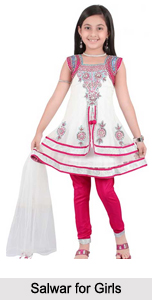
Salwar kameez is the traditional dress worn by various peoples of south - central Asia. Salwar is a sort of loose pajama-like trouser. The legs are wide at the top, and narrow at the bottom. The legs are pleated or gathered into a waistband. There is a drawstring at the top of the waistband to hold up the salwar. The kameez is a long shirt or tunic. The side seams (known as the chaak) are left open below the navel, which gives the wearer greater freedom of movement. The kameez is usually cut straight and flat. When girls wear the salwar kameez, they usually wear a long scarf or shawl called a dupatta around the head or neck. The salwar is preferred by the younger generation as it is easy to carry. It is worn on both formal and casual occasions.
Thus costumes for children range over a number of different styles, and they have great many items to choose from.