Baul songs of Bengal are termed as the folk music. Folk singers or the Bauls belong to a particular religious sect, and the songs composed and sung by them are known as Baul songs. It may be noted here that folk songs pertain to that group of music which is spontaneous and reflects the life and circumstance of man in his local surroundings. Since they are mostly composed by common men, they are comparatively less refined as compared to other classical forms of music and are a pure rendition. It has often been argued that since Baul music represents a spiritual aspect on life, it cannot be included under folk music which deals mainly with the conditions and circumstances of man. However it must be stated here that Baul music most certainly qualifies as folk music since all folk songs deal with both the material as well as the spiritual world.
Origin of Baul Songs
Bauls belong to a particular sect of the Indian Scheduled tribes and Schedule caste, and can be seen in almost every village of Indian state of West Bengal. The movement of the Bauls has grown out of their ostracism from the religious practices, as is the case with most people belonging to the lower castes. Most of the rites and rituals prescribed by the texts of Brahmanical sources of ancient history and exclude them from the structure of society and hence they have grown and developed on their own, outside the confines of society. It is for this reason that the Bauls live and wander outside society, not wanting to be a part of it. This social ostracism however does not distract them from their goal, and they are singularly devoted to spiritual experiences and feelings.
Purpose of Baul Songs
The main aim of the Bauls is upliftment of the soul and a spiritual quest. They seek to attain this upliftment by means of the songs that they sing. This is the prime purpose of the Bauls in this life and in following this purpose everything else is secondary. The Bauls seek fulfilment in divine union and for them the satisfaction of their basic vital needs is superseded by their spiritual goal. As a result of their pursuits, they remain detached from society and societal associations and demands. It is felt that all these are stumbling blocks which will stand in the way of the Baul achieving his goal of union with the divine. He is going through a constant inner struggle which also leads to failure at times. All knowledge that he possesses comes from the teachings of the Guru, from faith, introspection and intuition. The knowledge that he acquires in the course of his Sadhana is transmitted to others via his songs.
Practice of Baul Songs
Baul fakirs have simple attire, comprising a saffron lungi and a long saffron gown running beyond the knees. They can usually be seen sporting long hair and a long beard, wandering around the villages singing and begging for alms. The Bauls have no formal education in societal terms. They believe in the system of "Adhikari-Veda". This means that the Baul will not reveal the mode of his or true inner feelings to just any lay person. This is considered to be harmful for both the Sadhak and the listener. The true nature and meaning of the symbols is only revealed to those along the same path or those who are sincerely interested in spiritual quests. Others who listen to the songs must remain content with the surface meaning alone. There are many Bauls who visit fairs and festivals and entertain people with their song and even dance. In fact the Bauls have a distinct dance pattern typical to them. The singers gather together in groups and go on singing one after another for days on end stopping only for food and rest. There are two notable festivals in the western part of Bengal where the maximum number of Bauls gather. These are the Joydev Kenduli in the Birbhum district and the Ghospara festival in the district of the North 24 Parganas and South 24 Parganas. The former is held in the middle of January and the latter during the festival of Dol Purnima in March-April.
Songs Related to Baul
The songs of the Baul singer reflect his inner struggle and his desire for communion with the divine. All the songs of the Baul reflect a part of this struggle. The theme of the songs of the Baul can be spilt into three categories. These are- the goal that is to be attained by the Bauls, the difficulties faced by those walking the spiritual path and guidance to overcome these difficulties. The language used in these songs is mainly symbolic, and cannot be understood at a superficial level. The language in the songs seems like a mere agglomeration of random words that does not make any sense to the layman. Their inner meaning can be comprehended only by those initiated to this form. There are a number of symbols that are used quite often. The most commonly used symbols are: Phool-flower, Neer-water, Moner Manus-soul`s companion, Tribeni-confluence of three rivers, Daraza/Dooar-door, Chandra-moon, Padma-lotus etc. The reason behind using such language is that the Bauls do not conform to the traditional rites and rituals prescribed by the Brahmanical texts, which others are used to. Hence those who are accustomed to these traditional texts have had their minds moulded by the same and hence they are unable to understand the Baul`s path. In fact, it is for this reason that most Bauls are ostracised and hence remain outside the folds of society. Since Baul music has a strong local flavour, there is bound to be some variations in the same. Thus in the eastern district, the music resembles Bhatiali and in the north there is an influence of Bhawaiya. In the west the songs are slightly different, with songs being long and monotonous in their tonal character. Many Baul gurus were, and still are, poets, Chaitanya Mahaprabhu (13th Century) was the greatest known Baul singer, and he travelled all over India. History counts him as the biggest influence among Baul poets and singers of later generations. Lalan Fakir, one of the most famous of them, was a revolutionary and a holy man, who created more than 5000 such songs.
Instruments in Baul Music
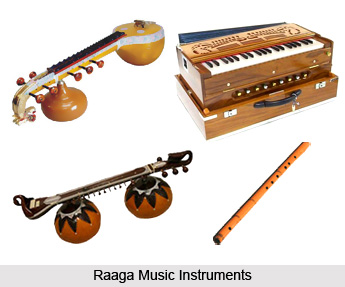
 Among the instruments that the Baul singer plays the most popular is the Ektara and Dotara which is used by almost all Bauls, as well as a small Dugi (kettle drum) tied at the waist. The ektara is most popular in western Bengal, especially Bankura district, Birbhum district, Purulia district etc. The Dotara or sarinda is most widely used in the northern districts, like north Dinajpur district and Malda district. In the eastern district both the Ektara and Dotara are used.
Though the Baul songs are not completely comprehended by everyone, they are still quite popular and largely accepted. They conform to the typical features of a folk song, in that the composers and singers are rooted in tradition and local culture, their feelings are genuine and spontaneous and the tunes and rhythms are based on traditional patterns. Sadly, the tradition of Baul music is largely dying out now.
Baul Songs
Baul Songs refer to the traditional folk music of Bengal. These songs are performed by singers who belong to a particular religious sect, and the main basis of the songs is their spiritual quest.