
The Indo-Aryan Language forms a branch of Indo-Iranian languages, which in itself is a branch of Indo-European language family. Out of all the Indo-European speakers, Indo-Aryans forms one half of them. The large numbers of native speakers are Hindustani, Bengali, Punjabi, Marathi, Gujarati, Odia, Sindhi, Nepali, Sinhala, Saraika and Assamese with the total number of natives coming to more than 900 million. They form a small sub-group of Indo-Iranian languages which consists of two other language groups: Nuristani and Iranian.
History OF Indo-Aryan Languages
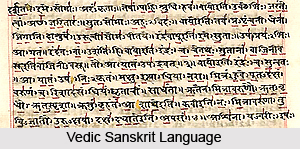
The earliest proof of the group is from Vedic Sanskrit, the languagethat has been used in the prehistoric preserved text of the Indian subcontinent, the foundational stone of Hinduism called the Vedas. The Indo-Aryan superstrate in Mitanni is of same age as the Rig Veda, but the only proof is a number of loanwords. In 4th century BC, the Language was codified and standardized by the grammarian Panini, called "Classical Sanskrit" by convention.
Middle Indo-Aryan Languages
Outside the purview of the Sanskrit Literature, the vernacular dialects continue to evolve. The ancient attested prakrits are the Jain and Buddhist canonical languages Pali and Ardha Magadhi respectively. By the medieval period, the Prakrits had actually diversified into many Middle Indic dialects. The Apabhramsa is actually a traditional cover term for midway dialects connecting late Middle Indic with early Modern Indic, spanning roughly the 6th to 13th centuries. Some of these dialects did show considerable literary production, the Sravakachar of Devasena (dated to the 930s) is now considered to be the first Hindi book. Under the thriving Mughal Empire, Persian became very influential as the language of prestige of the Islamic courts. But, as a matter of fact, the Persian was displaced by Urdu. This Indo-Aryan language is actually a combination with the Urdu Literature">Persian elements in its vocabulary, with the grammar of the local dialects. The two largest languages that formed from Apabhramsa were Hindi and Bengali; others include Oriya, Gujarati, Marathi and Punjabi.
New Indo-Aryan Languages
The Indic languages of North India, which also includes the Assam Valley and Pakistan, form a dialect continuum. The common Hindi that is spoken in India is actually standard Hindi which is the Sanskrit version of the local Hindustani spoken in Delhi area since the Mughals. However, the term Hindi is also used for most of central Indic dialects to Rajasthan from Bihar. The Indo-Aryan Prakrits also gave rise to languages like Gujarati, Assamese, Bengali, Odia, Nepali, Marathi and Punjabi, which are not considered to be Hindi despite being part of the same dialect continuum.
In the Hindi-speaking areas, the prestige dialect was long Braj Bhasha, but this was replaced in the 19th century by Khariboli -based Hindustani, commonly known as Urdu. This state of affairs continued until the Partition of India in 1947, when Hindustani/ Urdu continued as an official language of India and Pakistan but renamed Hindi in India and Urdu in Pakistan. Persian-Arabian vocabulary began to be excised from the official Standard Hindi corpus of India in a bid to make the language more "Indian". A return to Hindi poets such as Tulsidas resulted in what is known as a Sanskritisation of the language. Persian words in common parlance were slowly replaced by Sanskrit words, sometimes borrowed wholesale, or in new compounds. In contemporary times, there is a continuum of Hindi-Urdu, with heavily-Persianised Urdu at one end and Sanskritised Hindi at the other, although the basic grammar remains identical. Most people speak something in the middle, and this is what the term Hindustani is frequently used to mean today.
Classification: List of Indo-Aryan languages
The Indo-Aryan languages can be classified into the following groups given below:
Central zone
Northern zone
Northwestern zone
Eastern zone
Southern zone
Insular (Southern)
Because there are not always clear breaks between languages, there is no definite classification of the Indo-Aryan languages. However, they are commonly divided as follows:
Dardic languages, such as Kashmiri: though their exact classification among Indo- Aryan, Iranian and Nuristani Group, is uncertain.
Northern languages: Kumaoni, Nepali, Garhwali
North-western languages, such as Lahnda, Sindhi, and the Western Pahari languages
Central languages, such as Punjabi, Hindi, Gujarati, Rajasthani, Awadhi
Magadhan, or Eastern, languages, such as, Assamese, Bengali, Oriya, Maithili and Bhojpuri
Southern languages, such as Dhivehi, Konkani, Marathi, Sinhala, and perhaps Dakhini
Indo Aryan Languages
Indo Aryan Languages are spoken by large number of speakers ranging from Hindustani, Bengali, Punjabi, Marathi, Gujarati, Odia, Sindhi, Nepali, Sinhala, Saraika and Assamese.
Recently updated articles in Languages in India
Linguistic History of India
Linguistic history of India traces down two basic kinds of literary styles still prevalent in the country.
Ancient Sanskrit Grammarians
Ancient Sanskrit grammarians were pioneering scholars who considered factors like pronunciation and euphonic combination and the discrimination of par...
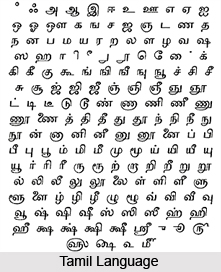
Tamil Language
Tamil is a Dravidian language spoken primarily in India and other countries of South Asia. It is one of the official languages of Tamil Nadu. With a r...
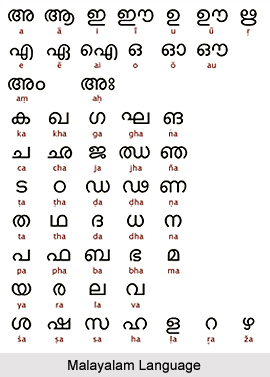
Malayalam Language
Malayalam language, one of 22 scheduled languages of India, is mostly concentrated in Kerala, Lakhswadeep and Puducherry. A Dravidian language, Malaya...
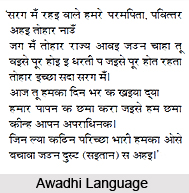
Awadhi Language
Awadhi is one of the enriched languages of India, Hindi too originated from it. Awadhi, an Indo-Aryan language from the Indo-European family, originat...
Related articles in Languages in India
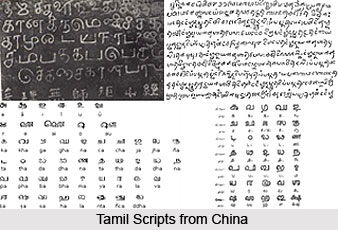
Development of Tamil Scripts
Development of Tamil scripts can be traced to the period just after the reign of Asoka. The Tamil script is believed to have developed from the Brahmi...
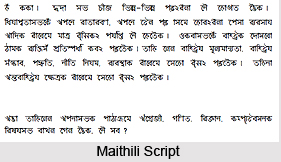
History of Maithili Language
History of Maithili Language can be dated back to the early fourteenth century. Maithili is now one of the national languages of India.
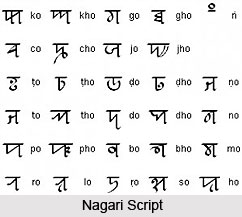
Nagari Script
Nagari script today is classified as Devanagari, believed to have served as the ancestor of various modern-day writing.
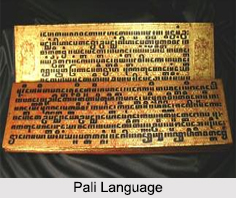
Pali Language
Pali Language owes its origination to Gautama Buddha and his disciples, who were chief to propagate it.
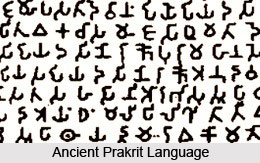
Origin of Prakrit Language
Origin of Prakrit language can be attributed to Sanskrit according to some historians. Some consider it as nature’s gift which is easily comprehensibl...