 Naga tribe of Nagaland belongs to the race which resided in south-west China. Naga is a generic term which is applied to several clusters of tribal groups inhabiting the states of Nagaland, Manipur, South-eastern Arunachal Pradesh and eastern Assam, in the North Eastern region of India. The largest Naga populations with 15 distinct sub-tribes are found in Nagaland. They are Ao, Angami, Chakhesang, Chang, Chirr, Khahmnungan, Konyak, Lotha, Makware, Phom, Rengma, Sema, Tikhir, Yimchunger and Zeliang. The Naga groups share common cultural features like the youth dormitory system, house pattern, disposal of dead, betel chewing habit, marriage pattern, life cycle rituals, traditional political organisation and clan system. The Naga tribes were roughly classified into four categories - the Southern Nagas, the Western Nagas, the Central Nagas and the Eastern Nagas.
Etymology of Naga Tribes
The word "Naga" is said to have been invented from the Burmese word "Naka," meaning people with earrings. Many Naga people have dropped over into adjoining Burma, Assam and Manipur also.
 Language of Naga Tribes
Naga tribes speak in a variety of different Tibeto-Burman languages, with Anal, Angami, Ao, Chakhesang, Chang, Lotha, Mao, Maram, Phom, Pochuri, Poumai, Phom, Rengma, Rongmei, Sangtam, Sumi, Tangkhul, Thangal and Zeme. Naga people speak over 89 diverse languages and dialects, chiefly inarticulate with each other.
Societies of Naga Tribes
Nagas build their villages on hill tops. Naga village has been regarded as a small republic as every Naga village has existed as an independent village state or a small republic. The Naga build their granaries around their villages. The youth dormitory is known as Morung among the Nagas. It is an important centre around which the Naga folklore flourished. It is equally important as a residential and training centre for traditional art. Boy`s dormitory is known as Ikhuichi and Iloichi is the name for dormitory of the girls. Joint family is the traditional form though nuclear family has become a new trend. Agriculture is the main system which regulates the soil practice of the Naga tribes. Shifting cultivation and terrace cultivation are practiced among them.
Economy of Naga Tribes
Agriculture is the main occupation of the Nagas. The practice of jhumming is done in two ways- first for paddy cultivation and second for growing vegetables like millet, maize, oil seeds, , chilies, pumpkin, Gourd, potato, brinjal, mustard, cucumber, beans, ginger and garlic. They also collect honey, resin, seeds, barks from the jungle and sell them in the market.
The Nagas also produce a variety of wooden articles such as utensils, rice pounding tables, smoking pipes, musical instruments, cups and plates of various shapes and size. They engage in elaborate wood carvings for decorating their Morung. Nagas excel in making baskets and mats. They make earthen pots by hand alone. One of the major contributions of the Christian Church has been to liberate the Nagas from the fear of evil spirits and evils of head hunting and continuous warfare.
 Food Culture of Naga Tribes
The Naga Tribe may eat roughly everything. Rice is the staple food. Rice is eaten twice a day with fish curry, pork, mutton, or vegetables. Beef, dog, fowls, bird, fish, crabs, beetles, ant and spiders are also eaten. The entire of an animal with skin, blood, intestine and even the eyes are habitually eaten. Milk and milk products are considered as a taboo among most of the Naga tribes. The Nagas have a preference to drink yi or madhu. At the event of marriages and festivals, large quantity of madhu is consumed. Tea is commonly consumed as beverage. Tobacco smoking in pipe is also general among the Naga Tribes.
Costumes of Naga Tribes
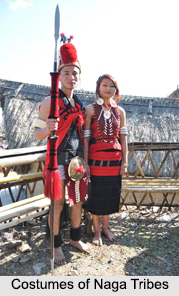
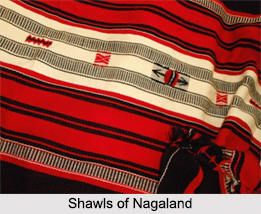
The Naga Tribes wear a plain white cloth, locally known as "subsu". The female skirt consists of a piece of cloth about one and a half meter long and about a half meter in breadth, wrapped around the waist. The colour of dress differs from tribe to tribe. Usually, the women wear tsongtem (puttees) and the Naga men dress in lengta which consists of a narrow piece of blue or white cloth, some four feet long and 25 centimeters broad.
Religion of Naga Tribes
Nagas have no idols and they do not consider the concept of image or idol worshipping. Although Christian by faith, they follow some of the old practices of tribal religions.
Different types of Naga Tribes
Followings are the different types of the Naga Tribes:
Angami
Ao
Chang
Chirr
Chiru
Htangan
Kharam
Khiamniungan
Konyak
Leinong
Liangmai
Lotha
Mao
Maram
Mzieme
Pochury
Phom
Poumai
Rengma
Rongmei
Sangtam
Sumi
Tangkhul
Tarao
Thangal
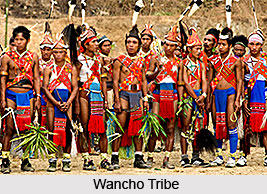
Wancho
Zeme
 Festivals of Naga Tribes
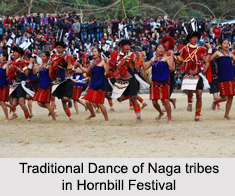
Hornbill festival is a celebration held every year from 1st to 10th December, in Nagaland. It is also called the `Festival of Festivals`. Some other different Festivals of Naga Tribes are as follows:
Sekrenyi
Ngada
Chiithun
Kanghi
Tsukhenyi
Yemshi
Moatsu
Monyu
Miu
Naknyu Lem
Metemneo
Amongmong
Tokhu Emong
Tuluni
Art of Naga Tribes
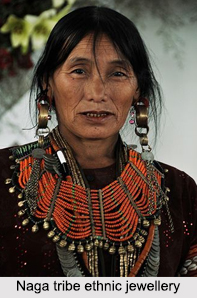
Each of Naga tribe has an exclusive way of building their huts. A general tradition among all the tribes is decorating the entrances of their houses with the heads of buffaloes. Clothing patterns are established to each tribe, and the cloth is woven by the women. They make use of beads with diversity, profusion and complexity in their jewellery with a broad choice of resources, including glass, shell, stone, teeth or tusk, claws, horns, metal, bone, wood, seeds, hair and fibre.
Weaving of colourful woollen and cotton shawls is an innermost activity for women of all Naga tribes. The Nagas are specialists in basket making. Bamboo baskets are made in narrowed and cylindrical shapes. Mats and shields of bamboo are also made. There are blacksmiths in each Naga village. They prepare dao, sickles, axes and spears. The Nagas are very good wood carvers.