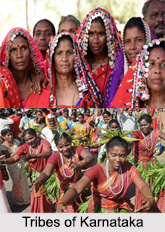
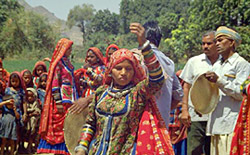
 Konda Kapus tribe lives in great numbers in the Karnataka state of India. There are other states of Indian subcontinent as well where this tribe has settled down like Andhra Pradesh, Odisha and Tamil Nadu. As per the provision of the Indian Constitution, Konda Kapu tribe is considered to be one of the Scheduled tribes of the country. Konda Kapus tribe is also known as "Konda Dora" tribes.
Origin of Konda Kapus Tribe
According to anthropologists, Konda Kapus tribes have descended from the famous Pandava kings and thus they identify themselves as Hindus. Till present day, these Konda Kapus tribes revere the Pandavas and a deity called `Thalupulamma`. Another story is also popular about the origin of this Konda Kapus tribal community. As per the scholar Thurston, the Konda Kapus tribe belongs to the caste that carries on the profession of hill cultivation and is mainly found in Visakhapatnam.
Language of Konda Kapus Tribe
The Konda Kapus tribes speak the regional language Telugu. Apart from it, the also have developed their own dialects. They have developed their mother tongue, popularly known as Kubi or Konda Bhasha, which has a belonging to Gadaba group of the famous Dravidian language family.
Economy of Konda Kapus Tribe
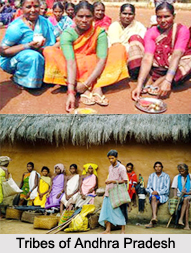
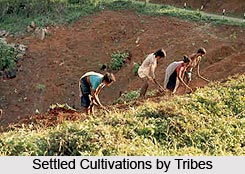
Like many other tribal communities of the Indian subcontinent, the economy of the Konda Kapus tribe is agro- forest based. It is only natural that these Konda Kapus tribes too depend on settled cultivation, shifting cultivation, also known as Podu cultivation etc. They are also dependent on forest products.
Housing Settlements of Konda Kapus Trib
Housing settlements are also found in the region. The houses are sparingly dispersed in the whole area, each being surrounded by mountains and forests. Some of the Konda Kapus tribes also have built their houses on the top of the mountains and also at hilltops. The people of this community generally built their houses with thatched roofs. However, due to the government initiatives, many of these Konda Kapus tribes have built the tiled houses. For cooking, they make use of clay pots and aluminum utensils. Just like any other tribal community, they follow the same social structure. Thus clan, lineage and family are prevalent in the society of this Konda Kapus tribal community. Various clan divisions of this tribal community are Naga, Surya, and Korra. Amongst these Konda Kapus tribes, certain surnames too are quite popular like Somula, Janni, Nandula, Boyina, Badmani, Jami, Deesara, Chittam, Tamala, Gammela and Pangi.
Food Habits of Konda Kapus Tribe
Over the years, these Konda Kapus tribes have developed tastes for some sumptuous food. Ambali or Gruel which is prepared from ragi flour is the staple food of the Konda Kapus tribal community. Maximum of these Konda Kapus tribes are fond of non-vegetarian meals with no liking for rice. Beefs are widely consumed. Edible fruits, roots and tubers in the forest have also become an inseparable thing of the meals of this Konda Kapus tribal community. Once in a while, they take part in some special small hunting games in which they catch hold of numerous animals like wild fowls, pigs, hares and several birds to satisfy their hunger. Oil is hardly used for cooking. They also gather the seed leaf of the mango fruit in order to extract the gruel out of it only after thorough processing. Interestingly, these Konda Kapus tribes consume the gruel as food at times when there is hardly any availability of food in the areas. Smoking cigar and chewing tobacco are the addictions that these Konda Kapus tribes have adapted over the years. Arrack (Sara), Sago palm toddy (Jeelugu Kallu), and rice beer (Maddi) are some of the alcoholic drinks that this tribe savors, irrespective of gender division.
Attires of Konda Kapus Tribe
Dresses and jewelleries are integrally related to the lifestyle of Konda Kapus tribal community. In fact, clothes are simple for both the male and female members of the community. The aged males generally keep the upper body portion bare and wrap their lower portion of their body with Pancha (Dhoti) or Gochi. Gochi is a piece of line cloth worn round the waist. In general, the Konda Kapus youths wear trouser and banian or shirt while the young Konda Kapus females wear saree and blouse. Unlike many of the tribes of India, these Konda Kapus tribes do not use gold jewelleries. Mostly, the females adorn themselves with silver or copper ornaments. Exquisite necklaces that these Konda Kapus females wear are made with 25 paise and 50 paise coins.
Social Norms of Konda Kapus Tribe
Most of the Konda Kapus tribal communities follow the rules of patriarchal society. Nuclear family system is quite prevalent. Marriage too is quite an important institution in the whole of the Konda Kapus tribal community. Monogamy is the most favored form of marriage. However, there are instance of polygamous marriages are heard from here and there. Due to financial constrains, now a days, maximum of these Konda Kapus tribes have averted the practice of polygamy.
Only handful cases of the marriage by `elopement`, `capture`, and `service` are in practice. Widow marriage, levirate marriages are in practice among them. Only after taking permission from the head of the Konda Kapus tribes, they can go for divorce. The marital bonds are very weak among the tribal people. Extra marital relations are prevalent among them.
Religious Beliefs of Konda Kapus Tribe
Following the footsteps of most of the tribal communities of the state, these Konda Kapus tribes are widely oriented to religion and also superstitions. Hinduism and Christianity are practiced by many of this Konda Kapus tribal society.
Festivals of Konda Kapus Tribe
Festivals and fairs are incorporated within the culture and tradition of this Konda Kapus tribal community. Almost everyone participate in the celebration of the Etikela Panduga. It is the most significant festival. Besides this, they celebrate festivals of Hindus like Sankranti, Diwali and Sivaratri. Modukondamma thirunallu is the significant fair, organized collectively at Paderu in every year during the month of May.