Urinary Disorders - Informative & researched article on Urinary Disorders
  Indianetzone: Largest Free Encyclopedia of India with thousand of articles Naturopathy


in  
Art & Culture | Entertainment | Health | Reference | Sports | Society | Travel
Forum  | RSS Feeds  | Free E-magazine
Naturopathy : Fasting Therapy l Colour Therapy l Sleep Therapy l Aromatherapy l Water Therapy l Massage Therapy l Mud Therapy l Magnetic Therapy l Nature Cure Treatments l Bath Therapy l Indian Naturopathy l Magnet l Music Therapy l Flower Remedies l Weight Loss l Diet Therapy l Diseases of the Nervous System l Oushadhi l Unani Medicine in India
Home > Health > Naturopathy > Nature Cure Treatments > Common Ailments > Urinary Disorders
Urinary Disorders
Urinary disorder is a bacterial infection that affects the urinary tract of the women and sometimes of men.
  Haematuria or Adhoga Raktapitia   Dysuria or Mutrakrichha   Causes of Urinary Disorders
  Symptoms of Urinary Disorders   Treatments of Urinary Disorders    

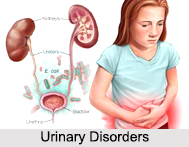
BhujangasanaUrinary disorder is basically urinary tract infection (UTI) which is a bacterial infection that affects any part of the urinary tract. In this disease the bacteria get into the bladder or kidney and multiply in the urine and cause a UTI. The most common type of UTI is a bladder infection which is also often named as cystitis. Another kind of UTI is a kidney infection, known as `pyelonephritis` which is much more serious. There are some other types of UTIs that are Uncomplicated Urinary Tract Infections (UTIs), Complicated Urinary Tract Infections, Recurrent Urinary Tract Infections, Asymptomatic Urinary Tract Infection (Asymptomatic Bacteriuria) and Acute Urethral Syndrome

Urinary disorders are the results of some infections caused by certain bacteria. In this respect the name of Escherichia (E.) coli should be cited as 75% - 90% of uncomplicated cystitis cases in younger women and in more than half the cases in older women (over age 50) are the result of this bacteria. E. coli originates as a harmless microorganism in the intestines, spreads to the vaginal passage in most of the cases of UTI. Gradually it invades and colonizes the urinary tract. Some bacteria may be able to invade into deeper tissue in the bladder, where they survive to infect the patient after resolution of the previous infection. Most of the cases of UTIs in younger women, Staphylococcus saprophyticus is responsible for 5% - 15% of UTIs. Infections caused by this bacterium tend to have a seasonal variation. Klebsiella, Enterococci bacteria and Proteus mirabilis account for most of remaining bacterial organisms that result UTIs. They are generally found in UTIs in older women.

The causes of Urinary disorder may also include painful or frequent urination, bedwetting, or the need to urinate frequently throughout the night. Incontinence may be caused by infection, a urinary tract abnormality, estrogen loss after menopause, sagging pelvic muscles or a neuromuscular disorder. Incontinence can be categorized according to whether it is temporary (transient incontinence) or caused by a long-standing problem (established incontinence). A bladder infection is the most common cause of transient incontinence. Other reversible factors that can contribute to incontinence include conditions like a severe infection such as pneumonia or impaired mobility because of a leg or hip fracture. Additional causes of transient incontinence include excess intake of alcohol or beverages that contain caffeine and conditions that can result in irritation of the bladder or urethra, such as atrophic vaginitis or severe constipation.

Established incontinence may be caused by brain and spinal cord disorders such as stroke, Alzheimer`s disease, and multiple sclerosis; diseases that affect the nerves leading to and from the bladder such as diabetes. Moreover, conditions in the lower urinary tract such as an enlarged prostate; and conditions that permanently impair mental function or mobility are also hold responsible for UTI. Urinary incontinence can also be categorized into five basic types based on the pattern of symptoms like Urge, Stress, Overflow, Functional and Mixed incontinence.

The symptoms of urinary disorders include the urge to urinate frequently, which may recur immediately after the bladder is emptied. The patient may experience Nocturia which is the need to urinate during the night. It is followed by a painful burning sensation or Urethritis. This is the reason of the discomfort or pain at the urethral meatus or a burning sensation throughout the urethra with urination (dysuria). Patients suffering from UTI may feel pain in the midline suprapubic region or discomfort or pressure in the lower abdomen that can feel bloated. Even the patient may sense cramping in the pelvic area or back, Pyuria when pus in the urine or discharge from the urethra is seen, Hematuria or blood in urine even mild fever is experienced by the patient that is called Pyrexia in the medical science. Another symptom of urinary disease is the cloudy and foul-smelling urine which often has a strong smell, protein or blood in the urine. This is a sign of pyuria, or a high white blood cell count in the urine, and is a very reliable indicator of urinary tract infections. In addition to these symptoms, kidney infections include Emesis, back, side (flank) or groin pain, abdominal pain or pressure, shaking chills and high spiking fever, night sweats and extreme fatigue.

Following the symptoms of urinary disorders, the diagnosis of the diseases can be confirmed through some tests recommended by the doctors. After observing the episodes of incontinence and the estimation of urine leakage, the patient is advised to go for some tests like ultrasonography or urinary catheterization, cystoscopy and Urodynamic tests. A pelvic examination in women can help identify problems that may contribute to or cause incontinence, such as atrophy of the lining of urethra, prolapse of the bladder (cystocele), and damage affecting the nerves to the bladder.

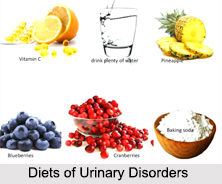
The urinary disorders though painful and problematic, the diseases have many ways of treatments. In alternative medicines, urinary disorders are treated and the results are effective as the case studies have revealed. Urinary disorders are treated in Naturopathy, Herbal therapy, Hydrotherapy, Aromatherapy, Juice therapy and Reflexology. Even dietary changes can lessen the acuity of the diseases. Dietary changes include avoiding citrus fruits and spicy foods, and decreasing intake of refined starches and sugars, vegetable fats, onions, beans, and chocolate. Urinary diseases are treated with a juice therapy that allows the patient to consume cranberry juice per day which can result in decreasing the amount of bacteria in urine. According to more recent researches, the constituents in cranberry called proanthocyanins prevent bacteria from adhering to the walls of the urinary tract. This is thought to allow urine to wash away the bacteria.

According to the practitioners of herbal therapy, some medicines like Blueberry can be used as it has the properties of cranberry. Moreover the patient is treated with herbal medicines like Asparagus (Asparagus officinalis), birch (Betula spp.), couch grass (Agropyron repens), goldenrod (Solidago virgaurea), horsetail, Java tea (Orthosiphon stamineus), lovage (Levisticum officinale), Goldenseal (Hydrastis canadensis), Corn silk (Zea mays), Marshmallow root (Althea officinalis), parsley (Petroselinum crispum), spiny restharrow (Ononis spinosa), Buchu leaf and nettle that have proved effective in the treatment of urinary diseases. The volatile oil of horseradish has been shown to kill bacteria that can cause urinary tract infections. Even in some cases of urinary disorders according to the severity of the disease is treated with Homeopathy medicines like Cantharis, Staphysagria etc are used to get relief from sharp burning pain, intense urge to urinate and continual burning, result of sexual intercourse. Apart from these,

The urinary disorders are the diseases caused by some bacteria that are if properly diagnosed can be treated in time. One of the main reasons of the infections is unhygienic activities and improper cleanliness. In addition to follow the medicines the patients suffering from urinary disorders are advised to follow personal hygiene like toilet, bathing, and menstrual habits which play an important role in developing urinary disorders and should be dealt with proper care.

(Last Updated on : 6/04/2009)
  More on Common Ailments...
 
Allergies Fever Sore Throat
Urinary Disorders Common Cold Headache
Tonsillitis Cough Insomnia
Sinusitis Fissure and fistula Warning signs of Stress
Nosebleed or Nakseer Hoarseness or Swarabheda Puiikama
Earache or Kaan Ka Dard Poliomyelitis or Balapakshaghata Types of Allergies
Recently Updated Articles in Naturopathy
  • Types of Magnets
    The planet earth is full of different types of permanent magnets, which vary in size, shape, design and strength.
  •  
  • Classification of Magnetic Materials
    The magnetic materials are broadly classified into three categories depending on their attraction towards a magnet.
  •  
  • Use of Magnets
    The magnets are very useful in treating various human ailments like toothache, stiffness of shoulders etc.
  •  
  • Affect of magnets in Human Metabolism
    The magnet has its affect on blood and hence it influences the whole human metabolism in a good or bad way.
  •  
E-mail this Article | Post a Comment
Free E-magazine
Subscribe to Free
E-Magazine on Naturopathy

 
Urinary Disorders - Informative & researched article on Urinary Disorders
Sitemap
Contact Us   |   RSS Feeds
Copyright © 2008 Jupiter Infomedia Pvt. Ltd. All rights reserved including the right to reproduce the contents in whole or in part in any form or medium without the express written permission of Jupiter Infomedia Pvt. Ltd.