Tanjore Paintings have a very rich heritage. Tanjore Painting is one of the most popular forms of classical South Indian painting. It is the local art form of Thanjavur city of Tamil Nadu. The pattern of art had flourished in Thanjavur, the capital of the Chola dynasty and since got such a name as Tanjore paintings.
The premise of Tanjore painting is essentially religious and spiritual and the art is renowned for its artistic portray of legendary characters and themes. The Brihadeeswara temple, for instance, houses several illustrations of Thanjavur paintings in the form of Chola murals and Nayak paintings. Even the Maratha palace is an ideal place to explore these paintings.
History of Tanjore Paintings
Tanjore Painting of India originated in the 16th century, under the sovereignty of the Cholas. The drop of the Vijayanagar Empire and dismiss of Hampi in the Battle of Talikota in 1565 CE effected the immigration of painters who had been dependent on the aid of the empire. Some of them roamed to Thanjavur and worked under the patronage of the Thanjavur Nayakas. Then, the Maratha rulers defeated the Thanjavur Nayakas and began to raise the Thanjavur atelier. During the Gupta Empire around 18th century, Tanjore had reached the peak of success. The Tanjore painting adorned the interiors of the palaces and soon found their place in every household. The "Saraswathi Mahal Library" in Tanjore displays the famous Tanjore paintings.
Features of Tanjore Paintings
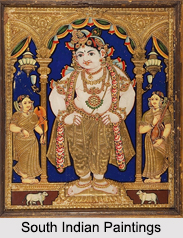
 Tanjore paintings are famous for rich colour, exterior prosperity and compressed work of art. Tanjore Paintings are embellished with rich precious stones, glass pieces and gold that add colour to the surrounding. To include 3d effect, the painters use limestone. Subjects of most of the paintings are Hindu gods and goddesses and saints. The paintings are made on wood and cloth made canvass. Tanjore Paintings come in three finishes classic, stamped and exceptional. High quality of 22-carat gold foil is used to make sure that it lasts for generations.
The characteristic of Tanjore painting is that the figures in the paintings have a round body and egg shaped effulgent eyes and are surrounded by curtains and arch. These paintings illuminate in the dark room. The artists then sketches the meticulous pictures on the canvas while the paste of limestone and fastening substance is used during adorning and engraving ornaments into the paintings. The pillars, dresses, arch and thrones of the Tanjore paintings are gilded with the gold leaves and gems of different colours. After this, colours are painted on the sketch. For outlines dark brown is usually used. Red is preferentially used as the background colour but sometimes green is also used. The yellow colour is used for the Goddesses while for Gods it varies: blue for Lord Vishnu and white for Nataraja. Previously artists used the natural colours made from vegetable dyes. The portfolios of the old Tanjore paintings were restricted to the drawings of the divine figures. But now-a-days the modern artists explore new dimensions. They also start depicting the presiding deities of the famous temples.
Types of Tanjore Paintings
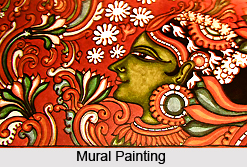
The Thanjavur temples can be divided according to dynasties. From example, under the Chola reign the murals came into prominence. As time gave way to the rise of the Nayaka dynasty, the Nayak paintings came to limelight. These paintings carried forward the aesthetic tradition of the Vijayanagara art. The Thanjavur or Tanjore paintings once again revised itself under the Maratha rule. The Marathas continued the Nayaka tradition of patronising. However, paintings under them were influenced by the Mughal idiom. These paintings with stone settings were primarily found on walls.
Making of Tanjore Painting
There are many steps involved in the making of a Tanjore Painting; the first involves drawing of the initial sketch of the image on the bottom. The base is made up of a cloth, which is pasted over a wooden base. The second step consists of mixing chalk powder or zinc oxide with water-soluble glue and applying it on the base.
After that, the drawing is made and ornamented with cut glass, pearls and semi-precious stones. Laces or threads are also used to beautify the painting. To add the effect, wafer thin sheets of gold are pasted in aid on some parts of the painting, while the other parts are painted in dazzling colours.