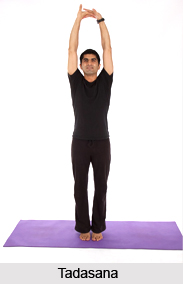
 Tadasana is a cultural yoga asana. It is a very basic standing posture with feet together and hands at the sides of the body. The asana improves one`s general posture and tones the muscles of the body.
This pose allows internal organs to work more efficiently thus improving respiration, digestion and elimination. It strengthens the abdomen and the legs. It may help relieve sciatica and reduce flat feet. There are some poses that help prepare for Tadasana. They are namely, Adho Mukha Svanasana and Uttanasana. Although Tadasana is a very basic pose it is the basis for many standing poses. Urdhva Hastasana is a very similar pose with the hands raised above the head. The final position of Tadasana resembles the palm tree. The palm tree is usually erect and straight and the individual should essentially stand straight and erect in this asana.
Meaning of Tadasana
Tadasana translates to the mountain pose in Sanskrit. It derives its name from the stretched final pose, where the entire body is stretched upwards.
Practice of Tadasana
* First one should stand erect, bring legs together, hands by the side of the thighs and look straight in the front.
* One should raise the hands straight in front up to arms and the palms should face each other.
* After that one can bring the hands up straight forwards towards the sky, fingers pointing upward.
* Then slowly one should stand on one`s toes, and raise heels as much as the person can. One should stretch body up as much as possible.
* While returning to the original position, one should bring the heels on the ground first, and then bring down the hands also.
One can also interlace the fingers, extend the arms straight in front of the torso, turn the palms away, then stretch the arms upward, perpendicular to the floor, so the palms face the ceiling.
The person practicing Tadasana can also bring the arms behind the back, holding each elbow with the opposite-side hand (be sure to reverse the cross of the forearms and repeat for an equal length of time) and then try to recreate the balanced sensation of Tadasana in all the standing asanas or posture. Tadasana can be practiced as a starting position for standing poses, in between standing poses, or by itself to improve posture. The person can stay in the pose for 30 seconds to 1 minute, breathing easily.
Effects of Tadasana
This asana improves height and makes the spine more flexible. Visceroptosis and pain in the backbone are also alleviated. Tadasana strengthens thighs, knees, and ankles and firms abdomen and buttocks, while relieving sciatica and reduces flat feet. The individual can improve the balance in this pose by standing with his inner feet slightly apart, stretching from 3 to 5 inches. The position of the arms can be varied in a variety of ways, such as one can stretch the arms upward, perpendicular to the floor and parallel with each other, with the palms facing inward.
Precautions in practice of Tadasana
Those having complaints of reeling sensation should not practice Tadasana. The learners can improve their balance in this pose by standing with his inner feet slightly apart, anywhere from 3 to 5 inches. One can also check the alignment in this pose with the back against a wall and stand with the backs of the heels, sacrum, and shoulder blades (but not the back of the head) touching the wall. Excessive practice of Tadasana can bring about some side effects like Headache, Insomnia and Low blood pressure.