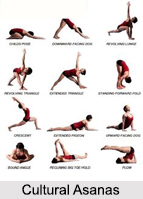
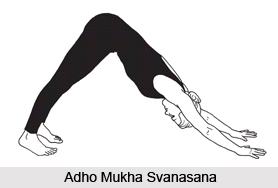
 This is a very popular Hatha Yoga posture. The body takes the form of a Downward-facing Dog. (Adho means down, Mukha refers to face and svana means Dog). It is a very rejuvenating stretch which is highly therapeutic for high blood pressure, asthma, flat feet, sciatica and sinusitis.
Practice of Adho Mukha Svanasana:
•The posture begins by kneeling with the hands and knees on the floor. Hands should be placed under the shoulders, fingers spread wide, knees under the hips, knees about seven inches apart, spine straight and relaxed.
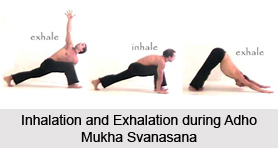
On a deep exhale, the hips are pushed toward the ceiling, the body forming an inverted V-shape. Legs and Arms should be straight, elbows engaged, shoulders wide and relaxed. Hands and feet remain hip-width apart.
• If the hamstrings are very strong or tight, the knees should be bent to allow the spine to lengthen fully.
•Pressure is avoided on the wrists by pressing into the fingers and palms, directing the push upward into the hips.
•The head drops naturally. The heart moves toward the back wall.
•The hips move up and back. Relying on the breath while holding the posture, the student takes deep, steady inhales and exhales that create a flow of energy through the body.
•Concentration should be stressed on maintaining a slow, rhythmic, sustaining breath.
•With an exhale release onto the hands and knees and rests in a child`s pose.
Effects of Adho Mukha Svanasana:
• Good for toning the shoulders, legs, arms feet and spine.
•Builds immunity and strengthened the body. Provides an overall body stretch.
•Removes fatigue and rejuvenates the body.
•Increases blood flow to the sinuses.
• Strengthens the immune system.
•Calms the mind and lifts the spirits.
•Improves digestion.
•Strengthens arms, legs, and feet.
Precautions in the practice of Adho Mukha Svanasana
•This posture is not recommended when the wrists are sensitive or injured. Modifications are advised in that instance. Can induce Carpal tunnel syndrome.
•Avoid in Diarrhea.
•In case of Pregnancy: Do not do this pose late-term.
•High blood pressure or headache: Support your head on a bolster or block, ears level between the arms.