
 Bal Gangadhar Tilak was a well known Indian Nationalist. In the early part of the 20th century when the trend of Indian independence was mostly guided by Extremism, Bal Gangadhar Tilak became the uncrowned king. He was one of the first and strongest proponents of Swaraj and he was also considered as the "Father of Hindu Nationalism". His famous declaration "Swaraj is my birthright, and I shall have it" served as an inspiration for future revolutionaries during India"s struggle for freedom. Bal Gangadhar Tilak was credited to be the first nationalist leader who sought close contact with the masses. In this respect he was the precursor of Mahatma Gandhi.
Bal Gangadhar Tilak
Bal Gangadhar Tilak, a social reformer and freedom fighter, is considered the ‘Father of Indian Unrest’. He is also known as ‘Lokmanya Tilak’.
Introduction
Bal Gangadhar Tilak was a well known Indian Nationalist. In the early part of the 20th century when the trend of Indian independence was mostly guided by Extremism, Bal Gangadhar Tilak became the uncrowned king. He was one of the first and strongest proponents of Swaraj and he was also considered as the "Father of Hindu Nationalism". His famous declaration "Swaraj is my birthright, and I shall have it" served as an inspiration for future revolutionaries during India"s struggle for freedom. Bal Gangadhar Tilak was credited to be the first nationalist leader who sought close contact with the masses. In this respect he was the precursor of Mahatma Gandhi.Early Life of Bal Gangadhar Tilak
Early life of Bal Gangadhar Tilak was spent in a modest family full of poverty and adversity. He was born on July 23, 1856, at Ratnagiri a town on the coastal strip between Goa and Gujarat, known as Konkan. His father Gangadharpant was a teacher in the department of education. In 1861 Tilak entered school at Ratnagiri. When the family moved to Pune he continued his school education there. In 1872, when Bal Gangadhar was not yet sixteen, his father died. A year earlier, before he had finished his secondary education, Bal Gangadhar was married. In 1873 he enrolled at the Deccan College in Pune and soon advanced in mathematics and Sanskrit literature. In 1878 he took his degree of Bachelor of Arts. and in 1879 his L.L.B., devoting special attention to Hindu Law. Thus Tilak prepared himself for a legal career.
Tilak belonged to an impoverished Brahman sect which, with the fall of the Peshwa dynasty, had lost its feudal landlord privileges. Tilak, who graduated from Deccan College, Pune in 1877, was among one of the first generation of Indians to receive a college education. Tilak believed that, religion and practical life are not different. According to him, to take to Sanyasa (renunciation) is not to abandon life. His dedication to humanity was a fundamental element in the Indian Nationalist movement. After graduating, Tilak taught mathematics in a private school in Pune. Later due to some philosophical disparity with the colleagues in the New School, he decided to leave the job.
In that time frame he became a journalist. He was a tough critic of the Western education system, and felt that it demeaned the Indian students and insulted India`s heritage. He organised the Deccan Education Society with a few of his college friends, including Mahadev Ballal Namjoshi, Gopal Ganesh Agarkar, and Vishnu Krishna Chiplunkar whose goal was to progress the quality of education for India`s youth. Tilak also co-founded two newspapers, the Kesari and the Maratha. The Deccan Education Society was set up to generate a new system that taught young Indians nationalist ideas through a stress on Indian culture. Tilak started a mass movement towards independence that was disguised by an emphasis on a religious and cultural restoration. He taught Mathematics at Fergusson College.
Bal Gangadhar Tilak joined the Indian National Congress in 1890 thus embarking on a full time political career.
Tilak belonged to an impoverished Brahman sect which, with the fall of the Peshwa dynasty, had lost its feudal landlord privileges. Tilak, who graduated from Deccan College, Pune in 1877, was among one of the first generation of Indians to receive a college education. Tilak believed that, religion and practical life are not different. According to him, to take to Sanyasa (renunciation) is not to abandon life. His dedication to humanity was a fundamental element in the Indian Nationalist movement. After graduating, Tilak taught mathematics in a private school in Pune. Later due to some philosophical disparity with the colleagues in the New School, he decided to leave the job.
In that time frame he became a journalist. He was a tough critic of the Western education system, and felt that it demeaned the Indian students and insulted India`s heritage. He organised the Deccan Education Society with a few of his college friends, including Mahadev Ballal Namjoshi, Gopal Ganesh Agarkar, and Vishnu Krishna Chiplunkar whose goal was to progress the quality of education for India`s youth. Tilak also co-founded two newspapers, the Kesari and the Maratha. The Deccan Education Society was set up to generate a new system that taught young Indians nationalist ideas through a stress on Indian culture. Tilak started a mass movement towards independence that was disguised by an emphasis on a religious and cultural restoration. He taught Mathematics at Fergusson College.
Bal Gangadhar Tilak joined the Indian National Congress in 1890 thus embarking on a full time political career.
Political Career of Bal Gangadhar Tilak
Political career of Bal Gangadhar Tilak spans for a long period of time. Right from his days in Indian National Congress, Bal Gangadhar Tilak contributed immensely towards the betterment of nation. He vehemently fought for the freedom of India.
Bal Gangadhar Tilak`s Association with Indian National Congress began in the year 1890. He was strongly against the mindset of the moderates and especially fought for the independent or self-government. During his time, he was one of the prominent radicals alive who strongly fought and rebelled against impact of British rule in India.
Arrest of Bal Gangadhar Tilak : On 30th April 1908 two potential Bengali youths, Prafulla Chaki and Khudiram Bose threw bombs on a carriage at Muzzafarpur in order to send across a statement and to kill the chief Presidency Magistrate Douglas Kingsford of Calcutta fame, but by mistake, killed some woman travelling in it. Chaki committed suicide when was caught and Bose was hanged. Tilak is his weekly paper Kesari defended the revolutionaries and also called for immediate Swaraj or self rule.
The government, with haste, arrested him for sedition. He was sentenced to six years` transportation and an Rs 1,000 fine. Consequently, Tilak was sent to Mandalay - Burma and was there from 1908 to 1914. While imprisoned he continued his reading and writing - thus further developing his ideas on the Indian Nationalist Movement. While in the prison he wrote the famed Gita Rahasya. Lots of copies of which were sold, and the money was donated for the freedom fighting.
Life after Prison for Bal Gangadhar Tilak : Life after prison for Bal Gangadhar Tilak was mellowed, since he suffered from Diabetes because of the hardship in prison in Mandalay prison. In August, when World War I started, Tilak cabled the cabled King Emperor in Britain of his support and turned his oratory to find new recruits for war efforts.
He also welcomed Indian Council Act fondly known as Minto-Morley Reforms which had been passed by British Parliament in May 1909, terming it as "a marked increase of confidence between the Rulers and the Ruled". The violent acts actually got retarded than hastened the pace of political reforms, be felt.
He was excited for reconciliation with Congress and had abandoned his demand for direct action and settled for agitations "strictly by constitutional means" - a line advocated by his rival Gopal Krishna Gokhale. Tilak saw the spark in Mohandas Gandhi and tried his best to convince Gandhi to leave the idea of "Total Ahimsa" and try to get "Swarajya" by all means. Gandhi, though looked upon him as his guru, did not change his mind.
All India Home Rule League : Later of course, Tilak re-united with his fellow nationalists and also rejoined Indian National Congress in the year 1916. He also assisted in setting up All India Home Rule League in 1916-1918, with G. S. Khaparde and Muhammad Ali Jinnah and Annie Besant.
After trying for years to reunite the radical and moderate factions, he gave up and focuses on the Home Rule League, which sought self rule. In effort to garner support, Tilak travelled from one village to another looking for support from farmers and locals to join the movement towards self rule. He was seriously impressed by the Russian Revolution, and also expressed his admiration for Valdamir Lenin.
Tilak started his political career as Maratha propagandist and also progressed into the mainstream nationalist after his close connection with Indian nationalists following the partition of Bengal in 1905.
Bal Gangadhar Tilak`s Association with Indian National Congress began in the year 1890. He was strongly against the mindset of the moderates and especially fought for the independent or self-government. During his time, he was one of the prominent radicals alive who strongly fought and rebelled against impact of British rule in India.
Arrest of Bal Gangadhar Tilak : On 30th April 1908 two potential Bengali youths, Prafulla Chaki and Khudiram Bose threw bombs on a carriage at Muzzafarpur in order to send across a statement and to kill the chief Presidency Magistrate Douglas Kingsford of Calcutta fame, but by mistake, killed some woman travelling in it. Chaki committed suicide when was caught and Bose was hanged. Tilak is his weekly paper Kesari defended the revolutionaries and also called for immediate Swaraj or self rule.
The government, with haste, arrested him for sedition. He was sentenced to six years` transportation and an Rs 1,000 fine. Consequently, Tilak was sent to Mandalay - Burma and was there from 1908 to 1914. While imprisoned he continued his reading and writing - thus further developing his ideas on the Indian Nationalist Movement. While in the prison he wrote the famed Gita Rahasya. Lots of copies of which were sold, and the money was donated for the freedom fighting.
Life after Prison for Bal Gangadhar Tilak : Life after prison for Bal Gangadhar Tilak was mellowed, since he suffered from Diabetes because of the hardship in prison in Mandalay prison. In August, when World War I started, Tilak cabled the cabled King Emperor in Britain of his support and turned his oratory to find new recruits for war efforts.
He also welcomed Indian Council Act fondly known as Minto-Morley Reforms which had been passed by British Parliament in May 1909, terming it as "a marked increase of confidence between the Rulers and the Ruled". The violent acts actually got retarded than hastened the pace of political reforms, be felt.
He was excited for reconciliation with Congress and had abandoned his demand for direct action and settled for agitations "strictly by constitutional means" - a line advocated by his rival Gopal Krishna Gokhale. Tilak saw the spark in Mohandas Gandhi and tried his best to convince Gandhi to leave the idea of "Total Ahimsa" and try to get "Swarajya" by all means. Gandhi, though looked upon him as his guru, did not change his mind.
All India Home Rule League : Later of course, Tilak re-united with his fellow nationalists and also rejoined Indian National Congress in the year 1916. He also assisted in setting up All India Home Rule League in 1916-1918, with G. S. Khaparde and Muhammad Ali Jinnah and Annie Besant.
After trying for years to reunite the radical and moderate factions, he gave up and focuses on the Home Rule League, which sought self rule. In effort to garner support, Tilak travelled from one village to another looking for support from farmers and locals to join the movement towards self rule. He was seriously impressed by the Russian Revolution, and also expressed his admiration for Valdamir Lenin.
Tilak started his political career as Maratha propagandist and also progressed into the mainstream nationalist after his close connection with Indian nationalists following the partition of Bengal in 1905.
Bal Gangadhar Tilak in Indian National Congress
Bal Gangadhar Tilak`s association with the Indian National Congress goes back a long way in the year 1890. The moment he joined hands with the Congress he became an active member of the same. He also opposed his moderate attitude, especially towards struggle for self and independent government. He was mostly importantly one of the popular radical leaders of the time.
He was a member of the Congress who was, personally, strongly opposed to early marriages. Tilak also opposed the Age of Consent Bill 1891 viewing it as an interference with Hinduism and a dangerous precedent. The act rose the age at which a girl could get married from 10 to 12 years.
In the late 1896, a plague epidemic spread from Mumbai to Pune and by late 1897 it reached a stage of epidemic. In effort to stop or suppress the epidemic and also prevent the same from spreading, it was actually decided to take drastic step by the Special Plague Committee (that was set up).
Bal Gangadhar Tilak took up the cause of the people by actually publishing articles in his paper named Kesari that were inflammatory, quoting the Hindu scripture, the Bhagavad Gita, to say that no blame could be attached to anyone who killed an oppressor without any thought of reward.
Following this incident, on 22nd June 1897, Rand and another British officer, Lt Ayerst was also killed by Chapekar brothers and their own associates. Tilk was charged of criminal offence, with incitement to murder and was sentenced to 18 months imprisonment. When he was released from prison he became a national hero. He adopted a new and patriotic slogan, "Swaraj (self-rule) is my birthright and I shall have it."
With the Partition of Bengal 1905, a ploy adopted by Lord Curzon to slacken the National Movement, Tilak encouraged Swadeshi movement and the Boycott movement. The movement of boycott actually consisted of boycotting the use of British goods and also social boycott of any Indian who used foreign goods.
The main principle of Swadeshi Movement actually consisted of the usage of goods produced by oneself or in Indian soil. Therefore, Tilak rightly said that the Boycott movements and Swadeshi are the two sides of same coin.
Bal Gangadhar Tilak strongly opposed the views and thoughts of the moderates like Gopal Krishna Gokhale, and was well supported by fellow Indian nationalists like Bipin Chandra Pal in Bengal and Lala Lajpat Rai in the Indian state of Punjab. As a result the trio were referred to as Lal-Bal-Pal triumvirate.
In the year 1907, the annual session of the Congress Party was held in Surat in Gujarat. Problems broke out between the extremists and moderates factions of the party of selection of the new President of Congress.
The party split into the "Jahal matavadi" ("Hot Faction" or extremists), led by Tilak, Pal and Lala Lajpat Rai, and the "Maval matavadi" ("Soft Faction" or moderates). Nationalists like Aurobindo Ghosh were Tilak supporters.
He was a member of the Congress who was, personally, strongly opposed to early marriages. Tilak also opposed the Age of Consent Bill 1891 viewing it as an interference with Hinduism and a dangerous precedent. The act rose the age at which a girl could get married from 10 to 12 years.
In the late 1896, a plague epidemic spread from Mumbai to Pune and by late 1897 it reached a stage of epidemic. In effort to stop or suppress the epidemic and also prevent the same from spreading, it was actually decided to take drastic step by the Special Plague Committee (that was set up).
Bal Gangadhar Tilak took up the cause of the people by actually publishing articles in his paper named Kesari that were inflammatory, quoting the Hindu scripture, the Bhagavad Gita, to say that no blame could be attached to anyone who killed an oppressor without any thought of reward.
Following this incident, on 22nd June 1897, Rand and another British officer, Lt Ayerst was also killed by Chapekar brothers and their own associates. Tilk was charged of criminal offence, with incitement to murder and was sentenced to 18 months imprisonment. When he was released from prison he became a national hero. He adopted a new and patriotic slogan, "Swaraj (self-rule) is my birthright and I shall have it."
With the Partition of Bengal 1905, a ploy adopted by Lord Curzon to slacken the National Movement, Tilak encouraged Swadeshi movement and the Boycott movement. The movement of boycott actually consisted of boycotting the use of British goods and also social boycott of any Indian who used foreign goods.
The main principle of Swadeshi Movement actually consisted of the usage of goods produced by oneself or in Indian soil. Therefore, Tilak rightly said that the Boycott movements and Swadeshi are the two sides of same coin.
Bal Gangadhar Tilak strongly opposed the views and thoughts of the moderates like Gopal Krishna Gokhale, and was well supported by fellow Indian nationalists like Bipin Chandra Pal in Bengal and Lala Lajpat Rai in the Indian state of Punjab. As a result the trio were referred to as Lal-Bal-Pal triumvirate.
In the year 1907, the annual session of the Congress Party was held in Surat in Gujarat. Problems broke out between the extremists and moderates factions of the party of selection of the new President of Congress.
The party split into the "Jahal matavadi" ("Hot Faction" or extremists), led by Tilak, Pal and Lala Lajpat Rai, and the "Maval matavadi" ("Soft Faction" or moderates). Nationalists like Aurobindo Ghosh were Tilak supporters.
Bal Gangadhar Tilak in Indian National Movement
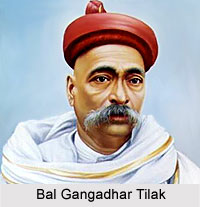 Bal Gangadhar Tilak was an outstanding leader of the Indian national movement scholar and thinker. In fact Tilak had been intimately associated with the Indian freedom struggle. From the period of 1870 to the beginning of 1920, Tilak`s association with the Indian national movement could be divided into three phases. The first stage commenced from about 1879-80 AD, the second stage from 1891-97and the third stage from1905-08. Tilak`s role in the Indian National Movement brought forward important developments. Though he began his fight on the Maratha soil yet his activities crossed the threshold Maharashtra.
The first stage in Tilak`s role in the Indian National Movement extended over a period of 10 years. It was during these years that his radical political views and outlook was moulded. With the help of several colleagues, Tilak launched number educational undertakings in a private Secondary School that was independent of British official institutions, the Deccan Education Society and a college. At the same time in collaboration with some of the Maratha patriots, Tilak started two weekly newspapers the Mahratta and the Kesari. However during 1890s he had differences of opinion with his colleagues and as a result Tilak withdrew from the Deccan Education Society. Thus, the first stage is identified by Tilak combining broad educational work with political propaganda.
In the second stage of his career, the differences of opinion between Bal Gangadhar Tilak and the Maharashtra Moderate Nationalists widened. In the Sarvajanik Sabha, the difference was out in the open too. In 1895, Tilak succeeded in ousting the Moderates from the society and becoming its actual leader. He then moved forward to active political struggle against the colonial regime, to widely applying means and methods designed to enlist the masses into the struggle. In 1895 the Maharashtra Nationalists` radical wing came into being as a result of the breaking of the native political society in the then Deccan. Subsequently in 1897 with the aggravation of the political situation in Western India, culminated in Tilak`s arrest and his being sentenced to 18 months` imprisonment.
This ushered in the third stage of Tilak`s career. In the period of the 1905-08 revolutionary upsurge Tilak became the chief leader of the democrat tic wing of the national movement not only of Maharashtra but of the whole of India. Likewise covering ten years, 1898-1908, the third stage terminated in another trial of Tilak, his being sentenced to transportation, and a great revolutionary spurt of the masses of Mumbai who elevated the struggle for India`s liberation to a new and higher plane.
 From 1879 and 1897 Tilak`s patriotic activity proceeded mainly in his native Maharashtra and was, therefore, of a local character to some extent. This time period was marked by number of important developments. The British had turned India into a source to obtain raw materials for British industry. Then it was also made a field for the export of British capital. The peasantry, which prised the overwhelming majority of the population, grew increasingly dependent on merchants and moneylenders and sank into poverty. At the same time a process of Indian native capitalist development with the formation of a working class and indigenous bourgeoisie class emerged alongwith the growth of an intelligentsia. The young liberal bourgeoisie, considering India as a whole to be the Sphere of its trading, money-lending and enterprising activity crossed the national barriers dividing the peoples of India, overcame religious and caste prejudices, and, in 1885, founded the Indian National Congress, the first political organisation claiming all-India leadership.
As far as Tilak was concerned, he readily helped the Indian bourgeois opposition to pursue its quite modest programme of struggle for the institution of the so-called representative principle in the administration or India. He was well aware that this programme was only a half way measure. It was permeated with the idea of compromise with the colonial power and that a very narrow circle or people could gain from it but a semblance of benefit. Nevertheless he conscientiously helped to promote its realisation. Being proud of his Maratha origin and culture, Tilak was even ready to forego his Maratha nationalism in the interests of the whole Indian bourgeois class which he regarded as the interests of the people of India.
Recently updated articles in Personalities in India

Governors of Mizoram
The Governor of Mizoram is the constitutional head of the state and is appointed by the President of India. The Governor performs various constitution...
Governors of Jharkhand
Governors of Jharkhand have served as the constitutional heads of the state since its formation on 15 November 2000. Appointed by the President of Ind...

Agnimitra Paul
Agnimitra Paul is an Indian fashion designer and politician serving as a Member of the West Bengal Legislative Assembly from Asansol Dakshin. A senior...
Governors of Uttarakhand
Governor of Uttarakhand is the nominal head of the state. The Governor is also the representative of the President of India in the state of Uttarakhan...
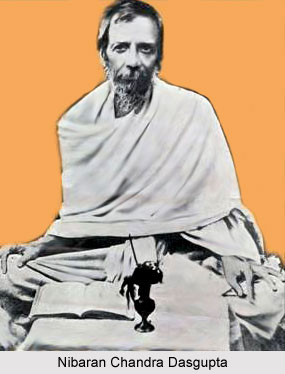
Nibaran Chandra Dasgupta
Nibaran Chandra Dasgupta was a distinct personality of Bengal who became famous for the establishment of ‘Shilpashram,’ a rural industry within the ma...
Related articles in Personalities in India

Sanskrit Theatre Personalities
Sanskrit Theatre Personalities was the main elements of Indian theatre with culture, customs and ethnicity.
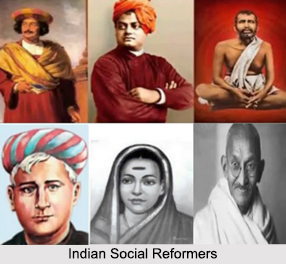
Indian Social Reformers
The Indian Social Reformers are responsible for liberating the nation of several social and religious evils.
Raja Ram Mohan Roy
Raja Ram Mohan Roy is a great Indian social reformer who is celebrated all over the country. He has done many operations for the liberation of women....