
Chapter 4 begins with Parvathi`s request to clarify further Shiva`s assertion in chapter 3 that Brahman may be attained even by the worship of Parvathi, or Shakti. Shiva explains that she is the Para Prakriti (or supreme Nature) and from her has sprung all of existence, and she is its Mother. Shiva then insists that people of the Kali age can only attain Brahman by Kaulika worship, or that derived from knowledge of the Supreme Brahman.
Parvati asks lord Shiva to explain how worshiping her is tantamount to unity with the supreme Brahman, and the means and Mantras by which such worship may attain such fruit.
Shiva answers that he shall expound first on the reasons why she must be worshipped, and dwells on the Kaula doctrine, practices deriving from acknowledging Brahman as the supreme entity.
Nature of Prakriti
Shiva explains that Parvati is the supreme Prakriti, from whom has sprung the entire universe and she is therefore the Mother of all creation. Shiva then edifies his consort with an extended list of epithets:
`Thou art Kali, Tarini, Durga, Shodashi, Bhuvaneshvari, Dhumavati. Thou art Bagala, Bhairavi, and Chhinna-mastaka. Thou art Anna-purna, Vagdevi, Kama-lalaya. Thou art the Image or Embodiment of all the Shaktis and of all the Devas (13-14). Thou art both Subtle and Gross, Manifested and Veiled, Formless, yet with form. Who can understand Thee?`
Shiva hence gives voice to the manifold aspect of Shakti, the divine natural force that moves the universe, and elevates his consort to a level equal to Brahman, significantly, something that he does not do for himself.
Kaulika Worship
Shiva then proclaims the supremacy of Kaulika worship in the Kali age for attaining Brahmanhood. Although the chapter does not elaborate on the actual meaning of Kaulika Dharma, it nevertheless ascribes numerous superlative qualities to it.
Shiva proclaims that he knows no doctrine superior to that of the Kaula Dharma, and that by the worship of just one Kaulika, all of the gods are pleased. He observes that men are inclined to Kaulika worship by merit acquired in previous births, and only Kaula Dharma is both meritorious and enjoyable, or pleasurable, whereas Yoga is merely meritorious.
Shiva then provides several more signs by which the discerning may know that the Kali age is upon them. He assserts that those free of vice and firm in their adherence to the Kaulika Dharma will not be harmed by the deleterious effects of the Kali age. Shiva even asserts that despite its barbarous evils, the Kali age possesses the advantage of rendering great merit to a Kaulika who is merely firm in his intention, whereas past ages could render both merit and demerit.
Shiva then proceeds to further delineate man`s slow decay through the ages, and avers that the various protective rituals arising from Kaulika dharma will still protect the righteous from harm in the Kali yuga.
The fourth chapter is a preamble to a deeper discussion on Kaula. It serves to set the context for later chapters, wherein Parvati wishes to know more about the exact nature of Kaula dharma or Kula chara, and Shiva reveals several more esoteric rituals pertinent to it.
Worship of the Supreme Prakriti
Chapter 4 of the Mahanirvana Tantra begins with Parvathi asking Lord Shiva how the supreme Brahman may be worshipped by worshiping her, or Shakti.
Recently updated articles in Indian Literature
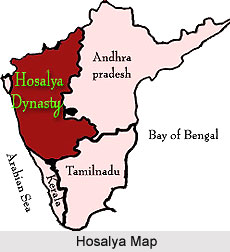
Gadyakarnamrita
Gadyakarnamrita is a 13th-century Sanskrit literary work written mainly in prose. It describes the ninety-day battle at Srirangam between the Hoysala...
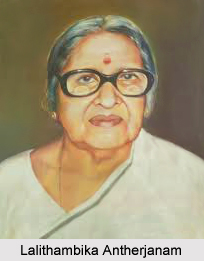
Women Writers in Malayalam Literature
Women writers in Malayalam literature have worked incessantly to make a place for their literary works. In the earlier periods, they were completely o...
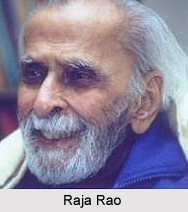
Comrade Kirillov, Novel by Raja Rao
Comrade Kirillov, a distinctive creation of Raja Rao, is presented as a brief yet incisive novelette that offers an ironic portrayal of the self-contr...
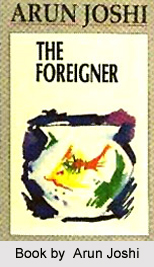
The Foreigner, Novel by Arun Joshi
“The Foreigner” is a book authored by Arun Joshi and published by Vision. It is an illustrious creation in the entire career of Arun Joshi, the famous...
Short Story in Telugu Literature
Short Story in twentieth century Telugu Literature was extremely popular and growing in and developing in a major way. Their popularity was greatly fa...
Related articles in Indian Literature
Mythological Themes in Indian Literature
Mythological themes in Indian literature have been integral to every ancient and contemporary writer and their path to f
Literature During Gupta Age
It is during the Gupta Age literature in the form of poetry, epos and drama gained a colossal importance.
Literature of Aravidu Dynasty
Sanskrit and Telugu were the popular literary medium of communication during Aravidu dynasty.
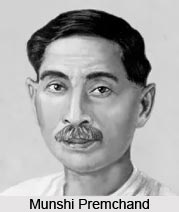
Munshi Premchand
Munshi Premchand was a legendary Indian writer notable for his modern Hindustani literature. A writer of a very high caliber, Premchand`s writings hav...
Sanskrit Poets
The names of some of the Sanskrit Poets are Bharavi, Devarshi Ramanath Shastri, Jayadeva and Srinivas Rath.