
Anantakandali is a famous writer of Vaishnava literature in Assamese. His poetry is distinguished by purity of thought and classical elegance of diction. It contains many descriptive passages of noble beauty. Even though the mythological references seem absurd at times, yet the poet`s artistic and absorbing eloquence cannot be ignored. Anantakandali`s Sahasranama Vrittanla, not to speak of the Dasam Bhagavata, shows scholarship and poetic skill. Anantakandali`s Ramayana is a distilled spiritual essence. It was he who for the first time established a basic identification of Lord Rama with Lord Krishna, an inspiring landmark in Vaishnava literature and religion.
Although he had a profound knowledge of Sanskrit, Anantakandali wrote in the Assamese language, and claimed for it recognition as a medium of literary expression.
This is what he said :
"I am an adept in Sanskrit verses, And can compose them well; Yet, I write in this medium, So that women and the illiterate Might get the joy of listening."
To restore treasures of Sanskrit literature from its cryptic meaning which the people could not fathom. And to present them in a popular garb to the people is the central idea behind all compositions of the Vaishnava era. It is like Tulsidas defending the use of the vernacular in his Ramacarita Manasa in reply to the Sanskrit pundits who advocated the use of Sanskrit for all literary work. It must be remembered that nowhere is Anantakandali`s genius displayed more completely than in the pleasant blend of realism, war and romance that is reflected in his Kumaraharana. It is an idyll. Compared to Rama Saraswati`s, Anantakandali`s art is precise in spirit and meaning.
Anantakandali
Anantakandali was a poet of Vaishnavite literature in Assamese. He for the first time identified Lord Rama with Lord Vishnu in the realms of VAishnavite literature.
About Anantakandali
Works of Anantakandali
Works of Anantakandali include the noted Harana Kavyas, which are essentially romantic tales in keeping with the medieval atmosphere of elopement and ultimate union. These too are in keeping with the Vaishnava ideal. Along with works like the Sahasranama and Ghunuca, he is well-known for the Kumara Harana. With its jewel-lights and sensuous appeal, Kumara Harana has exotic beauty and technical perfection.
The story goes such. Aniruddha the lover flies from Dwarka at the invitation of the artist-maiden Chitralekha, friend of Usha, to meet his forlorn bride in Sonitpura. The chief characteristics of the poem are romance and a certain element of humour, pathos and the triumphant glory of youth. It narrates with grace and joy the romantic restlessness of the youthful souls as also the fierce encounter between the forces of Dwarka and those of Sonitpura that took place as a result of the secret love affairs of Usha and Aniruddha. At last, through the intrigues of Narada, Lord Krishna appeared on the scene of battle. His compassionate influence cast away all discordance and finally succeeded in uniting the lovers in happy wedlock. Apparently an episode of romantic youthful passion, it is a jewel of a piece. In Kumara Harana, the poet has transfigured an old legend found in the Harivamsam and the Bhagavatam into a romantic extravaganza. Its simple pathos, insight into character and faithfulness to truth- these qualities have made the poem a popular favourite with several generations of readers. Told with great dramatic power and psychological understanding, the Kavya, despite the fact that at places it exhibits a tendency to over-description and inclination to dwell on extra details, is a moving study.
Vaishnava ideals are brought out on a fulsome scale towards the end; yet the touch of mystery added to it in order to give due significance to the story is kept within aesthetic limits. Anantakandali possesses the capacity to blend realism and fatalism, war and romance into fine proportions.
The story goes such. Aniruddha the lover flies from Dwarka at the invitation of the artist-maiden Chitralekha, friend of Usha, to meet his forlorn bride in Sonitpura. The chief characteristics of the poem are romance and a certain element of humour, pathos and the triumphant glory of youth. It narrates with grace and joy the romantic restlessness of the youthful souls as also the fierce encounter between the forces of Dwarka and those of Sonitpura that took place as a result of the secret love affairs of Usha and Aniruddha. At last, through the intrigues of Narada, Lord Krishna appeared on the scene of battle. His compassionate influence cast away all discordance and finally succeeded in uniting the lovers in happy wedlock. Apparently an episode of romantic youthful passion, it is a jewel of a piece. In Kumara Harana, the poet has transfigured an old legend found in the Harivamsam and the Bhagavatam into a romantic extravaganza. Its simple pathos, insight into character and faithfulness to truth- these qualities have made the poem a popular favourite with several generations of readers. Told with great dramatic power and psychological understanding, the Kavya, despite the fact that at places it exhibits a tendency to over-description and inclination to dwell on extra details, is a moving study.
Vaishnava ideals are brought out on a fulsome scale towards the end; yet the touch of mystery added to it in order to give due significance to the story is kept within aesthetic limits. Anantakandali possesses the capacity to blend realism and fatalism, war and romance into fine proportions.
Recently updated articles in Indian Literature
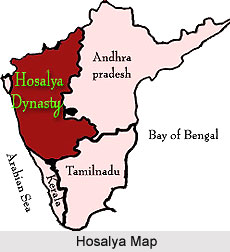
Gadyakarnamrita
Gadyakarnamrita is a 13th-century Sanskrit literary work written mainly in prose. It describes the ninety-day battle at Srirangam between the Hoysala...
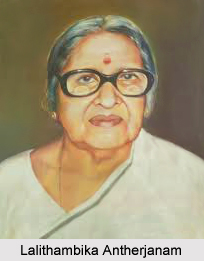
Women Writers in Malayalam Literature
Women writers in Malayalam literature have worked incessantly to make a place for their literary works. In the earlier periods, they were completely o...
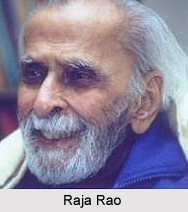
Comrade Kirillov, Novel by Raja Rao
Comrade Kirillov, a distinctive creation of Raja Rao, is presented as a brief yet incisive novelette that offers an ironic portrayal of the self-contr...
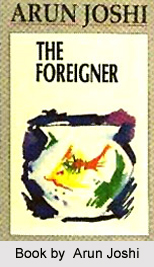
The Foreigner, Novel by Arun Joshi
“The Foreigner” is a book authored by Arun Joshi and published by Vision. It is an illustrious creation in the entire career of Arun Joshi, the famous...
Short Story in Telugu Literature
Short Story in twentieth century Telugu Literature was extremely popular and growing in and developing in a major way. Their popularity was greatly fa...
Related articles in Indian Literature
Mythological Themes in Indian Literature
Mythological themes in Indian literature have been integral to every ancient and contemporary writer and their path to f
Literature During Gupta Age
It is during the Gupta Age literature in the form of poetry, epos and drama gained a colossal importance.
Literature of Aravidu Dynasty
Sanskrit and Telugu were the popular literary medium of communication during Aravidu dynasty.
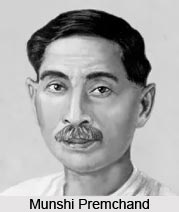
Munshi Premchand
Munshi Premchand was a legendary Indian writer notable for his modern Hindustani literature. A writer of a very high caliber, Premchand`s writings hav...
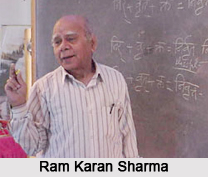
Sanskrit Poets
The names of some of the Sanskrit Poets are Bharavi, Devarshi Ramanath Shastri, Jayadeva and Srinivas Rath.