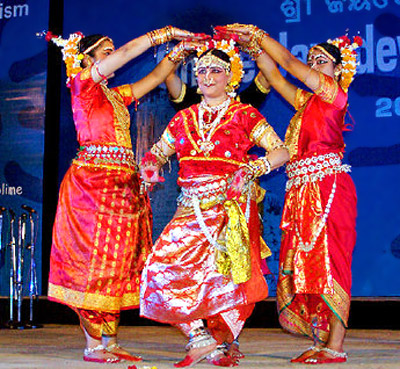
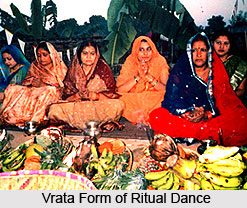
 A vrata form of ritual dance is practised by women of Hindu families in Bengal. In the erstwhile Bengal, the vrata form of ritual dance was widely practiced in the village of Rajghat, Jessore District. During the vrata the women of this village and other nearby villages visit an ancient temple of the goddess Sitala. This goddess is believed to avert many diseases and even bareness. Five to seven days before the chief puja, the preceding ceremonies begin to be observed by the women in their individual houses. All the ladies take a solemn vow of observing a strict fast on the vrata day. The adult women of the village are invited for the occasion. Together they all match ahead to the bathing ghat reciting prayers. On arriving at the ghat, the women observing the vrata places a brass pot on a small tray (kula) and placing it on her head she enters into the water completely immersing herself. Having completed the ceremonial bath the woman along with all the members return back home, carrying the sacred pot on her head. Upon reaching home she places the pot in a sacred place and through night they all sing religious songs with no instrumental accompaniment. The songs sung always begin with a `Bandana`, or invocation.
During the days of the ceremony, the women along with the sacred pot in the kula visit all the houses in the village begging for alms. At each house they beg for rice or money with which the contemplated puja performed. As the members reach individual houses the chief lady spreads a ceremonial cloth (asan) on the floor. She then places the sacred pot along with the kula in the centre of the cloth surrounding which all the ladies perform solemn dances with the accompaniment of the `dhak.` This dhak is played by a man of the Rishi caste. This goes on for five to seven days according to the vrata after which they advance to the shrine of Sitala and offer the puja. The pujas and the dances that follow are performed with much reverence. The dancers form a ring and slowly move round with very little foot-work. These dances are executed by the members of the village irrespective of castes, class and status.